
E2F-4 Antibody (D-3): sc-6851
- E2F-4 Antibody (D-3) is a mouse monoclonal IgG1 κ, cited in 8 publications, provided at 200 µg/ml
- raised against amino acids 108-300 of E2F-4 of human origin
- recommended for detection of E2F-4 of mouse, rat and human origin by WB, IP, IF and IHC(P)
- available conjugated to agarose for IP; and to HRP for WB, IHC(P) and ELISA
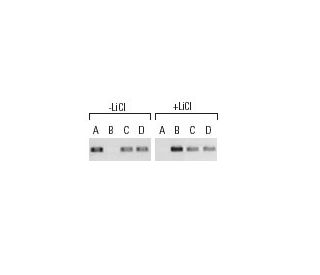
- TransCruz reagent for Gel Supershift and ChIP applications (sc-6851 X, 200 µg/0.1 ml)
- See E2F-4 (D-7): sc-398543 for E2F-4 antibody conjugates, including AC, HRP, FITC, PE, Alexa Fluor® 488, 594, 647, 680 and 790.
- m-IgG Fc BP-HRP, m-IgG1 BP-HRP and m-IgGκ BP-HRP are the preferred secondary detection reagents for E2F-4 Antibody (D-3) for WB and IHC(P) applications. These reagents are now offered in bundles with E2F-4 Antibody (D-3) (see ordering information below).

E2F-4 Antibody (D-3) is a mouse monoclonal IgG1 antibody that detects E2F-4 in mouse, rat, and human samples through applications such as western blotting (WB), immunoprecipitation (IP), immunofluorescence (IF), and immunohistochemistry (IHC). E2F-4 plays a crucial role in regulating the cell cycle, particularly in the transition from the G1 phase to the S phase, by controlling the expression of genes necessary for DNA synthesis and cell proliferation. This regulation is vital for maintaining proper cell growth and division, as dysregulation of E2F-4 can lead to uncontrolled cell proliferation and is often implicated in various cancers. E2F-4 interacts with the retinoblastoma protein (Rb) to form a transcriptional regulatory complex that is essential for the precise control of cell cycle progression. Formation of heterodimers with the DP-1 protein enhances E2F-4 transcriptional activity, thereby influencing the expression of target genes that are critical for cell cycle advancement. E2F-4 (D-3) antibody enables researchers to gain insights into the mechanisms of cell cycle regulation and the potential implications of E2F-4 in oncogenesis.
Alexa Fluor® is a trademark of Molecular Probes Inc., OR., USA
LI-COR® and Odyssey® are registered trademarks of LI-COR Biosciences
Contains Mercury: All HRP conjugates (including bundle forms) contain thiomersal, a mercury compound. Do not dispose in trash. Dispose as hazardous chemical waste according to local, state and federal regulations.
Download thiomersal SDS
E2F-4 Antibody (D-3) References:
- Expression of E2F-1 and E2F-4 is reduced in primary and metastatic breast carcinomas. | Ho, GH., et al. 2001. Breast Cancer Res Treat. 69: 115-22. PMID: 11759817
- Novel functions for the transcription factor E2F4 in development and disease. | Hsu, J. and Sage, J. 2016. Cell Cycle. 15: 3183-3190. PMID: 27753528
- Unveiling E2F4, TEAD1 and AP-1 as regulatory transcription factors of the replicative senescence program by multi-omics analysis. | Wang, Y., et al. 2022. Protein Cell. 13: 742-759. PMID: 35023014
- Therapeutic targeting of the USP2-E2F4 axis inhibits autophagic machinery essential for zinc homeostasis in cancer progression. | Xiao, W., et al. 2022. Autophagy. 18: 2615-2635. PMID: 35253629
- Trim33 masks a non-transcriptional function of E2f4 in replication fork progression. | Rousseau, V., et al. 2023. Nat Commun. 14: 5143. PMID: 37612308
- In vivo CRISPR/Cas9-mediated screen reveals a critical function of TFDP1 and E2F4 transcription factors in hematopoiesis. | Tran, NT., et al. 2024. Leukemia. 38: 2003-2015. PMID: 39043964
- Transcription factor E2F4 facilitates SUMOylation to promote HCC progression through interaction with LIN9. | Ma, Z., et al. 2024. Int J Oncol. 65: PMID: 39239750
- Transcription Factor E2F4 Promote Proliferation, Migration, and Invasion of Gastric Cancer Cells by transcriptionally activating DSCC1. | Baral, S., et al. 2024. Int J Biol Sci. 20: 4978-4998. PMID: 39309429
- E2F-4 and E2F-5, two members of the E2F family, are expressed in the early phases of the cell cycle. | Sardet, C., et al. 1995. Proc Natl Acad Sci U S A. 92: 2403-7. PMID: 7892279
- E2F-4, a new member of the E2F transcription factor family, interacts with p107. | Ginsberg, D., et al. 1994. Genes Dev. 8: 2665-79. PMID: 7958924
Ordering Information
| Product Name | Catalog # | UNIT | Price | Qty | FAVORITES | |
E2F-4 Antibody (D-3) | sc-6851 | 200 µg/ml | $322.00 | |||
E2F-4 Antibody (D-3): m-IgG Fc BP-HRP Bundle | sc-536550 | 200 µg Ab; 10 µg BP | $361.00 | |||
E2F-4 Antibody (D-3): m-IgGκ BP-HRP Bundle | sc-533701 | 200 µg Ab; 40 µg BP | $361.00 | |||
E2F-4 Antibody (D-3): m-IgG1 BP-HRP Bundle | sc-544669 | 200 µg Ab; 20 µg BP | $361.00 | |||
E2F-4 Antibody (D-3) AC | sc-6851 AC | 500 µg/ml, 25% agarose | $424.00 | |||
E2F-4 Antibody (D-3) HRP | sc-6851 HRP | 200 µg/ml | $322.00 | |||
E2F-4 Antibody (D-3) X | sc-6851 X | 200 µg/0.1 ml | $322.00 |