
Date published: 2026-4-13

1-800-457-3801

SCBT Portrait Logo
Seach Input

PAH Antibody (E-8): sc-271257

5.0(1)
Write a reviewAsk a question

Datasheets
  • PAH Antibody (E-8) is a mouse monoclonal IgG2a κ provided at 200 µg/ml
  • specific for an epitope mapping between amino acids 404-432 near the C-terminus of PAH of human origin
  • recommended for detection of PAH of mouse, rat and human origin by WB, IP, IF and ELISA; also reactive with additional species, including and equine, canine and porcine
  • m-IgG2a BP-HRP and m-IgGκ BP-HRP are the preferred secondary detection reagents for PAH Antibody (E-8) for WB applications. These reagents are now offered in bundles with PAH Antibody (E-8) (see ordering information below).

    Gene Editing Promo Banner

    QUICK LINKS

    SEE ALSO...

    PAH Antibody (E-8) is a mouse monoclonal IgG2a antibody that detects phenylalanine hydroxylase (PAH) in mouse, rat, and human samples through applications such as western blotting (WB), immunoprecipitation (IP), immunofluorescence (IF), and enzyme-linked immunosorbent assay (ELISA). PAH is a crucial enzyme that catalyzes the conversion of phenylalanine to tyrosine, serving as the rate-limiting step in phenylalanine catabolism, which is vital for the synthesis of neurotransmitters and other important biomolecules. The proper functioning of PAH is essential, as deficiencies in this enzyme lead to phenylketonuria (PKU), a genetic disorder that can result in severe cognitive impairment if not managed with a strict low-phenylalanine diet from an early age. Located predominantly in the liver, PAH exists as a soluble homotetrameric protein, and PAH structure is critical for enzymatic activity. The PAH gene, situated on human chromosome 12q23.2, encodes all necessary information for producing functional PAH, highlighting the significance of this single gene in the classic PKU phenotype. Various mutations in the PAH gene can lead to reduced enzyme activity, resulting in a spectrum of PKU severity, and while multiple isozymes of PAH have been identified, these variants exhibit slight differences in charge and electrophoretic behavior. Anti-PAH antibody (E-8) is an invaluable tool for researchers studying the implications of PAH in metabolic disorders and exploring potential therapeutic interventions.

    For Research Use Only. Not Intended for Diagnostic or Therapeutic Use.

    Ordering Information

    Product NameCatalog #UNITPriceQtyFAVORITES

    PAH Antibody (E-8)

    sc-271257
    200 µg/ml
    $322.00

    PAH Antibody (E-8): m-IgGκ BP-HRP Bundle

    sc-534909
    200 µg Ab; 40 µg BP
    $361.00

    PAH Antibody (E-8): m-IgG2a BP-HRP Bundle

    sc-546200
    200 µg Ab; 10 µg BP
    $361.00

    PAH (E-8) Neutralizing Peptide

    sc-271257 P
    100 µg/0.5 ml
    $69.00

    Dear SC tgeam, what are the difference between E-8 antibody and H2 antibody. They both target the same region in the C-terminal of PAH protein. Are they have a different epitopes ?

    Asked by: Dima
    Thank you for your question. These are different antibody clones that were raised against the same protein sequence but will have (minimally) different binding properties and may have different epitopes within the epitope region. Note also that these antibodies are different isotypes, i.e. IgG1 and IgG2a, respectively.
    Answered by: Tech Support Europe
    Date published: 2024-08-13

    Dear SC team, what are the difference between E-8 antibody and H2 antibody. They both target the same region in the C-terminal of PAH protein. Are they have a different epitopes ?

    Asked by: Dima
    Thank you for your question. These are different antibody clones that were raised against the same protein sequence but will have (minimally) different binding properties and may have different epitopes within the epitope region. Note also that these antibodies are different isotypes, i.e. IgG1 and IgG2a, respectively.
    Answered by: Tech Support Europe
    Date published: 2024-08-13

    What application is the blocking peptide sc-271257 P appropriate for?

    Asked by: Randy McDonald
    Thank you for your question. The blocking peptide is intended for use as a negative control, by pre-adsorbing the mouse monoclonal antibody against the antigen. For full protocol details, please contact our Technical Services Department or view our online protocol here: https://www.scbt.com/scbt/resources/protocols/peptide-neutralization
    Answered by: Technical Support
    Date published: 2017-03-01
    • y_2026, m_4, d_10, h_11CST
    • bvseo_bulk, prod_bvqa, vn_bulk_3.0.43
    • cp_1, bvpage1
    • co_hasquestionsanswers, tq_3
    • loc_en_US, sid_271257, prod, sort_[SortEntry(order=LAST_APPROVED_ANSWER_SUBMISSION_TIME, direction=DESCENDING)]
    • clientName_scbt
    • bvseo_sdk, java_sdk, bvseo-4.0.0
    • CLOUD, getContent, 103ms
    • QUESTIONS, PRODUCT
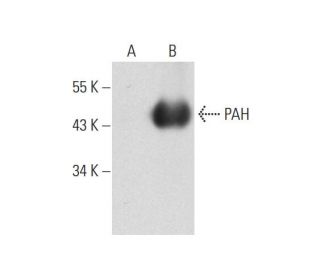
    Rated 5 out of 5 by from Satisfactory Western blot data of PAH expressionSatisfactory Western blot data of PAH expression in non-transfected and mouse PAH transfected 293T whole cell lysates. -SCBT QC
    Date published: 2014-04-17
    • y_2026, m_4, d_10, h_11
    • bvseo_bulk, prod_bvrr, vn_bulk_3.0.43
    • cp_1, bvpage1
    • co_hasreviews, tv_0, tr_1
    • loc_en_US, sid_271257, prod, sort_[SortEntry(order=SUBMISSION_TIME, direction=DESCENDING)]
    • clientName_scbt
    • bvseo_sdk, java_sdk, bvseo-4.0.0
    • CLOUD, getReviews, 16ms
    • REVIEWS, PRODUCT
    PAH Antibody (E-8) is rated 5.0 out of 5 by 1.
    • y_2026, m_4, d_10, h_11
    • bvseo_bulk, prod_bvrr, vn_bulk_3.0.43
    • cp_1, bvpage1
    • co_hasreviews, tv_0, tr_1
    • loc_en_US, sid_271257, prod, sort_[SortEntry(order=SUBMISSION_TIME, direction=DESCENDING)]
    • clientName_scbt
    • bvseo_sdk, java_sdk, bvseo-4.0.0
    • CLOUD, getAggregateRating, 127ms
    • REVIEWS, PRODUCT