
Date published: 2026-4-24

1-800-457-3801

SCBT Portrait Logo
Seach Input

Neurofibromin Antibody (McNFn27a): sc-20017

3.8(4)
Write a reviewAsk a question

Datasheets
  • Neurofibromin Antibody (McNFn27a) is a mouse monoclonal IgG1 κ, cited in 4 publications, provided at 200 µg/ml
  • raised against an N-terminal peptide of Neurofibromin of human origin
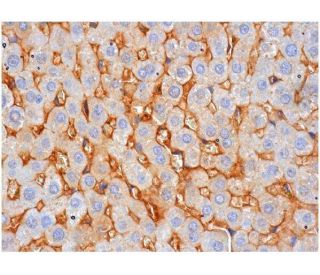
  • recommended for detection of Neurofibromin of mouse, rat and human origin by WB, IP, IF and IHC(P)
  • See Neurofibromin (H-12): sc-376886 for Neurofibromin antibody conjugates, including AC, HRP, FITC, PE, Alexa Fluor® 488, 594, 647, 680 and 790.
  • m-IgG Fc BP-HRP, m-IgG1 BP-HRP and m-IgGκ BP-HRP are the preferred secondary detection reagents for Neurofibromin Antibody (McNFn27a) for WB and IHC(P) applications. These reagents are now offered in bundles with Neurofibromin Antibody (McNFn27a) (see ordering information below).

Gene Editing Promo Banner

QUICK LINKS

SEE ALSO...

Neurofibromin Antibody (McNFn27a) is a mouse monoclonal IgG1 antibody that detects Neurofibromin in mouse, rat, and human samples through applications such as western blotting (WB), immunoprecipitation (IP), immunofluorescence (IF), and immunohistochemistry. Neurofibromin, also known as NF1-GAP-related protein, is a crucial 2,818 amino acid protein encoded by the NF1 gene located on chromosome 17, which is associated with neurofibromatosis type 1, one of the most prevalent autosomal dominant disorders. Anti-Neurofibromin antibody (McNFn27a) recognizes a protein that plays a significant role in regulating cell growth and differentiation by acting as a GTPase-activating protein (GAP) for Ras proteins, which are pivotal in cell signaling pathways that control various cellular functions, including proliferation and survival. The interaction between Neurofibromin and Ras proteins is vital, as Neurofibromin helps maintain normal cellular functions and prevents uncontrolled cell growth, which can lead to tumorigenesis. Neurofibromin is expressed consistently across a wide array of tissues, including the brain, lung, liver, kidney, spleen, muscle, and colon, highlighting its importance in various physiological processes. Neurofibromin′s ability to modulate Ras activity underscores its potential as a therapeutic target in conditions associated with Ras dysregulation, making Neurofibromin (McNFn27a) monoclonal antibody an essential tool for researchers studying neurofibromatosis and related signaling pathways.

For Research Use Only. Not Intended for Diagnostic or Therapeutic Use.

Ordering Information

Product NameCatalog #UNITPriceQtyFAVORITES

Neurofibromin Antibody (McNFn27a)

sc-20017
200 µg/ml
$322.00

Neurofibromin Antibody (McNFn27a): m-IgG Fc BP-HRP Bundle

sc-536640
200 µg Ab; 10 µg BP
$361.00

Neurofibromin Antibody (McNFn27a): m-IgGκ BP-HRP Bundle

sc-533797
200 µg Ab; 40 µg BP
$361.00

Neurofibromin Antibody (McNFn27a): m-IgG1 BP-HRP Bundle

sc-544725
200 µg Ab; 20 µg BP
$361.00

I am using Neurofibromin (McNFn27a): sc-20017 monoclonal antibody to stain paraffin embedded tissue. Do you recommend antigen retrieval when using this antibody?

Asked by: TinTin
We recommend performing antigen retrieval with sodium citrate buffer (pH 6) and heat. The full protocol can be found here: https://www.scbt.com/scbt/resources/protocols/immunoperoxidase-staining
Answered by: Technical Support
Date published: 2017-02-24
  • y_2026, m_4, d_23, h_7CST
  • bvseo_bulk, prod_bvqa, vn_bulk_3.0.43
  • cp_1, bvpage1
  • co_hasquestionsanswers, tq_1
  • loc_en_US, sid_20017, prod, sort_[SortEntry(order=LAST_APPROVED_ANSWER_SUBMISSION_TIME, direction=DESCENDING)]
  • clientName_scbt
  • bvseo_sdk, java_sdk, bvseo-4.0.0
  • CLOUD, getContent, 113ms
  • QUESTIONS, PRODUCT
Rated 5 out of 5 by from This antibody genuinely *does* work (even on WB)Hi. I am first author of one of the cited publications for this antibody (at least my pub still listed as 08/2025; Kahen, E. et al.) and I noticed someone else said they could not get signal on WB in their hands. I want to reassure that you really can get great WB's with this antibody for any human cell line, but it is a labor of love. Neurofibromin is a fairly large protein as you likely know, (typically considered 240 kd) often running somewhere around 210-240 kda range on a gel per MW markers. As I wrote in my methods, I had to use a tris-acetate gradient gel of 3-8% to capture NF1 and its putative isoform explicitly (Very painful gel to deal with; many gels were broken during troubleshooting). Getting the loading control was tricky because tubulin would run around the same range as a non-specific band. Alpha-actinin ran *very close* to a non-specific band so was not "publication worthy" but was good for testing, and was used, and others might benefit from this using alpha-actinin for loading control for NF1 if new antibodies more specific. I had to find perfect timing to be able to capture proper *actin* right at the bottom of the gel, which has far more specific WB antibodies for pub-worthy images. Note: Wet transfer 100% necessary to get all the NF1. Dry transfer would either over-transfer the actin or (most often) under-transfer the NF1. Very difficult to get sufficient NF1 on a membrane via dry-transfer without losing other bands for controls (and I was also really trying to get RAS on same gel). Honestly I think I legit tried dry transfer for a hilarious amount of time once and when I stained the gel out of curiosity, there was *still* so much protein in the NF1 region. I really tried many times with dry transfer- wet transfer only way to get anything useful. Then, I actually blocked membranes *overnight* in Odyssey blocking buffer. This Santa-Cruz NF1 antibody was then used at highest concentration recommended by manufacturer, again in Odyssey blocking buffer *overnight* (4degC on shaker). Very thorough washing in TBST (and I think I actually preferred lower tween 20 % but 10 min washes). I really wanted clean crisp neurofibromin showing two bands, as I did. And ultimately, I was able to get the result I wanted and reproduce it (though actin could really have looked a little prettier, but quantified accurately overall.) I suppose we should really be this detailed in our methods, explaining these sorts of things, but we tend not to be. Nonetheless, what I've described might help someone working with this antibody. Feel free to reach out via email and I will try to remember my best other than what I've written here.
Date published: 2025-08-02
Rated 1 out of 5 by from Not working for WB in our handsessentially no specific bands, nor non-specific bands.
Date published: 2019-05-29
Rated 4 out of 5 by from WB: Worked well in mouse spleen samplesWB: Worked well in mouse spleen samples. -SCBT Publication Review
Date published: 2015-06-18
Rated 5 out of 5 by from Published data for IF in human Schwann cellsPublished data for IF in human Schwann cells and CCF cells. -SCBT Publication Review
Date published: 2013-05-05
  • y_2026, m_4, d_23, h_7
  • bvseo_bulk, prod_bvrr, vn_bulk_3.0.43
  • cp_1, bvpage1
  • co_hasreviews, tv_0, tr_4
  • loc_en_US, sid_20017, prod, sort_[SortEntry(order=SUBMISSION_TIME, direction=DESCENDING)]
  • clientName_scbt
  • bvseo_sdk, java_sdk, bvseo-4.0.0
  • CLOUD, getReviews, 16ms
  • REVIEWS, PRODUCT
Neurofibromin Antibody (McNFn27a) is rated 3.8 out of 5 by 4.
  • y_2026, m_4, d_23, h_7
  • bvseo_bulk, prod_bvrr, vn_bulk_3.0.43
  • cp_1, bvpage1
  • co_hasreviews, tv_0, tr_4
  • loc_en_US, sid_20017, prod, sort_[SortEntry(order=SUBMISSION_TIME, direction=DESCENDING)]
  • clientName_scbt
  • bvseo_sdk, java_sdk, bvseo-4.0.0
  • CLOUD, getAggregateRating, 112ms
  • REVIEWS, PRODUCT