
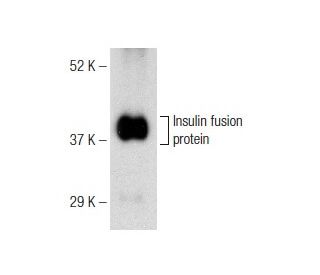

Insulin Antibody (2B7): sc-52034
- Insulin Antibody (2B7) is a mouse monoclonal IgG1, cited in 1 publications, provided at 100 µg/ml
- raised against human recombinant C-peptide construction
- recommended for detection of free C-peptide and proinsulin molecules of mouse, rat and human origin by WB, IP and ELISA
- At present, we have not yet completed the identification of the preferred secondary detection reagent(s) for Insulin Antibody (2B7). This work is in progress.

QUICK LINKS
Insulin Antibody (2B7) is a mouse monoclonal IgG1 antibody developed to recognize the human recombinant C-peptide of proinsulin. Insulin, a pivotal peptide hormone composed of 51 amino acids divided into an A chain and a B chain connected by two disulfide bridges, plays a crucial role in regulating glucose metabolism by facilitating the uptake of glucose into cells and promoting glycogen synthesis. The C-peptide, a segment of the proinsulin precursor, is essential for the proper folding and structural stability of insulin before cleavage to form the mature hormone. Post-translational modifications, including the cleavage of the C-peptide from proinsulin, are vital for activating insulin′s biological functions and ensuring effective interaction with its receptor. Insulin interacts with various proteins to mediate effects; upon binding to the insulin receptor (IR) on the cell surface, insulin triggers the phosphorylation of insulin receptor substrates (IRS), which subsequently activate the PI3K/Akt signaling pathway, leading to increased glucose uptake through the translocation of Glut4 transporters to the cell membrane. Additionally, insulin interacts with proteins such as Shc and GRB2 to activate the MAPK/ERK pathway, influencing cell growth and differentiation. Anti-insulin antibody (2B7) is recommended for use in western blotting (WB), immunoprecipitation (IP), and enzyme-linked immunosorbent assay (ELISA) across multiple species, including mouse, rat, and human, making this tool invaluable for researchers studying insulin biosynthesis, secretion, and signaling pathways. Insulin (2B7) antibody supports a wide range of research applications, contributing to a deeper understanding of insulin′s multifaceted roles in metabolism and interactions with critical signaling proteins.
Ordering Information
| Product Name | Catalog # | UNIT | Price | Qty | FAVORITES | |
Insulin Antibody (2B7) | sc-52034 | 100 µg/ml | $322.00 |