
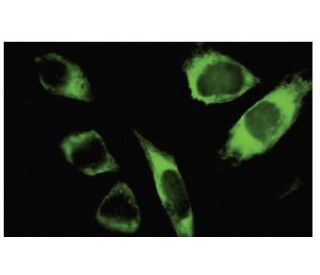
SPATA2 Antibody (EE-31): sc-100946
- SPATA2 Antibody (EE-31) is a mouse monoclonal IgG2a κ provided at 100 µg/ml
- raised against recombinant SPATA2 of human origin
- recommended for detection of SPATA2 of mouse, rat and human origin by WB, IP, IF and ELISA
- At present, we have not yet completed the identification of the preferred secondary detection reagent(s) for SPATA2 Antibody (EE-31). This work is in progress.

SPATA2 Antibody (EE-31) is a mouse monoclonal IgG2a antibody that detects SPATA2 in mouse, rat, and human samples through applications such as western blotting (WB), immunoprecipitation (IP), immunofluorescence (IF), and enzyme-linked immunosorbent assay (ELISA). SPATA2, also known as PD1 or tamo, is a 520 amino acid nuclear protein predominantly expressed in Sertoli cells of the testis, where SPATA2 plays a crucial role in the regulation of spermatogenesis. SPATA2 is not found in spermatogenic cells, indicating SPATA2′s specific function in supporting the environment necessary for sperm development. SPATA2′s expression is significantly upregulated in response to follicle-stimulating hormone (FSH), which is essential for Sertoli cell function, highlighting SPATA2′s role as an FSH-responsive protein. This regulation suggests that SPATA2 is integral to the FSH-dependent processes that govern spermatogenesis, making SPATA2 a vital component in male fertility. With approximately 85% sequence identity to its rat homolog, SPATA2 has been conserved throughout mammalian evolution, underscoring SPATA2′s importance in reproductive biology. Anti-SPATA2 antibody (EE-31) is an invaluable tool for researchers investigating the mechanisms of spermatogenesis and the role of Sertoli cells in male reproductive health.
Alexa Fluor® is a trademark of Molecular Probes Inc., OR., USA
LI-COR® and Odyssey® are registered trademarks of LI-COR Biosciences
SPATA2 Antibody (EE-31) References:
- SPATA2 links CYLD to the TNF-α receptor signaling complex and modulates the receptor signaling outcomes. | Wagner, SA., et al. 2016. EMBO J. 35: 1868-84. PMID: 27307491
- SPATA2-Mediated Binding of CYLD to HOIP Enables CYLD Recruitment to Signaling Complexes. | Kupka, S., et al. 2016. Cell Rep. 16: 2271-80. PMID: 27545878
- SPATA2 Links CYLD to LUBAC, Activates CYLD, and Controls LUBAC Signaling. | Elliott, PR., et al. 2016. Mol Cell. 63: 990-1005. PMID: 27591049
- SPATA2: more than a missing link. | Schlicher, L., et al. 2017. Cell Death Differ. 24: 1142-1147. PMID: 28282038
- SPATA2 regulates the activation of RIPK1 by modulating linear ubiquitination. | Wei, R., et al. 2017. Genes Dev. 31: 1162-1176. PMID: 28701375
- The SPATA2/CYLD pathway contributes to doxorubicin-induced cardiomyocyte ferroptosis via enhancing ferritinophagy. | Zhou, YJ., et al. 2022. Chem Biol Interact. 368: 110205. PMID: 36195186
- The role of SPATA2 in TNF signaling, cancer, and spermatogenesis. | Masola, V., et al. 2022. Cell Death Dis. 13: 977. PMID: 36402749
- SPATA2 and CYLD inhibit T cell infiltration into colorectal cancer via regulation of IFN-γ/STAT1 axis. | Tan, TG., et al. 2022. Front Oncol. 12: 1016307. PMID: 36531014
- SPATA2 restricts OTULIN-dependent LUBAC activity independently of CYLD. | Griewahn, L., et al. 2023. Cell Rep. 42: 111961. PMID: 36640323
- SPATA2 suppresses epithelial-mesenchymal transition to inhibit metastasis and radiotherapy sensitivity in non-small cell lung cancer via impairing DVL1/β-catenin signaling. | Ji, H., et al. 2023. Thorac Cancer. 14: 969-982. PMID: 36814090
Ordering Information
| Product Name | Catalog # | UNIT | Price | Qty | FAVORITES | |
SPATA2 Antibody (EE-31) | sc-100946 | 100 µg/ml | $339.00 |