
SULT2B1 렌티바이러스의 활성화 입자 (m): sc-424817-LAC
- Target species: mouse
- 200 µl of transduction-ready, high-titer CRISPR/dCas9 Lentiviral Activation Particles
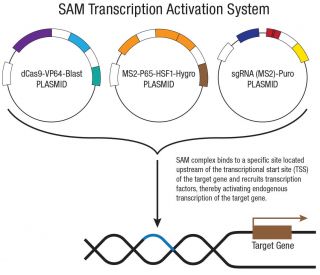
- SULT2B1 Lentiviral Activation Particles (m) 는 synergistic activation mediator (SAM) transcription activation system으로 세포에 대한lentiviral transduction을 통해 특정유전자 발현을 upregulate하도록 디자인되였습니다.
- SULT2B1 Lentiviral Activation Particles (m) 은 아래의 SAM Activation elements를 포함하고 있습니다: transactivation domain VP64과 융합된 deactivated Cas9 (dCas9) 뉴클리아제 (D10A and N863A),MS2-p65-HSF1융합 프로틴과 타깃특정 20 nt guide RNA. 또한 각각 blasticidin, hygromycin 과 puromycin resistance genes를 포함하고있습니다.
- SAM complex는 transduction후 transcriptional start site상류의 약 200-250 nt의 특정위치에 바인딩하여 고효율gene activation에 필요한 transcription factor을 증가시킵니다.
- SULT2B1 렌티바이러스 활성화 플라스미드 (m) 및 SULT2B1 렌티바이러스 활성화 플라스미드 (m2)에 의해 암호화되는 gRNA는 Sult2b1 프로모터의 서로 다른 조절 영역을 표적으로 합니다. 하나 또는 두 가지 디자인 모두 사용할 수 있습니다
- Transfection, gene activation효율은 WB, IF나 IHC등 방법으로 측정할수있습니다, 권장하는 항체는 SULT2B1 Antibody (A-3): sc-166423

주문정보
| 제품명 | 카탈로그 번호 | 단위 | 가격 | 수량 | 관심품목 | |
SULT2B1 렌티바이러스의 활성화 입자 (m) | sc-424817-LAC | 200 µl | $455.00 |
Mouse Sult2b1은 세포질성 황산전이효소 SULT2B1을 암호화하며, 이 효소는 3′-포스포아데노신-5′-포스포황산(PAPS)에 의존해 콜레스테롤 및 관련 스테롤을 포함한 하이드록시스테로이드와 옥시스테롤의 황산화(sulfation)를 촉매합니다. SULT2B1은 지용성 스테롤을 더 극성인 황산화 대사산물로 전환함으로써 스테롤 항상성, 막 조성, 스테로이드 호르몬 이용 가능성을 조절하는 데 기여하며, 그 결과 핵 수용체 신호전달과 지질 대사 프로그램에도 영향을 미칩니다. SULT2B1 활성은 표피 분화와 장벽 형성, 대식세포의 지질 처리, 간의 지질 대사를 조절하는 경로들과 연관되어 있어, 염증, 대사 이상, 콜레스테롤/스테롤 균형 장애에 관한 연구에서 중요한 표적이 됩니다.
SULT2B1 렌티바이러스 활성화 입자(m)는 완전한 시너지 활성화 매개체(SAM) 전사 활성화 시스템을 전달 준비가 된 고역가 렌티바이러스 입자에 포장함으로써 이러한 요구를 충족시키며, 더 광범위한 인간 세포 유형에서 효율적인 Sult2b1 발현 증가를 가능하게 합니다.
SULT2B1 렌티바이러스 활성화 입자(m)는 렌티바이러스 전이를 통해 시너지 활성화 매개체(SAM) 시스템의 모든 기능적 구성 요소를 전달합니다. 이 시스템은 표적 세포로 공동 전달되는 세 가지 입자 제제로 구성됩니다: 하나는 촉매 활성이 없는 dCas9(D10A 및 N863A 돌연변이)을 VP64 전사 활성화 도메인과 결합시킨 형태로, 블라스티시딘 내성 유전자를 포함하며; 하나는 히그로마이신 저항성 유전자와 융합된 MS2-p65-HSF1 융합 단백질을 암호화하며; 또 하나는 푸로마이신 저항성 유전자와 융합된 두 개의 MS2 RNA 아파타머에 표적 특이적 20 nt sgRNA가 융합된 것을 암호화합니다. 렌티바이러스 매개 전달 및 발현 카세트의 게놈 통합 후, SAM 구성 요소들은 안정적으로 발현되며 Sult2b1 전사 개시점 상류의 근위 프로모터 영역 내 표적 부위에 집합합니다. 이곳에서 VP64, p65 및 HSF1은 협력하여 내인성 전사 기구를 모집하고 내인성 SULT2B1 발현의 지속적인 상향 조절을 유도합니다. 뉴클레아제 비활성 dCas9을 사용함으로써 이중 가닥 DNA 절단이 발생하지 않으며, Sult2b1의 본래 게놈 위치와 조절 구조를 보존할 수 있습니다.
렌티바이러스 형식은 몇 가지 실질적인 이점을 제공합니다: 안정적인 게놈 통합은 세포 분열을 통한 유전적 활성화를 지원하며, 고역가 입자 제제는 자체 바이러스 생산의 필요성을 없애고, 1차 세포, 비분열 세포 및 형질 도입 저항성 세포 유형과의 호환성은 실험적 접근성을 확대합니다. 성공적인 전이는 푸로마이신, 하이그로마이신, 블라스티시딘을 이용한 삼중 항생제 선별을 통해 확인하고 증폭할 수 있습니다.
연구용으로만 사용하세요. 진단 또는 치료용이 아닙니다.