
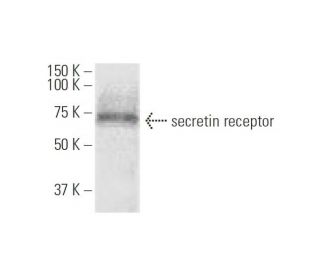


secretin receptor Antibody (3H1): sc-293316
- secretin receptor Antibody (3H1) is a mouse monoclonal IgG2a κ provided at 100 µg/ml
- raised against amino acids 32-141 of secretin receptor of human origin
- recommended for detection of secretin receptor of human origin by WB, IP and ELISA
- At present, we have not yet completed the identification of the preferred secondary detection reagent(s) for secretin receptor Antibody (3H1). This work is in progress.

QUICK LINKS
SEE ALSO...
secretin receptor Antibody (3H1) is a mouse monoclonal IgG2a antibody that detects secretin receptor in human samples through applications such as western blotting (WB), immunoprecipitation (IP), and enzyme-linked immunosorbent assay (ELISA). Secretin receptor plays a crucial role in gastrointestinal physiology by mediating the effects of secretin, a hormone that regulates fluid and electrolyte secretion, as well as influencing central nervous system activity and cardiovascular functions. This receptor is a member of the G-protein-coupled receptor (GPCR) family, characterized by its seven transmembrane domains, which facilitate its interaction with G-proteins to modulate intracellular signaling pathways, including the regulation of cyclic AMP levels. The structural integrity of secretin receptor is vital for its function; specific amino acids, such as arginine at positions 339 and 343, contribute to receptor stability and surface presentation, while a lysine at position 323 is essential for effective G-protein coupling and subsequent cAMP accumulation. The gene encoding human secretin receptor is located on chromosome 2q14.1 and exhibits significant expression in various tissues, including the pancreas, kidney, small intestine, lung, and liver, highlighting its importance in multiple physiological processes. Anti-secretin receptor antibody (3H1) is an invaluable tool for researchers studying the intricate signaling mechanisms of this receptor and its implications in health and disease.
Ordering Information
| Product Name | Catalog # | UNIT | Price | Qty | FAVORITES | |
secretin receptor Antibody (3H1) | sc-293316 | 100 µg/ml | $322.00 |