
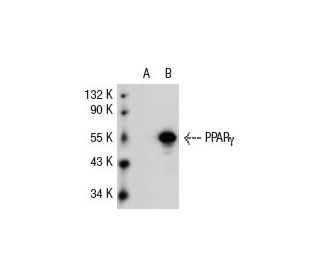
PPARγ (E-8): sc-7273. Western blot analysis of PPARγ expression in non-transfected: sc-117752 (A) and mouse PPARγ transfected: sc-122729 (B) 293T whole cell lysates.
PPARγ (m): 293T溶解物: sc-122729
- マウスPPARγ ランスフェクトされた293Tライセート
- 200 µl のSDS-PAGEバッファに100 µgのタンパク質;PPARγ抗体のウェスタンブロッティングコントロールとして適合
- 適したコントロール抗体: PPARγ 抗体 (B-5): sc-271392 は免疫蛍光またはウエスタンブロットによってPPARγ発現ノックダウンのモニタリング用のコントロール抗体に推奨
- -20° Cで保存する必要があり、凍結融解の繰り返しが最小化されることが必要です
- 使用直前にサンプルバイアルを煮沸する必要があります
- 非トランスフェクトした control 293T lysate (sc-117752)

PPARγ (m):293T Lysateは、HEK 293T細胞株由来であり、マウス系におけるペルオキシソーム増殖剤活性化受容体γ(PPARγ)タンパク質の研究に不可欠なツールである。HEK 293細胞の改良型であるHEK 293T細胞は、SV40ラージT抗原を発現しており、タンパク質の高効率生産が可能である。この溶解液は、PPARγが脂肪形成、グルコース代謝、炎症に関与する遺伝子発現を制御する分子機構を調べるのに特に有用である。研究者はPPARγ(m)を使用する:293Tライセートを用いて、PPARγが核内受容体としてどのように機能し、DNA中の特定のPPAR応答エレメント(PPRE)に結合し、標的遺伝子の転写を制御しているかを調べる。PPARγはレチノイドX受容体(RXR)とヘテロ二量体を形成し、リガンド結合時に、コアクチベーターと転写装置のリクルートを促進するコンフォメーション変化を起こす。クロマチン免疫沈降(ChIP)、ルシフェラーゼレポーターアッセイ、電気泳動移動度シフトアッセイ(EMSA)などの技術は、これらの相互作用や遺伝子制御におけるPPARγの役割を研究するために一般的に用いられている。この溶解液は、PPARγの活性や安定性に影響を与えるリン酸化やスモイル化などの翻訳後修飾を解明するのに有用である。これらの修飾を分析することにより、科学者はPPARγの機能を制御する制御メカニズムについての洞察を得ることができる。PPARγ(m)を用いた研究293T Lysateは、基本的な生物学的プロセスに厳密に焦点を当て、細胞代謝と遺伝子制御の理解を進めている。
注文情報
| 製品名 | カタログ # | 単位 | 価格 | 数量 | お気に入り | |
PPARγ (m): 293T Lysate | sc-122729 | 100 µg/200 µl | $236.00 |