
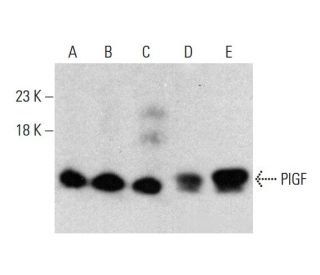
PlGF Antibody (H-4): sc-518003
- PlGF Antibody (H-4) is a mouse monoclonal IgA κ, cited in 3 publications, provided at 200 µg/ml
- specific for an epitope mapping between amino acids 124-149 at the C-terminus of PlGF of human origin
- recommended for detection of PIGF-1, PIGF-3 and to a lesser extent, PIGF-2 isoforms of mouse, rat and human origin by WB, IP, IF and ELISA
- m-IgGκ BP-HRP is the preferred secondary detection reagent for PlGF Antibody (H-4) for WB applications. This reagent is now offered in a bundle with PlGF Antibody (H-4) (see ordering information below). For additional m-IgGκ BP conjugates see our complete list of Mouse IgG Binding Proteins.

QUICK LINKS
SEE ALSO...
PlGF Antibody (H-4) is a mouse monoclonal IgA kappa light chain antibody that detects PlGF, specifically the PIGF-1, PIGF-3, and to a lesser extent, PIGF-2 isoforms, in mouse, rat, and human samples through applications such as western blotting (WB), immunoprecipitation (IP), immunofluorescence (IF), and enzyme-linked immunosorbent assay (ELISA). anti-PlGF antibody (H-4) is available in a non-conjugated form, allowing for versatile experimental use. The placenta growth factor (PlGF) plays a crucial role in angiogenesis, which is the formation of new blood vessels, a process vital for normal physiological functions as well as pathological conditions like cancer. PlGF is primarily secreted by placental trophoblasts and is involved in the regulation of endothelial cell proliferation and migration, making PlGF a significant factor in tumor progression and metastasis. Notably, PlGF interacts with the vascular endothelial growth factor (VEGF) signaling pathway, where PlGF can enhance the effects of VEGF, particularly in the context of tumor microenvironments. The ability of PlGF to form homodimers and heterodimers with VEGF underscores PlGF′s importance in mediating angiogenic responses, and PlGF′s interaction with the Flt-1 receptor further highlights PlGF′s role in vascular biology. Understanding the function and mechanisms of PlGF is essential for developing therapeutic strategies targeting angiogenesis in various diseases, including cancer.
Ordering Information
| Product Name | Catalog # | UNIT | Price | Qty | FAVORITES | |
PlGF Antibody (H-4) | sc-518003 | 200 µg/ml | $322.00 | |||
PlGF Antibody (H-4): m-IgGκ BP-HRP Bundle | sc-552195 | 200 µg Ab; 40 µg BP | $361.00 |