
Date published: 2025-12-6

1-800-457-3801

SCBT Portrait Logo
Seach Input

hepcidin Antibody (56-Z): sc-100277

4.8(4)
Write a reviewAsk a question

Datasheets
  • hepcidin Antibody (56-Z) is a mouse monoclonal IgG1 κ hepcidin antibody, cited in 5 publications, provided at 100 µg/ml
  • raised against full-length recombinant protein mapping within amino acids 25-85 of hepcidin of human origin
  • recommended for detection of hepcidin of human origin by IF, IHC(P) and ELISA
  • At present, we have not yet completed the identification of the preferred secondary detection reagent(s) for hepcidin Antibody (56-Z). This work is in progress.

QUICK LINKS

SEE ALSO...

Hepcidin Antibody (56-Z) is a mouse monoclonal IgG1 kappa light chain antibody that detects the hepcidin protein of human origin by immunofluorescence (IF), immunohistochemistry with paraffin-embedded sections (IHCP), and enzyme-linked immunosorbent assay (ELISA). Anti-hepcidin antibody (56-Z) is available as a non-conjugated format. Hepcidin, also known as HAMP, HEPC, LEAP1, or HFE2B, is an 84 amino acid secreted protein primarily produced in the liver, where hepcidin plays a vital role in regulating iron homeostasis. Hepcidin (56-Z) antibody recognizes a protein crucial for maintaining iron balance in the body by controlling iron absorption from the intestine and release from macrophages. Hepcidin achieves this by binding to the iron exporter ferroportin, leading to ferroportin internalization and degradation, which effectively reduces iron levels in circulation. Iron regulation is essential not only for preventing iron overload conditions, such as hemochromatosis, but also for ensuring iron availability for critical biological processes, including hemoglobin synthesis and cellular respiration. Additionally, hepcidin exhibits antimicrobial properties, providing a defense mechanism against bacterial infections, which underscores hepcidin′s importance in both iron metabolism and immune response. Defects in the gene encoding hepcidin can lead to hemochromatosis type 2B, a serious condition characterized by excessive iron accumulation and associated complications such as hepatic fibrosis and cardiomyopathy.

For Research Use Only. Not Intended for Diagnostic or Therapeutic Use.

Alexa Fluor® is a trademark of Molecular Probes Inc., OR., USA

LI-COR® and Odyssey® are registered trademarks of LI-COR Biosciences

hepcidin Antibody (56-Z) References:

  1. LEAP-1, a novel highly disulfide-bonded human peptide, exhibits antimicrobial activity.  |  Krause, A., et al. 2000. FEBS Lett. 480: 147-50. PMID: 11034317
  2. Hepcidin, a urinary antimicrobial peptide synthesized in the liver.  |  Park, CH., et al. 2001. J Biol Chem. 276: 7806-10. PMID: 11113131
  3. Chemical synthesis of beta-defensins and LEAP-1/hepcidin.  |  Klüver, E., et al. 2002. J Pept Res. 59: 241-8. PMID: 12010514
  4. Mutant antimicrobial peptide hepcidin is associated with severe juvenile hemochromatosis.  |  Roetto, A., et al. 2003. Nat Genet. 33: 21-2. PMID: 12469120
  5. Digenic inheritance of mutations in HAMP and HFE results in different types of haemochromatosis.  |  Merryweather-Clarke, AT., et al. 2003. Hum Mol Genet. 12: 2241-7. PMID: 12915468
  6. IL-6 mediates hypoferremia of inflammation by inducing the synthesis of the iron regulatory hormone hepcidin.  |  Nemeth, E., et al. 2004. J Clin Invest. 113: 1271-6. PMID: 15124018
  7. Recent advances in understanding haemochromatosis: a transition state.  |  Robson, KJ., et al. 2004. J Med Genet. 41: 721-30. PMID: 15466004
  8. Hepcidin regulates cellular iron efflux by binding to ferroportin and inducing its internalization.  |  Nemeth, E., et al. 2004. Science. 306: 2090-3. PMID: 15514116
  9. Erythropoietin mediates hepcidin expression in hepatocytes through EPOR signaling and regulation of C/EBPalpha.  |  Pinto, JP., et al. 2008. Blood. 111: 5727-33. PMID: 18326822
  10. Hepcidin inhibits hepatocyte apoptosis through the PERK pathway in acute liver injury and fibrosis.  |  Li, C., et al. 2025. Hepatol Commun. 9: PMID: 39699302
  11. Plasma acute phase proteins as potential predictors of intra-amniotic inflammation and infection in preterm premature rupture of membranes.  |  Cho, HY., et al. 2024. Innate Immun. 17534259241306237. PMID: 39711480
  12. A case series of patients with β-thalassemia trait and iron overload: from multifactorial hepcidin suppression to treatment with mini-phlebotomies.  |  Busti, F., et al. 2025. Haematologica.. PMID: 39744829

Ordering Information

Product NameCatalog #UNITPriceQtyFAVORITES

hepcidin Antibody (56-Z)

sc-100277
100 µg/ml
$333.00

Dear technique support, I have bought the antibody of hepcidin(56-Z): sc-100277, I want to do immunohistochemistry, can you tell me the protocol that you used it to do immunohistochemistry? Thank you very much!

Asked by: okahan
Thank you for your question. You can find our recommended protocol for IHC applications by following this link: https://www.scbt.com/scbt/de/resources/protocols/immunoperoxidase-staining
Answered by: Tech Support Europe
Date published: 2020-08-28

Is there trial size of hepcidin(56-Z): sc-100277? I want to measure the effect of it firstly.

Asked by: okahan
Thank you for your question. We do not offer a trial size of this antibody, unfortunately. However, it is recommended and warrantied for detection of hepcidin of human origin by IF, IHC(P) and ELISA, so there is no risk involved if you decide to purchase it.
Answered by: Tech Support Europe
Date published: 2020-08-04

Hi Is this antibody only specific for human or just not tested for other species (e.g. mouse & rat)? In case not tested, is it possible to obtain a trial vial to test the antibody on both rat and mice liver specimens?

Asked by: Bassem
Thank you for your inquiry and your interest in this product. We have not tested the hepcidin Antibody (56-Z): sc-100277 on mouse or rat. Thus we do not recommend nor warrant it for the detection of hepcidin from mouse or rat origin. We do not offer this antibody in a sample size. For further questions please contact our European Support Office in Germany directly. You can reach us by phone at: +49 6221 4503 0, by email at: europe@scbt.com or by live chat directly on our website, www.scbt.com We are happy to assist you.
Answered by: Technical Support Europe
Date published: 2017-12-15

Does it work on mouse hepcidin?

Asked by: Deliang
Thank you for your question. This antibody, sc-100277 Hepcidin (56-Z) has not been tested for mouse and is therefore not recommended nor warrantied to use on mouse samples. It may work, but we can not recommend that it will do so. If you have any further questions, please contact Technical Service by phone, (800)-457-3801 option 2, email <scbt@scbt.com>, or by live chat directly on our website, www.scbt.com.
Answered by: Tech Service
Date published: 2017-06-06

Can sc-100277: hepcidin (56-Z) monoclonal antibody be used to stain formalin-fixed, paraffin-embedded (FFPE) tissue sections?

Asked by: Germaine
Thank you for your question. Yes, sc-100277: hepcidin (56-Z) is recommended for use in IHC with paraffin-embedded sections. We recommend performing antigen retrieval with sodium citrate buffer (pH 6) and heat. The full protocol can be found here: https://www.scbt.com/scbt/resources/protocols/immunoperoxidase-staining
Answered by: Technical Support
Date published: 2017-03-24
  • y_2025, m_11, d_29, h_6CST
  • bvseo_bulk, prod_bvqa, vn_bulk_3.0.42
  • cp_1, bvpage1
  • co_hasquestionsanswers, tq_5
  • loc_en_US, sid_100277, prod, sort_[SortEntry(order=LAST_APPROVED_ANSWER_SUBMISSION_TIME, direction=DESCENDING)]
  • clientName_scbt
  • bvseo_sdk, java_sdk, bvseo-4.0.0
  • CLOUD, getContent, 160ms
  • QUESTIONS, PRODUCT
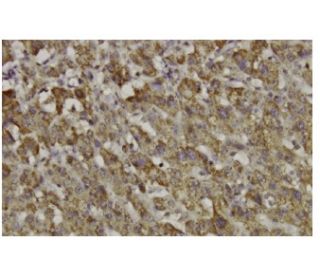
Rated 5 out of 5 by from Good choice for Immunoperoxidase stainingThis antibody works well for staining human liver tissue. -SCBT QC
Date published: 2023-09-14
Rated 5 out of 5 by from 货期很快,抗体效果很好抗体到货速度很快,做WB的的结果也很好,条带很清晰,PI很满意,会推荐实验室其他人也购买,希望santa抗体一如既往的好
Date published: 2021-11-18
Rated 5 out of 5 by from GreatI used this antibody to detect the expression of hepcidin in section of liver tissue.
Date published: 2016-12-05
Rated 4 out of 5 by from Produced wonderful immunoperoxidase cytoplasmicProduced wonderful immunoperoxidase cytoplasmic staining in formalin-fixed, paraffin-embedded human liver tissue. -SCBT QC
Date published: 2014-12-08
  • y_2025, m_11, d_29, h_6
  • bvseo_bulk, prod_bvrr, vn_bulk_3.0.42
  • cp_1, bvpage1
  • co_hasreviews, tv_0, tr_4
  • loc_en_US, sid_100277, prod, sort_[SortEntry(order=SUBMISSION_TIME, direction=DESCENDING)]
  • clientName_scbt
  • bvseo_sdk, java_sdk, bvseo-4.0.0
  • CLOUD, getReviews, 17ms
  • REVIEWS, PRODUCT
hepcidin Antibody (56-Z) is rated 4.8 out of 5 by 4.
  • y_2025, m_11, d_29, h_6
  • bvseo_bulk, prod_bvrr, vn_bulk_3.0.42
  • cp_1, bvpage1
  • co_hasreviews, tv_0, tr_4
  • loc_en_US, sid_100277, prod, sort_[SortEntry(order=SUBMISSION_TIME, direction=DESCENDING)]
  • clientName_scbt
  • bvseo_sdk, java_sdk, bvseo-4.0.0
  • CLOUD, getAggregateRating, 125ms
  • REVIEWS, PRODUCT