
GPNMB Plasmide KO CRISPR/Cas9 (m): sc-430005
- Specie Target: mouse
- 20 µg di DNA plasmidico purificato, pronto per trasfezione; sufficiente fino a 20 trasfezioni
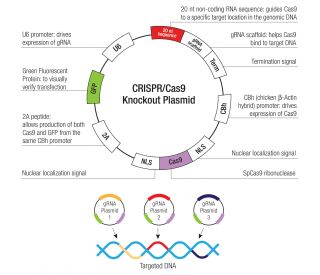
- GPNMB Il plasmide CRISPR/Cas9 Knockout (KO) (m) è un pool di plasmidi, ciascuno dei quali codifica la nucleasi Cas9 e un RNA guida (gRNA) specifico per il bersaglio di 20 nt, progettato per la massima efficienza di knockout utilizzando sequenze derivate dalla libreria GeCKO v2
- Le sequenze gRNA indirizzano Cas9 a indurre rotture a doppio filamento (DSB) sito-specifiche nel locus genomico GPNMB, con conseguente knockout genico tramite giunzione non omologa (NHEJ)
- I geni di resistenza alla puromicina e RFP sono fiancheggiati da siti LoxP, consentendo la rimozione dei marcatori di selezione tramite la ricombinasi Cre (Cre Vector: sc-418923) dopo aver stabilito linee cellulari knockout stabili

Informazioni ordini
| Nome del prodotto | Codice del prodotto | UNITÀ | Prezzo | Quantità | Preferiti | |
GPNMB Plasmide KO CRISPR/Cas9 (m) | sc-430005 | 20 µg | $397.00 |
Panoramica
Gpnmb codifica per la glicoproteina transmembrana di tipo I glycoprotein non-metastatic melanoma protein B (GPNMB), arricchita in macrofagi, cellule dendritiche, osteoclasti, melanociti e microglia. GPNMB è coinvolta nel traffico lisosomiale ed endosomiale, nella fagocitosi, nel rimodellamento della matrice extracellulare e in programmi di adesione cellulare che modulano l’attivazione immunitaria e la riparazione tissutale. La sua espressione è spesso indotta da segnali infiammatori e stress cellulare, collegandola a vie che controllano la polarizzazione mieloide, il riassorbimento osseo e la biologia della pigmentazione. Una deregolazione di GPNMB è stata associata a modelli di neuroinfiammazione e neurodegenerazione, a rimodellamento metabolico e fibrotico e a fenotipi del microambiente tumorale–immunitario, rendendola un nodo utile per studi meccanicistici nei sistemi murini.
Il plasmide CRISPR/Cas9 KO GPNMB (m) è un pool di plasmidi progettato per la distruzione mirata del gene Gpnmb in linee cellulari mouse. Ciascun plasmide co-esprime un singolo RNA guida (sgRNA) unico che prende di mira un sito distinto all'interno del Gpnmb insieme alla nucleasi Cas9 di Streptococcus pyogenes. I plasmidi codificano anche per la GFP, consentendo l'identificazione fluorescente e l'arricchimento delle cellule trasfettate con successo tramite microscopia a fluorescenza o citometria a flusso.
Il design multi-guida aumenta la probabilità di generare inserzioni o delezioni (indels) che interrompono il frame di lettura aperto Gpnmb a seguito della formazione di rotture a doppio filamento mediate da Cas9. Le rotture del DNA introdotte dal sistema CRISPR/Cas9 vengono riparate attraverso vie endogene di giunzione non omologa (NHEJ), che spesso provocano mutazioni con spostamento del frame che annullano l'espressione della proteina GPNMB.
Questo sistema di knockout CRISPR consente la generazione efficiente di modelli cellulari carenti di Gpnmb per lo studio della segnalazione di GPNMB, studi di genomica funzionale, ricerca sulla biologia del cancro e valutazione delle risposte terapeutiche in linee cellulari umane.
Caratteristiche principali
- sgRNA mirati agli esoni Gpnmb critici per la funzione di GPNMB
Co-espressione di SpCas9 e sgRNA da un singolo plasmide per una somministrazione semplificata
Reporter GFP per l'identificazione delle cellule trasfettate
Pool di plasmidi mirati a più siti genomici di Gpnmb per migliorare l'efficienza del knockout
Compatibile con la somministrazione tramite trasfezione
Varianti di progettazione
CRISPR +/- HDR
- Gli gRNA codificati dal GPNMB CRISPR/Cas9 KO Plasmid (m) e dal GPNMB CRISPR/Cas9 KO Plasmid (m2) prendono di mira siti distinti all'interno del locus Gpnmb. Potrebbe essere disponibile uno o entrambi i design di targeting. Vedere Prodotti correlati per la disponibilità.
I costrutti donatori HDR codificati dal GPNMB Plasmide HDR (m) e il plasmide HDR GPNMB (m2) contengono una cassetta di resistenza alla puromicina e un reporter RFP affiancato da bracci di omologia Gpnmb per supportare la riparazione diretta dall'omologia in siti bersaglio Gpnmb definiti corrispondenti ai disegni CRISPR/Cas9 KO. La disponibilità dei donatori HDR può variare. Vedere Prodotti correlati per la disponibilità.
Solo per uso di ricerca. Non destinato a uso diagnostico o terapeutico.