
GLCNE Plasmide di attivazione CRISPR (m): sc-424509-ACT
- Specie Target: mouse
- 20 µg di DNA plasmidico purificato, pronto per trasfezione; sufficiente fino a 20 trasfezioni
- GLCNE Plasmide di attivazione CRISPR (m) è un mediatore sinergico di attivazione (SAM) del sistema di attivazione trascrizionale disegnato per upregolare specificatamente l'espressione genica
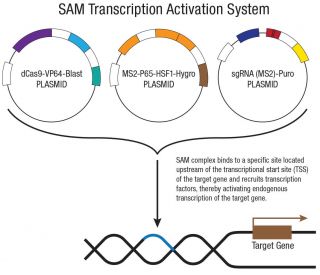
- GLCNE CRISPR Activation Plasmid (m) consiste di tre plasmidi in proporzione 1:1:1 : un plasmide che codifica la nucleasi (D10A and N863A) Cas9 (dCas9) deattivata fusa al dominio di transattivazione VP64, ed un gene di resistenza alla blasticina; un plasmide che codifica per la proteina di fusione MS2-p65-HSF1, ed un gene di resistenza all'igromicina;un plasmide che codifica un RNA guida di 20 nt target specifico, e un gene di resistenza alla puromicina.
- Il complesso SAM legae una regione sito-specifica circa 200-250 nt a monte del sito di start trascrizionale e fornisce un robusto reclutamento di fattori trascrizionali per un'attivazione altamente efficiente del gene target
- I gRNA codificati dal GLCNE CRISPR Activation Plasmid (m) e dal GLCNE CRISPR Activation Plasmid (m2) prendono di mira regioni regolatorie distinte a monte del sito di inizio della trascrizione di Gne. Uno o entrambi i modelli potrebbero essere disponibili
- In seguito alla trasfezione, l'efficienza dll'attivazione genica può essere testata con WB, IF o IHC utilizzando l'anticorpo: GLCNE Antibody (H-10): sc-376057

Informazioni ordini
| Nome del prodotto | Codice del prodotto | UNITÀ | Prezzo | Quantità | Preferiti | |
GLCNE Plasmide di attivazione CRISPR (m) | sc-424509-ACT | 20 µg | $397.00 | |||
GLCNE Plasmide di attivazione CRISPR (m2) | sc-424509-ACT-2 | 20 µg | $397.00 |
Il gene murino **Gne** codifica la glucosamina (UDP-N-acetil)-2-epimerasi/N-acetilmannosamina chinasi (GLCNE), un enzima bifunzionale e limitante la velocità nella via biosintetica de novo dell’acido sialico, che converte UDP-GlcNAc in ManNAc-6-fosfato. Controllando i pool cellulari di CMP–acido sialico, GLCNE influenza la sialilazione di proteine e lipidi, che determina la maturazione delle glicoproteine nella via secretoria e modula il riconoscimento cellula–cellula, l’adesione e la segnalazione mediata dai recettori alla membrana plasmatica. Alterazioni dell’attività di Gne e dell’omeostasi della sialilazione sono associate a difetti della fisiologia muscolare e a risposte più ampie di stress legate alla glicosilazione, che influenzano la segnalazione infiammatoria e le interazioni con la matrice extracellulare. Queste caratteristiche biologiche rendono Gne un bersaglio utile per studiare, nei sistemi modello murini, la regolazione dipendente dalla sialilazione delle proteine di membrana, il traffico intracellulare e la composizione dei glicoconiugati.
GLCNE Il plasmide di attivazione CRISPR (m) fornisce un approccio mirato e non distruttivo per sovraregolare l'espressione endogena di Gne senza alterare la sequenza di DNA sottostante.
GLCNE Il plasmide di attivazione CRISPR (m) è un sistema SAM (mediatore di attivazione sinergico) a tre plasmidi progettato per la sovraregolazione trascrizionale altamente efficiente e sito-specifica del locus Gne nelle linee cellulari umane. Il sistema è costruito attorno a una Cas9 cataliticamente inattiva (dCas9) che porta due mutazioni inattivanti (D10A e N863A) che eliminano l'attività nucleasica preservando al contempo il legame con il DNA. Questa dCas9 è fusa con VP64, un potente attivatore trascrizionale, ed è coespressa con un gene di resistenza alla blasticidina per la selezione. Il secondo plasmide codifica la proteina di fusione MS2-p65-HSF1, un complesso attivatore secondario che agisce in sinergia con dCas9-VP64, insieme a un gene di resistenza all'igromicina. Il terzo plasmide codifica un sgRNA specifico per il bersaglio di 20 nt fuso a due aptameri di RNA MS2 che reclutano il complesso MS2-p65-HSF1 nel sito di attivazione, accompagnato da un gene di resistenza alla puromicina. I tre plasmidi vengono somministrati in un rapporto di massa 1:1:1 per un'espressione bilanciata di tutti i componenti del sistema.
Una volta assemblato nel locus bersaglio, il complesso SAM si lega a circa 200 bp a monte del sito di inizio della trascrizione Gne, dove VP64, p65 e HSF1 agiscono in modo concertato per reclutare il machinery trascrizionale e guidare la sovraregolazione dell'espressione endogena di GLCNE. A differenza della Cas9 con attività nucleasica, dCas9 non introduce rotture a doppio filamento né modifica la sequenza genomica, preservando il locus Gne nativo e consentendo lo studio delle risposte trascrizionali dipendenti da GLCNE nel locus endogeno, rendendolo uno strumento prezioso per studi funzionali, l'identificazione di geni bersaglio e la modellizzazione del ripristino della via GLCNE nelle cellule tumorali con espressione di Gne silenziata o ridotta.
Solo per uso di ricerca. Non destinato a uso diagnostico o terapeutico.