
Date published: 2026-3-20

1-800-457-3801

SCBT Portrait Logo
Seach Input

FLG/Filaggrin Antibody (AKH1): sc-66192

4.7(12)
Write a reviewAsk a question

Datasheets
  • FLG/Filaggrin Antibody (AKH1) is a mouse monoclonal IgG1 κ FLG/Filaggrin antibody, cited in 98 publications, provided at 200 µg/ml
  • raised against purified foreskin Filaggrin of human origin
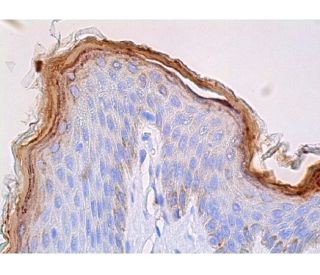
  • FLG/Filaggrin Antibody (AKH1) is recommended for detection of Filaggrin and Profilaggrin of human origin by WB, IF and IHC(P)
  • Anti-FLG/Filaggrin Antibody (AKH1) is available conjugated to agarose for IP; HRP for WB, IHC(P) and ELISA; and to either phycoerythrin or FITC for IF, IHC(P) and FCM
  • also available conjugated to Alexa Fluor® 488, Alexa Fluor® 546, Alexa Fluor® 594 or Alexa Fluor® 647 for WB (RGB), IF, IHC(P) and FCM, and for use with RGB fluorescent imaging systems, such as iBright™ FL1000, FluorChem™, Typhoon, Azure and other comparable systems
  • also available conjugated to Alexa Fluor® 680 or Alexa Fluor® 790 for WB (NIR), IF and FCM; for use with Near-Infrared (NIR) detection systems, such as LI-COR®Odyssey®, iBright™ FL1000, FluorChem™, Typhoon, Azure and other comparable systems
  • m-IgG Fc BP-HRP and m-IgG1 BP-HRP are the preferred secondary detection reagents for FLG/Filaggrin Antibody (AKH1) for WB and IHC(P) applications. These reagents are now offered in bundles with FLG/Filaggrin Antibody (AKH1) (see ordering information below).

Crispr Promo Banner

QUICK LINKS

SEE ALSO...

Filaggrin Antibody (AKH1) is a mouse monoclonal IgG1 kappa light chain antibody that detects Filaggrin protein of human origin by western blotting (WB), immunofluorescence (IF), and immunohistochemistry with paraffin-embedded sections (IHCP). Anti-Filaggrin antibody (AKH1) is available in both non-conjugated and various conjugated forms, including agarose, horseradish peroxidase (HRP), phycoerythrin (PE), fluorescein isothiocyanate (FITC), and multiple Alexa Fluor® conjugates, providing versatility for different experimental needs. Filaggrin, a key structural protein, plays a crucial role in the skin′s barrier function by promoting the aggregation of keratin intermediate filaments, which is essential for maintaining the integrity and resilience of the epidermis. Filaggrin is primarily located in the keratohyalin granules of the epidermis, where synthesis occurs as a large precursor known as profilaggrin. During the terminal differentiation of keratinocytes, profilaggrin undergoes proteolytic cleavage into active filaggrin, which facilitates the formation of a robust cornified envelope that protects against environmental stressors and prevents water loss. Proper functioning of filaggrin is vital for skin health, as mutations in the filaggrin gene are associated with various skin disorders, including atopic dermatitis and ichthyosis vulgaris, highlighting filaggrin′s importance in both skin barrier function and overall dermatological health.

For Research Use Only. Not Intended for Diagnostic or Therapeutic Use.

Alexa Fluor® is a trademark of Molecular Probes Inc., OR., USA

LI-COR® and Odyssey® are registered trademarks of LI-COR Biosciences

FLG/Filaggrin Antibody (AKH1) References:

  1. Inducible expression of filaggrin increases keratinocyte susceptibility to apoptotic cell death.  |  Kuechle, MK., et al. 2000. Cell Death Differ. 7: 566-73. PMID: 10822280
  2. Filaggrin mutations associated with skin and allergic diseases.  |  Irvine, AD., et al. 2011. N Engl J Med. 365: 1315-27. PMID: 21991953
  3. Organization, structure, and polymorphisms of the human profilaggrin gene.  |  Gan, SQ., et al. 1990. Biochemistry. 29: 9432-40. PMID: 2248957
  4. Filaggrin and Skin Barrier Function.  |  Kezic, S. and Jakasa, I. 2016. Curr Probl Dermatol. 49: 1-7. PMID: 26844893
  5. Characterization of a cDNA clone encoding human filaggrin and localization of the gene to chromosome region 1q21.  |  McKinley-Grant, LJ., et al. 1989. Proc Natl Acad Sci U S A. 86: 4848-52. PMID: 2740331
  6. The role of filaggrin in atopic dermatitis and allergic disease.  |  Drislane, C. and Irvine, AD. 2020. Ann Allergy Asthma Immunol. 124: 36-43. PMID: 31622670
  7. Revisiting the Roles of Filaggrin in Atopic Dermatitis.  |  Moosbrugger-Martinz, V., et al. 2022. Int J Mol Sci. 23: PMID: 35628125
  8. PDE4 inhibition by difamilast regulates filaggrin and loricrin expression via keratinocyte proline-rich protein in human keratinocytes.  |  Tsuji, G., et al. 2023. J Dermatol Sci. 110: 61-68. PMID: 37156706
  9. Influence of pathogenic filaggrin variants on dupilumab treatment in atopic dermatitis.  |  Clabbers, J., et al. 2024. J Allergy Clin Immunol. 153: 1155-1161.e4. PMID: 38272373
  10. Filaggrin Mutation Status and Prevention of Atopic Dermatitis with Maternal Probiotic Supplementation.  |  Zakiudin, DP., et al. 2024. Acta Derm Venereol. 104: adv24360. PMID: 38655655
  11. Filaggrin linker segment peptide and cystatin alpha are parts of a complex of the cornified envelope of epidermis.  |  Takahashi, M., et al. 1996. Arch Biochem Biophys. 329: 123-6. PMID: 8619628
  12. Recruitment of cycling epidermal cells and expression of filaggrin, involucrin and tenascin in the margin of the active psoriatic plaque, in the uninvolved skin of psoriatic patients and in the normal healthy skin.  |  Gerritsen, MJ., et al. 1997. J Dermatol Sci. 14: 179-88. PMID: 9138475

Ordering Information

Product NameCatalog #UNITPriceQtyFAVORITES

FLG/Filaggrin Antibody (AKH1)

sc-66192
200 µg/ml
$322.00

FLG/Filaggrin Antibody (AKH1): m-IgG Fc BP-HRP Bundle

sc-526977
200 µg Ab; 10 µg BP
$361.00

FLG/Filaggrin Antibody (AKH1): m-IgG1 BP-HRP Bundle

sc-532350
200 µg Ab; 20 µg BP
$361.00

FLG/Filaggrin Antibody (AKH1) AC

sc-66192 AC
500 µg/ml, 25% agarose
$424.00

FLG/Filaggrin Antibody (AKH1) HRP

sc-66192 HRP
200 µg/ml
$322.00

FLG/Filaggrin Antibody (AKH1) FITC

sc-66192 FITC
200 µg/ml
$336.00

FLG/Filaggrin Antibody (AKH1) PE

sc-66192 PE
200 µg/ml
$349.00

FLG/Filaggrin Antibody (AKH1) Alexa Fluor® 488

sc-66192 AF488
200 µg/ml
$364.00

FLG/Filaggrin Antibody (AKH1) Alexa Fluor® 546

sc-66192 AF546
200 µg/ml
$364.00

FLG/Filaggrin Antibody (AKH1) Alexa Fluor® 594

sc-66192 AF594
200 µg/ml
$364.00

FLG/Filaggrin Antibody (AKH1) Alexa Fluor® 647

sc-66192 AF647
200 µg/ml
$364.00

FLG/Filaggrin Antibody (AKH1) Alexa Fluor® 680

sc-66192 AF680
200 µg/ml
$364.00

FLG/Filaggrin Antibody (AKH1) Alexa Fluor® 790

sc-66192 AF790
200 µg/ml
$364.00

Hello, could you please give us some technical details (antigen retrieval, incubation time...) to properly use this antibody in IHC (automated system)? Thank you in advance, Giorgia

Asked by: IFOGio
Thank you for your question. FLG/Filaggrin Antibody (AKH1): sc-66192 has only been tested in manual IHC/IHC(P) applications. For antigen retrieval we recommend Heat treatment: Place slides in a container and cover with 10 mM sodium citrate buffer, pH 6.0 (sc-294091); or with 50 mM glycine-HCl buffer (sc-29096), pH 3.5, with 0.01% (w/v) EDTA (sc-29092). Heat at 95° C for 5 minutes. Top off with fresh buffer and heat at 95° C for 5 minutes (optimal incubation time may vary for each tissue type). Allow slides to cool in the buffer for approximately 20 minutes. Wash in deionized H2O three times for 2 minutes each. Aspirate excess liquid from slides. You can find our full recommended protocol under this link: https://www.scbt.com/resources/protocols/immunoperoxidase-staining
Answered by: Tech Support Europe
Date published: 2025-04-03

We are interested in using sc-66192 AF488 for IHC(p) skin sections however couldnt find an appropriate protocol for doing so. Request you to provide the protocol of same if available.

Asked by: Sandeep
Thank you for contacting Santa Cruz Biotechnology. We do not have a protocol for skin sections. Here is our IHC protocol: https://www.scbt.com/resources/protocols/immunoperoxidase-staining
Answered by: BlakeJ
Date published: 2024-07-09

Hello, How did you prove the specificity of this Ab? Do you have images with this Ab preincubated with the excess of the immunizing peptide that show loss of staining? Thanks

Asked by: mrochman
Thank you for your question. It would be helpful if you could call 800-457-3801, allowing for a more interactive discussion of this and other related questions.
Answered by: Technical Service
Date published: 2022-06-09

Dear SantaCruz Team, might it be possible to order this particular antibody in a carrier-free version, i.e. without gelatin or sodium azide? We would need it to test prior to imaging mass cytometry (IMC) application.

Asked by: Anonymous
Thank you for your question. It would be helpful if you could call 800-457-3801, allowing for a more interactive discussion of this and other related questions.
Answered by: Technical Service
Date published: 2022-01-20

I'm going to have a human skin IHC staining (in paraffin embedded sections). Therefore, I want to check if you know what's the retrieval protocol to make the better staining.

Asked by: Louis0007
Thanks for your question. Certain antigenic determinants are masked by formalin fixation and paraffin embedding and may be exposed by one of several methods: Heat treatment (recommended method): Place slides in a container and cover with 10 mM sodium citrate buffer, pH 6.0 (sc-294091); or with 50 mM glycine-HCl buffer (sc-29096), pH 3.5, with 0.01% (w/v) EDTA (sc-29092). Heat at 95° C for 5 minutes. Top off with fresh buffer and heat at 95° C for 5 minutes (optimal incubation time may vary for each tissue type). Allow slides to cool in the buffer for approximately 20 minutes. Wash in deionized H2O three times for 2 minutes each. Aspirate excess liquid from slides. Pepsin: Incubate sections for 10–20 minutes in 0.1% Pepsin (sc-476554) in 0.01 N HCl at room temperature. Wash slides several times in deionized H2O. Aspirate excess liquid from slides. Saponin: Incubate sections for 30 minutes in 0.05% Saponin (sc-280079) in deionized H2O at room temperature. Wash at least three times in PBS. Aspirate excess liquid from slides. Here is the link to IHC for your reference:https://www.scbt.com/zh/resources/protocols/immunoperoxidase-staining
Answered by: Technical Support 9
Date published: 2021-09-07

Please do you have image showing Western Blot for Cat No. Filaggrin Antibody (AKH1): sc-66192 showing specificity to mouse?

Asked by: Tawfik
We do not have published pictures of this antibody used in a Western Blot on mouse. Please contact Technical Support for more information.
Answered by: Tech Sales
Date published: 2021-03-10

Do you have any more precise information about location of AKH1 epitope on FLG?

Asked by: Dusko
Thank you for your question. No epitope mapping has been performed for this antibody, so the exact epitope it binds to is not known.
Answered by: Technical Support Europe
Date published: 2020-10-28

I am looking for Filaggrin Antibody to use it in my Western Blot experiment. I am looking for anti-Human, anti-Pig and anti-mouse specificity.

Asked by: TMISSA
Thank you for your question. Filaggrin Antibody (AKH1): sc-66192 is recommended for detection of human Filaggrin, and we have not yet tested the antibody for reactivity with additional species. We also offer a different antibody, Filaggrin Antibody (AE21): sc-80609, but this is also only currently recommended for detection of human Filaggrin. For a limited time we are offering a free 10µg sample of our monoclonal antibody, Filaggrin (AKH1): sc-66192. Please contact our Technical Service Department to request a sample. Please call us toll-free at (800) 457-3801 option 2, e-mail scbt@scbt.com, or use the live chat on our website.
Answered by: Technical Support
Date published: 2017-05-23
  • y_2026, m_3, d_16, h_6CST
  • bvseo_bulk, prod_bvqa, vn_bulk_3.0.42
  • cp_1, bvpage1
  • co_hasquestionsanswers, tq_10
  • loc_en_US, sid_66192, prod, sort_[SortEntry(order=LAST_APPROVED_ANSWER_SUBMISSION_TIME, direction=DESCENDING)]
  • clientName_scbt
  • bvseo_sdk, java_sdk, bvseo-4.0.0
  • CLOUD, getContent, 108ms
  • QUESTIONS, PRODUCT
Rated 5 out of 5 by from Works well in organotypic cultureWorks well as a stain in organotypic culture for immunofluorescence. Specific staining.
Date published: 2021-07-16
Rated 4 out of 5 by from Good for western blotFor western blot, use at 1:200 dilution in 5% milk TBST, overnight incubation with rocking at 4 degrees C. Example of published result: PMID 29134204.
Date published: 2020-01-09
Rated 5 out of 5 by from Worked with human skin staining with IHCWe received a trail size of filaggrin antibody to staining human skin and it worked well.
Date published: 2018-01-03
Rated 5 out of 5 by from Cross reacts with mouse filaggrinIn Western Blot analysis, a 45 kDa band was observed from mouse epidermis
Date published: 2017-12-15
Rated 5 out of 5 by from ExcellentThis antibody works extremely well in Paraformaldehyde fixed, cryosectioned human epidermis sections.
Date published: 2017-08-31
Rated 5 out of 5 by from strong band seenThis monoclonal antibody gives a nice strong robust and clean band for WB analysis in Hela whole cell lysate.
Date published: 2017-05-28
Rated 5 out of 5 by from works wellPositive in human skin tissue, works well for IF applications.
Date published: 2017-02-12
Rated 5 out of 5 by from Excellent IHC antibodyStrong and specific staining observed by IHC in paraffin embedded sections
Date published: 2017-01-13
  • y_2026, m_3, d_16, h_6
  • bvseo_bulk, prod_bvrr, vn_bulk_3.0.42
  • cp_1, bvpage1
  • co_hasreviews, tv_0, tr_12
  • loc_en_US, sid_66192, prod, sort_[SortEntry(order=SUBMISSION_TIME, direction=DESCENDING)]
  • clientName_scbt
  • bvseo_sdk, java_sdk, bvseo-4.0.0
  • CLOUD, getReviews, 15ms
  • REVIEWS, PRODUCT
FLG/Filaggrin Antibody (AKH1) is rated 4.7 out of 5 by 12.
  • y_2026, m_3, d_16, h_6
  • bvseo_bulk, prod_bvrr, vn_bulk_3.0.42
  • cp_1, bvpage1
  • co_hasreviews, tv_0, tr_12
  • loc_en_US, sid_66192, prod, sort_[SortEntry(order=SUBMISSION_TIME, direction=DESCENDING)]
  • clientName_scbt
  • bvseo_sdk, java_sdk, bvseo-4.0.0
  • CLOUD, getAggregateRating, 106ms
  • REVIEWS, PRODUCT