
Dyrk1A Plasmídeo de ativação de CRISPR (h): sc-401928-ACT
- alvos específicos: human
- 20 µg de plasmídeo de DNA pronto para transfecção; Suficiente para até 20 transfecções
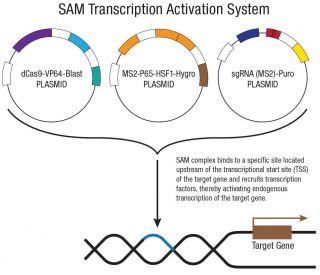
- Dyrk1AO plasmídeo de ativação de CRISPR (h)e um mediador da ativação sinergética (SAM) dentro do sistema de ativada da transcrição, criado para a especificamente fazer a regulação genética crescente
- Dyrk1A Plasmídeo de ativação CRISPR (h) consiste em 3 pares de plasmídeos com a razão de massa de 1:1:1: um plasmídeo contento o código para Cas9 desativada
- O complexo SAM resultante se liga a uma região especifica a qual contem aproximadamente 200-250 nt na região upstream da região de inicio da transcrição e fornece um recrutamento robusto de fatores de transcrição para uma eficiente ativação genética.
- Os gRNAs codificados pelo Plasmídeo de Ativação CRISPR Dyrk1A (h) e pelo Plasmídeo de Ativação CRISPR Dyrk1A (h2) têm como alvo regiões reguladoras distintas a montante do local de início da transcrição de DYRK1A. Um ou ambos os desenhos podem estar disponíveis
- Após a transfecção, a eficácia do processo de nocaute genético por ser testada WB, IF ou IHC usando o anticorpo:Dyrk1A Anticorpo (RR.7): sc-100376

Informacoes sobre ordens
| Nome do Produto | Numero de Catalogo | UNID | Preco | Qde | FAVORITOS | |
Dyrk1A Plasmídeo de ativação de CRISPR (h) | sc-401928-ACT | 20 µg | $397.00 | |||
Dyrk1A Plasmídeo de ativação de CRISPR (h2) | sc-401928-ACT-2 | 20 µg | $397.00 |
DYRK1A codifica a quinase 1A regulada por fosforilação de tirosina de dupla especificidade (Dyrk1A), uma quinase de serina/treonina que modula programas de fosforilação de proteínas que governam a progressão do ciclo celular, a diferenciação neuronal e a função sináptica. A Dyrk1A integra-se a redes de sinalização que controlam a regulação transcricional, o splicing de RNA e a proteostase, com substratos descritos e ligações a vias que influenciam o estado da cromatina e respostas ao stress. Alterações na dosagem e na atividade de DYRK1A estão implicadas em fenótipos do neurodesenvolvimento, incluindo efeitos sensíveis à dosagem associados à síndrome de Down e a biologia relacionada ao espectro do autismo, e também foram estudadas em contextos de proliferação de células cancerígenas. Essas características tornam o DYRK1A um nó útil para dissecar circuitos regulatórios dirigidos por quinases em modelos celulares humanos.
Dyrk1A O Plasmídeo de Ativação CRISPR (h) oferece uma abordagem direcionada e não destrutiva para regular positivamente a expressão endógena de DYRK1A sem alterar a sequência de ADN subjacente.
Dyrk1A O Plasmídeo de Ativação CRISPR (h) é um sistema mediador de ativação sinérgica (SAM) de três plasmídeos, concebido para a regulação positiva transcricional altamente eficiente e específica do locus DYRK1A em linhas celulares humanas. O sistema é construído em torno de uma Cas9 cataliticamente inativa (dCas9) portadora de duas mutações inativadoras (D10A e N863A) que eliminam a atividade nuclease, preservando simultaneamente a ligação ao ADN. Esta dCas9 é fundida com VP64, um potente ativador transcricional, e é coexpressa com um gene de resistência à blasticidina para seleção. O segundo plasmídeo codifica a proteína de fusão MS2-p65-HSF1, um complexo ativador secundário que atua em conjunto com o dCas9-VP64, juntamente com um gene de resistência à higromicina. O terceiro plasmídeo codifica um sgRNA de 20 nt específico para o alvo, fundido a dois aptâmeros de RNA MS2 que recrutam o complexo MS2-p65-HSF1 para o local de ativação, acompanhado por um gene de resistência à puromicina. Os três plasmídeos são administrados numa proporção de massa de 1:1:1 para uma expressão equilibrada de todos os componentes do sistema.
Uma vez montado no locus alvo, o complexo SAM liga-se a cerca de 200 pb a montante do local de início da transcrição DYRK1A, onde VP64, p65 e HSF1 atuam em conjunto para recrutar a maquinaria transcricional e impulsionar a regulação positiva da expressão endógena de Dyrk1A. Ao contrário da Cas9 com atividade nuclease, o dCas9 não introduz quebras de cadeia dupla nem modifica a sequência genómica, preservando o locus DYRK1A nativo e permitindo o estudo de respostas transcricionais dependentes de Dyrk1A no locus endógeno, tornando-o uma ferramenta valiosa para estudos funcionais, identificação de genes-alvo e modelagem da restauração da via Dyrk1A em células tumorais com expressão de DYRK1A silenciada ou reduzida.
Apenas para uso em investigação. Não se destina a uso diagnóstico ou terapêutico.