
α-parvin CRISPR/Cas9 KOプラスミド (h): sc-405769
- 対象生物種: human
- 20 µg のトランスフェクション準備済み、精製したプラスミドDNA、~20回トランスフェクション
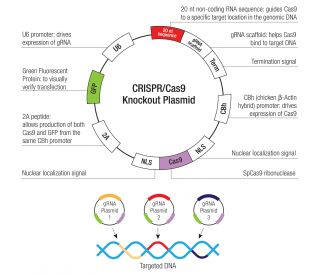
- α-parvin CRISPR/Cas9 ノックアウト(KO)プラスミド(h)は、GeCKO v2ライブラリ由来の配列を用いて最大のノックアウト効率を実現するよう設計された、Cas9ヌクレアーゼおよび標的特異的な20塩基対のガイドRNA(gRNA)をそれぞれコードするプラスミドのプールです
- gRNA配列は、Cas9を誘導してα-parvinゲノム座において部位特異的な二本鎖切断(DSBs)を引き起こし、非相同末端結合(NHEJ)を介して遺伝子ノックアウトをもたらします
- ピューロマイシン耐性遺伝子とRFP遺伝子はLoxP部位で挟まれているため、安定したノックアウト細胞株を樹立した後、Creリコンビナーゼ(Creベクター:sc-418923)を用いて選択マーカーを除去することができる。

注文情報
| 製品名 | カタログ # | 単位 | 価格 | 数量 | お気に入り | |
α-parvin CRISPR/Cas9 KOプラスミド (h) | sc-405769 | 20 µg | $397.00 |
概要
PARVAはα-パルビン(α-parvin)をコードしており、α-パルビンはアクチン結合性のフォーカルアドヒージョン(接着斑)アダプターとして機能します。α-パルビンはインテグリン連結キナーゼ(ILK)およびPINCHと会合してIPP複合体を形成し、インテグリンとアクチン細胞骨格を連結します。パキシリンなど他の接着関連因子との相互作用を介して、α-パルビンは細胞の伸展や遊走の過程におけるフォーカルアドヒージョンの組み立て、細胞骨格リモデリング、ならびにメカノトランスダクションに寄与します。PARVA依存的なシグナル伝達は、インテグリン/FAK経路や低分子GTPaseにより制御されるアクチン動態と接点を持ち、接着依存的な生存や細胞極性を支えます。これらの過程の破綻は、腫瘍細胞浸潤、線維化に関連する組織リモデリング、ならびに接着・収縮シグナルの変調が関与する心血管および平滑筋生物学の研究において重要です。
α-parvin CRISPR/Cas9 KOプラスミド(h)は、human細胞株におけるPARVA遺伝子の標的破壊を目的として設計されたプラスミドのプールである。各プラスミドは、PARVA内の異なる部位を標的とする固有のシングルガイドRNA(sgRNA)と、Streptococcus pyogenes由来のCas9ヌクレアーゼを共発現します。また、これらのプラスミドはGFPをコードしており、蛍光顕微鏡やフローサイトメトリーを用いて、トランスフェクションに成功した細胞を蛍光で識別・濃縮することが可能です。
このマルチガイド設計により、Cas9による二本鎖切断の形成後に、PARVAのオープンリーディングフレームを破壊する挿入または欠失(インデル)が生じる可能性が高まります。CRISPR/Cas9システムによって導入されたDNA切断は、内因性の非相同末端結合(NHEJ)経路を通じて修復され、その結果、α-parvinタンパク質の発現を阻害するフレームシフト変異が生じることが頻繁にあります。
このCRISPRノックアウトシステムにより、α-parvinシグナル伝達、機能ゲノミクス研究、がん生物学研究、およびヒト細胞株における治療反応の評価を目的とした、PARVA欠損細胞モデルの効率的な作製が可能となる。
主な特徴
- α-parvinの機能に不可欠なPARVAエクソンを標的とするsgRNA
導入を簡素化するための、単一プラスミドからのSpCas9およびsgRNAの共発現
トランスフェクトされた細胞を識別するためのGFPレポーター
ノックアウト効率を向上させるための、PARVAゲノム上の複数の部位を標的とするプラスミドのプール
トランスフェクションによる導入に対応
設計バリエーション
CRISPRs +/- HDR
- α-parvin CRISPR/Cas9 KOプラスミド(h)およびα-parvin CRISPR/Cas9 KOプラスミド(h2)によってコードされるgRNAは、PARVA遺伝子座内の異なる部位を標的としています。いずれか一方、または両方の標的設計が利用可能な場合があります。入手可能性については「関連製品」を参照してください。
α-parvin HDRプラスミド(h)および α-parvin HDRプラスミド(h2)によってコードされるHDRドナー構築体は、プロマイシン耐性カセットとRFPレポーターを含み、これらはPARVAホモロジーアームに挟まれており、CRISPR/Cas9 KO設計に対応する特定のPARVA標的部位でのホモロジー依存修復をサポートします。HDRドナーの入手可能性は異なる場合があります。入手可能性については「関連製品」をご確認ください。
研究用のみ。診断用または治療用ではありません。