
NPATCRISPR激活质粒(m): sc-434105-ACT
- 针对种属:mouse
- 20 µg 纯化的即用型的质粒DNA,最多可供20次转染
- NPAT CRISPER激活质粒(m)是一种协同激活介质(SAM)转录激活系统,目的在于特定上调基因表达
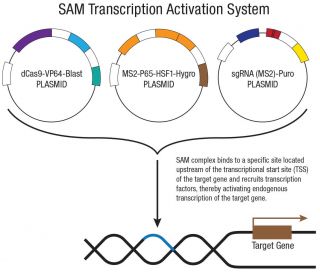
- NPAT CRISPR 激活质粒 (m)包含三种质量比为1:1:1的质粒:一种质粒编码与转录激活结构域VP64融合的去活化的Cas9 (dCas9)核酸酶(D10A and N863A),和杀稻瘟素抗性基因;一种质粒编码MS2-p65-HSF1融合蛋白,和潮霉素抗性基因;一种质粒编码与两个MS2 RNA适体融合的目标特异的20 nt向导RNA,和嘌呤霉素抗性基因。
- 形成的SAM复合物结合到转录起始位点上游大约200-250 nt的特定位点区域,为高效激活基因提供转录因子的招募
- 由 NPAT CRISPR 激活质粒 (m) 和 NPAT CRISPR 激活质粒 (m2) 编码的 gRNA 分别针对 Npat 转录起始位点上游的不同调控区域。其中一种或两种设计可能可用

订购信息
| 产品名称 | 产品编号 | 规格 | 价格 | 数量 | 收藏夹 | |
NPATCRISPR激活质粒(m) | sc-434105-ACT | 20 µg | $397.00 | |||
NPATCRISPR激活质粒(m2) | sc-434105-ACT-2 | 20 µg | $397.00 |
小鼠 Npat 基因编码 NPAT,这是一种核内辅因子,可将细胞周期推进与组蛋白基因转录及染色质动态过程相连接。NPAT 在 cyclin E/CDK2 下游被激活,并定位于组蛋白基因座小体(histone locus bodies),在其中支持与 S 期耦联的复制依赖型组蛋白表达,并协调 DNA 复制与基因组维护。通过这些作用,NPAT 参与调控 G1/S 转换、核苷酸掺入以及染色质装配等通路——这些过程在增殖压力以及疾病相关的细胞状态变化中常常发生紊乱。因此,调控 Npat 的表达有助于解析细胞周期信号如何与控制基因组稳定性的转录程序相互衔接。
NPAT CRISPR激活质粒(m)提供了一种靶向、非破坏性的方法,可在不改变底层DNA序列的情况下上调内源性Npat的表达。
NPAT CRISPR激活质粒(m)是一个由三条质粒组成的协同激活介导(SAM)系统,旨在对人类细胞系中的Npat基因座进行高效、位点特异性的转录上调。该系统以一种携带两个失活突变(D10A 和 N863A)的无催化活性的 Cas9(dCas9)为核心,这些突变消除了核酸酶活性,同时保留了 DNA 结合能力。该 dCas9 与强效转录激活因子 VP64 融合,并与用于筛选的布拉西定抗性基因共同表达。第二个质粒编码MS2-p65-HSF1融合蛋白——这一二级激活复合物与dCas9-VP64协同作用,并携带潮霉素抗性基因。第三个质粒编码靶标特异性20 nt sgRNA,其与两个MS2 RNA适配体融合,这些适配体可将MS2-p65-HSF1复合物招募至激活位点,并携带嘌呤霉素抗性基因。这三个质粒按1:1:1的质量比递送,以确保系统所有组分的平衡表达。
在靶位点组装完成后,SAM复合物结合于Npat转录起始位点上游约200 bp处,VP64、p65和HSF1在此协同作用,招募转录 machinery并驱动内源性NPAT表达上调。与具有核酸酶活性的Cas9不同, dCas9不会引入双链断裂或修改基因组序列,从而保留了原生的Npat位点,并能够研究内源性位点上依赖于NPAT的转录反应,使其成为功能研究、靶基因鉴定以及在Npat表达被沉默或降低的肿瘤细胞中模拟NPAT通路恢复的宝贵工具。
仅供研究使用。不用于诊断或治疗。