
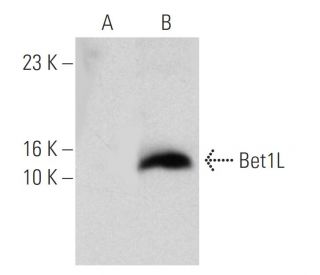

Bet1L (h): 293T Lysate: sc-115664
- human Bet1L transfected 293T lysate
- 100 µg protein in 200 µl SDS-PAGE buffer; suitable as Western Blotting control for Bet1L antibodies
- Suitable control antibody: Bet1L Antibody (19): sc-135846 is recommended as control antibody for monitoring of Bet1L expression knockdown by Western blotting or immunofluorescence
- should be stored at -20° C and repeated freezing and thawing should be minimized
- sample vial should be boiled once prior to use
- non-transfected control 293T lysate (sc-117752)

QUICK LINKS
Bet1L (h): 293T Lysate is derived from the 293T cell line, a human embryonic kidney cell line modified to express the SV40 large T antigen, which enhances its transfection efficiency and protein expression capabilities. This lysate is enriched with human Bet1L, a member of the SNARE (Soluble N-ethylmaleimide-sensitive factor Attachment protein REceptor) protein family, which plays a crucial role in mediating vesicle fusion and intracellular membrane trafficking. Bet1L is specifically involved in the transport of vesicles from the endoplasmic reticulum (ER) to the Golgi apparatus. In research, Bet1L (h): 293T Lysate is used to study the mechanisms of vesicular transport and the role of SNARE proteins in intracellular trafficking. Researchers employ this lysate in Western blotting to detect and quantify Bet1L expression under various experimental conditions, providing insights into its regulation and involvement in vesicle-mediated transport processes. The lysate is also utilized in co-immunoprecipitation assays to identify protein-protein interactions involving Bet1L, which helps explain its role within the SNARE complex and its interactions with other vesicle transport machinery components. Furthermore, functional assays using Bet1L (h): 293T Lysate are conducted to assess the impact of Bet1L on vesicle docking and fusion events. These studies contribute to understanding how Bet1L and other SNARE proteins coordinate to facilitate efficient cargo transport between cellular compartments. The use of Bet1L (h): 293T Lysate allows for detailed investigations into the molecular mechanisms underlying vesicle trafficking and membrane fusion, offering valuable insights into fundamental cellular processes.
Ordering Information
| Product Name | Catalog # | UNIT | Price | Qty | FAVORITES | |
Bet1L (h): 293T Lysate | sc-115664 | 100 µg/200 µl | $236.00 |