


ZIP4 Plasmídeo duplo de Nickase (h): sc-412558-NIC
- alvos específicos: human
- 20 µg de plasmídeo de DNA pronto para transfecção; Suficiente para até 20 transfecções
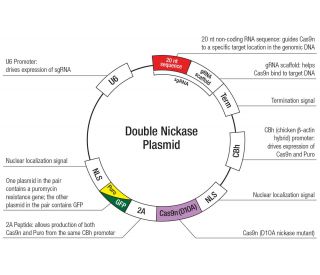
- ZIP4O plasmídeo de dupla Nickase (h) consiste num par de plasmídeos cada um contem D10A com mutação na nuclease Cas9 nuclease e um alvo especifico de RNA guia com 20 na (gRNA), criado para nocautear a expressão genética com maior especificidade do que o seu correspondente CRISPR/Cas9 KO
- Sequencias pareadas de gRNA são de aproximadamente 20 bp para permitir que os cortes duplos no DNA genômico mediados pela Casp ocorram com especificidade , o que se assemelha ao corte pela DSB
- Cada plasmídeo pertencente ao par de plasmídeos contem um gene de resistência a puromicina para seleção; o outro plasmídeo do par contem um marcador de GFP para a visualização e confirmação da transfecção
- O Plasmídeo Double Nickase ZIP4 (h) e o Plasmídeo Double Nickase ZIP4 (h2) codificam designs distintos de pares de gRNA direcionados para SLC39A4. Um ou ambos os desenhos podem estar disponíveis

Informacoes sobre ordens
| Nome do Produto | Numero de Catalogo | UNID | Preco | Qde | FAVORITOS | |
ZIP4 Plasmídeo duplo de Nickase (h) | sc-412558-NIC | 20 µg | $410.00 | |||
ZIP4 Plasmídeo duplo de Nickase (h2) | sc-412558-NIC-2 | 20 µg | $410.00 |
SLC39A4 codifica a ZIP4, um importador de zinco da membrana plasmática que regula a captação e a distribuição celular de zinco, sustentando a atividade de enzimas dependentes de zinco e programas transcricionais. A atividade da ZIP4 contribui para a homeostase de íons metálicos e influencia vias ligadas à diferenciação epitelial, à integridade da barreira e à detecção de nutrientes por meio de sinalização responsiva ao zinco. A desregulação de SLC39A4 está associada à absorção prejudicada de zinco e a alterações na fisiologia epitelial, tornando-o relevante para estudos sobre transporte de micronutrientes e homeostase tecidual. Na pesquisa biomédica, a ZIP4 serve como um ponto útil para investigar a regulação gênica e respostas ao estresse impulsionadas pelo zinco em sistemas modelo gastrointestinais e epiteliais.
ZIP4 O Plasmídeo de Nickase Dupla (h) consiste num par de plasmídeos combinados, concebidos para a edição de alta especificidade do locus SLC39A4 em linhas celulares human. Cada plasmídeo expressa uma nickase Cas9 D10A e um sgRNA distinto que tem como alvo cadeias de ADN opostas dentro de SLC39A4. Quando direcionadas para locais adjacentes em cadeias de ADN opostas, as duas nickases geram cortes deslocados numa única cadeia que, em conjunto, produzem uma quebra escalonada de cadeia dupla, exigindo uma atividade coordenada no alvo por parte de ambas as guias. A quebra de ADN resultante é resolvida por vias de reparação celular endógenas, mais frequentemente através da junção de extremidades não homólogas (NHEJ), levando a inserções ou deleções que perturbam a função SLC39A4. Ao exigir o envolvimento de dois sgRNA no locus alvo, a abordagem de dupla nickase aumenta a especificidade da edição e fornece uma estratégia CRISPR complementar para aplicações em que se deseja um controlo adicional sobre a precisão do direcionamento.
Para apoiar a identificação eficiente das células editadas, um plasmídeo codifica GFP para visualização fluorescente das populações transfectadas, enquanto o plasmídeo complementar transporta um gene de resistência à puromicina para seleção antibiótica. Em conjunto, estas características apoiam o enriquecimento eficiente das populações co-transfectadas e simplificam a validação dos clones com SLC39A4 interrompido.
Apenas para uso em investigação. Não se destina a uso diagnóstico ou terapêutico.