
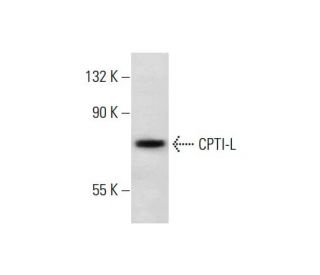


Y79 Cell Lysate: sc-2240
- 500 µg protein in 200 µl SDS-PAGE Western blotting buffer
- human whole cell lysate; retinoblastoma cells
- whole cell lysate provided as Western blotting positive control
- should be stored at -20°C and repeated freezing and thawing should be minimized
- sample vial should be placed at 95° C for up to 5 minutes, once prior to use

QUICK LINKS
SEE ALSO...
Y79 Cell Lysate, derived from a human retinoblastoma cell line, is extensively used in scientific research to investigate the molecular mechanisms underlying retinal cancer and neuronal differentiation. This lysate is rich in proteins, nucleic acids, and other cellular components that reflect the biochemical environment of retinoblastoma cells. Researchers utilize Y79 Cell Lysate to study the RB1 gene pathway, critical in regulating cell cycle progression and tumor suppression. Through techniques such as western blotting, immunoprecipitation, and proteomics, scientists can analyze the phosphorylation states and interactions of proteins involved in cell cycle control and apoptosis. Additionally, Y79 Cell Lysate is valuable for examining the role of signaling pathways such as Wnt, Notch, and Hedgehog, which are crucial in both cancer development and neuronal differentiation. This lysate serves as a model to test the effects of various chemical modulators on gene expression and protein activity, providing insights into the cellular processes that drive retinoblastoma progression. Moreover, it aids in the identification of novel biomarkers and potential targets for further research. The comprehensive application of Y79 Cell Lysate in these studies underscores its significance in advancing our understanding of cancer biology and neurogenesis.
Y79 Cell Lysate References:
- The architectural transcription factor high mobility group I(Y) participates in photoreceptor-specific gene expression. | Chau, KY., et al. 2000. J Neurosci. 20: 7317-24. PMID: 11007889
- The inherited blindness associated protein AIPL1 interacts with the cell cycle regulator protein NUB1. | Akey, DT., et al. 2002. Hum Mol Genet. 11: 2723-33. PMID: 12374762
- Comparative analysis of tumorbiology and CD133 positivity in primary and recurrent pancreatic ductal adenocarcinoma. | Welsch, T., et al. 2009. Clin Exp Metastasis. 26: 701-11. PMID: 19488831
- Treatment with connexin 46 siRNA suppresses the growth of human Y79 retinoblastoma cell xenografts in vivo. | Burr, DB., et al. 2011. Exp Eye Res. 92: 251-9. PMID: 21320488
- Role of B lymphoma Mo-MLV insertion region 1 in the oncogenic behavior of retinoblastomas. | Ren, R., et al. 2013. Mol Vis. 19: 561-74. PMID: 23559850
- Long Noncoding RNA LINC00202 Promotes Tumor Progression by Sponging miR-3619-5p in Retinoblastoma. | Yan, G., et al. 2019. Cell Struct Funct. 44: 51-60. PMID: 30905893
Ordering Information
| Product Name | Catalog # | UNIT | Price | Qty | FAVORITES | |
Y79 Cell Lysate | sc-2240 | 500 µg/200 µl | $120.00 |