
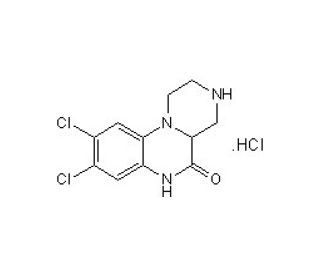

WAY 161503 hydrochloride (CAS 276695-22-8)
QUICK LINKS
WAY 161503 hydrochloride is primarily used in neuroscience research to investigate the role of serotonin receptors, specifically the 5-HT2C receptor, in various behavioral and physiological processes. This compound acts as a selective agonist for the 5-HT2C receptor, which may be useful for studying receptor function and its implications in mood regulation, appetite, and anxiety. Researchers utilize WAY 161503 hydrochloride to better understand the modulation of serotonin pathways and their impact on behavior and neural activity. The insights gained from studies using WAY 161503 hydrochloride contribute to a deeper understanding of neurotransmitter systems and their connections to behavioral outcomes. Additionally, this compound helps in mapping the effects of serotonin receptor activation across different brain regions, providing valuable data for neuroscientific investigations.
WAY 161503 hydrochloride (CAS 276695-22-8) References
- Antiobesity-like effects of the 5-HT2C receptor agonist WAY-161503. | Rosenzweig-Lipson, S., et al. 2006. Brain Res. 1073-1074: 240-51. PMID: 16430874
- Aversive stimulus properties of the 5-HT2C receptor agonist WAY 161503 in rats. | Mosher, TM., et al. 2006. Neuropharmacology. 51: 641-50. PMID: 16844150
- Differential effects of 5-HT2C receptor activation by WAY 161503 on nicotine-induced place conditioning and locomotor activity in rats. | Hayes, DJ., et al. 2009. Behav Brain Res. 197: 323-30. PMID: 18805442
- Effect of serotonergic anorectics on food intake and induction of Fos in brain of mice with disruption of melanocortin 3 and/or 4 receptors. | Rowland, NE., et al. 2010. Pharmacol Biochem Behav. 97: 107-11. PMID: 20347864
- Serotonin-induced brain glycogenolysis in rainbow trout (Oncorhynchus mykiss). | Pérez-Maceira, JJ., et al. 2012. J Exp Biol. 215: 2969-79. PMID: 22875766
- Food intake inhibition in rainbow trout induced by activation of serotonin 5-HT2C receptors is associated with increases in POMC, CART and CRF mRNA abundance in hypothalamus. | Pérez-Maceira, JJ., et al. 2016. J Comp Physiol B. 186: 313-21. PMID: 26832922
- Increased alternate splicing of Htr2c in a mouse model for Prader-Willi syndrome leads disruption of 5HT2C receptor mediated appetite. | Garfield, AS., et al. 2016. Mol Brain. 9: 95. PMID: 27931246
- Serotonin Regulates the Firing of Principal Cells of the Subiculum by Inhibiting a T-type Ca2+ Current. | Petersen, AV., et al. 2017. Front Cell Neurosci. 11: 60. PMID: 28326015
- Proneurogenic Effects of Trazodone in Murine and Human Neural Progenitor Cells. | Bortolotto, V., et al. 2017. ACS Chem Neurosci. 8: 2027-2038. PMID: 28636360
- Quinoxalinone as a Privileged Platform in Drug Development. | Shi, L., et al. 2018. Mini Rev Med Chem. 18: 392-413. PMID: 29090665
- Nucleus of the Solitary Tract Serotonin 5-HT2C Receptors Modulate Food Intake. | D'Agostino, G., et al. 2018. Cell Metab. 28: 619-630.e5. PMID: 30146485
- Ligand-directed serotonin 5-HT2C receptor desensitization and sensitization. | Felsing, DE., et al. 2019. Eur J Pharmacol. 848: 131-139. PMID: 30689993
- Modulation of neurological pathways by Salvia officinalis and its dependence on manufacturing process and plant parts used. | Tober, C. and Schoop, R. 2019. BMC Complement Altern Med. 19: 128. PMID: 31196061
- Modulation of the Tryptophan Hydroxylase 1/Monoamine Oxidase-A/5-Hydroxytryptamine/5-Hydroxytryptamine Receptor 2A/2B/2C Axis Regulates Biliary Proliferation and Liver Fibrosis During Cholestasis. | Kyritsi, K., et al. 2020. Hepatology. 71: 990-1008. PMID: 31344280
Ordering Information
| Product Name | Catalog # | UNIT | Price | Qty | FAVORITES | |
WAY 161503 hydrochloride, 5 mg | sc-204392 | 5 mg | $94.00 | |||
WAY 161503 hydrochloride, 25 mg | sc-204392A | 25 mg | $376.00 |