
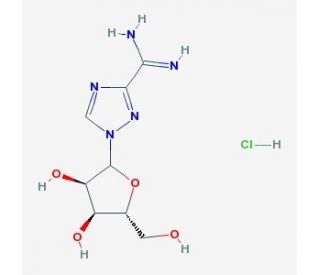

Viramidine Hydrochloride (CAS 40372-00-7)
QUICK LINKS
Viramidine hydrochloride is a synthetic nucleoside analogue designed to enhance the targeting of antiviral activity to the liver. Its structure allows for efficient uptake by liver cells due to the high activity of the enzyme adenosine deaminase in this organ. Once inside the liver cells, viramidine is metabolized by adenosine deaminase into its active form. The primary mechanism of action involves the inhibition of inosine monophosphate dehydrogenase (IMPDH), a key enzyme in the guanine nucleotide biosynthesis pathway. This inhibition leads to a decreased synthesis of guanine nucleotides, which are crucial for viral RNA and DNA synthesis, thereby exerting an antiviral effect. In scientific research, viramidine hydrochloride has been studied for its antiviral properties against a range of RNA viruses. Researchers have focused on its ability to concentrate in the liver, which is thought to reduce systemic side effects. Further research has explored the molecular dynamics and computational modeling of viramidine interactions with viral RNA polymerase and IMPDH, providing deeper insight into its mechanism of action at the molecular level. These studies contribute to a broader understanding of how nucleoside analogues can be tailored for more effective antiviral strategies.
Ordering Information
| Product Name | Catalog # | UNIT | Price | Qty | FAVORITES | |
Viramidine Hydrochloride, 5 mg | sc-213158 | 5 mg | $304.00 |