
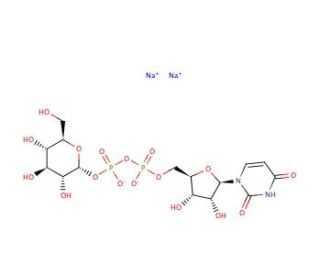

Uridine 5′-diphosphoglucose disodium salt from Saccharomyces cerevisiae (CAS 28053-08-9)
QUICK LINKS
Uridine 5′-diphosphoglucose disodium salt from Saccharomyces cerevisiae functions as a substrate in biochemical reactions involving glycosyltransferases. It serves as a donor of glucose residues in the biosynthesis of glycogen, starch, and other polysaccharides. Uridine 5′-diphosphoglucose disodium salt from Saccharomyces cerevisiae′s mechanism of action involves participating in the transfer of glucose to acceptor molecules, leading to the formation of glycosidic bonds. This process is for the synthesis of complex carbohydrates and plays a role in the regulation of energy storage and metabolism. Uridine 5′-diphosphoglucose disodium salt is involved in the modification of proteins and lipids through glycosylation, contributing to the structural and functional diversity of biomolecules. Its presence is necessary for the biosynthesis of glycoconjugates, which are involved in various cellular processes and signaling pathways.
Uridine 5′-diphosphoglucose disodium salt from Saccharomyces cerevisiae (CAS 28053-08-9) References
- The in vitro effect of ivermectin on the activity of trehalose synthesis pathway enzymes and their mRNA expression in the muscle of adult female Ascaris suum (Nematoda). | Dmitryjuk, M., et al. 2014. ScientificWorldJournal. 2014: 936560. PMID: 25405239
Ordering Information
| Product Name | Catalog # | UNIT | Price | Qty | FAVORITES | |
Uridine 5′-diphosphoglucose disodium salt from Saccharomyces cerevisiae, 10 mg | sc-222402 | 10 mg | $27.00 | |||
Uridine 5′-diphosphoglucose disodium salt from Saccharomyces cerevisiae, 25 mg | sc-222402A | 25 mg | $34.00 |