
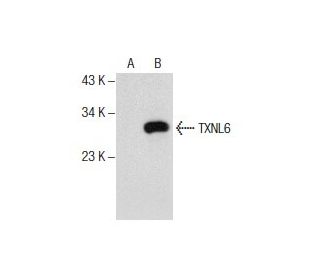


TXNL6 Antibody (3-RE25): sc-135593
- TXNL6 Antibody (3-RE25) is a mouse monoclonal IgG2b κ TXNL6 antibody provided at 100 µg/ml
- raised against recombinant TXNL6 protein of human origin
- recommended for detection of TXNL6 of human origin by WB, IP and ELISA
- At present, we have not yet completed the identification of the preferred secondary detection reagent(s) for TXNL6 Antibody (3-RE25). This work is in progress.

QUICK LINKS
TXNL6 Antibody (3-RE25) is a mouse monoclonal IgG2b kappa light chain antibody that detects TXNL6 protein of human origin by western blotting (WB), immunoprecipitation (IP), and enzyme-linked immunosorbent assay (ELISA). TXNL6 (3-RE25) antibody is available as a non-conjugated format. TXNL6, also known as thioredoxin-like 6, nucleoredoxin-like 1, or rod-derived cone viability factor, is a 212 amino acid protein located in the nuclear outer membrane and belongs to the nucleoredoxin family. TXNL6 contains a thioredoxin domain, which is crucial for cellular redox regulation. TXNL6 protects cone photoreceptor cells from photooxidative stress-induced apoptosis, potentially in collaboration with NFκB. Mutations in TXNL6 have been linked to age-related declines in cone and rod function, contributing to rod-cone dystrophies such as retinitis pigmentosa, a hereditary retinal disease that can lead to blindness. Given TXNL6′s protective role in retinal health, TXNL6 is considered a promising target for developing therapeutic strategies aimed at treating human retinal neurodegenerative diseases. TXNL6 is located on human chromosome 19, highlighting significance in genetic studies related to vision disorders.
Alexa Fluor® is a trademark of Molecular Probes Inc., OR., USA
LI-COR® and Odyssey® are registered trademarks of LI-COR Biosciences
TXNL6 Antibody (3-RE25) References:
- Identification and characterization of rod-derived cone viability factor. | Léveillard, T., et al. 2004. Nat Genet. 36: 755-9. PMID: 15220920
- [Neuroprotection of photoreceptor cells in rod-cone dystrophies: from cell therapy to cell signalling]. | Sahel, JA., et al. 2005. C R Biol. 328: 163-8. PMID: 15771002
- Disease-associated variants of the rod-derived cone viability factor (RdCVF) in Leber congenital amaurosis. Rod-derived cone viability variants in LCA. | Hanein, S., et al. 2006. Adv Exp Med Biol. 572: 9-14. PMID: 17249548
- Rod-derived Cone Viability Factor-2 is a novel bifunctional-thioredoxin-like protein with therapeutic potential. | Chalmel, F., et al. 2007. BMC Mol Biol. 8: 74. PMID: 17764561
- Thioredoxin-like 6 protects retinal cell line from photooxidative damage by upregulating NF-kappaB activity. | Wang, XW., et al. 2008. Free Radic Biol Med. 45: 336-44. PMID: 18474255
- Functional cone rescue by RdCVF protein in a dominant model of retinitis pigmentosa. | Yang, Y., et al. 2009. Mol Ther. 17: 787-95. PMID: 19277021
- The thioredoxin-like protein rod-derived cone viability factor (RdCVFL) interacts with TAU and inhibits its phosphorylation in the retina. | Fridlich, R., et al. 2009. Mol Cell Proteomics. 8: 1206-18. PMID: 19279044
- The homeobox gene CHX10/VSX2 regulates RdCVF promoter activity in the inner retina. | Reichman, S., et al. 2010. Hum Mol Genet. 19: 250-61. PMID: 19843539
- The disruption of the rod-derived cone viability gene leads to photoreceptor dysfunction and susceptibility to oxidative stress. | Cronin, T., et al. 2010. Cell Death Differ. 17: 1199-210. PMID: 20139892
Ordering Information
| Product Name | Catalog # | UNIT | Price | Qty | FAVORITES | |
TXNL6 Antibody (3-RE25) | sc-135593 | 100 µg/ml | $339.00 |