
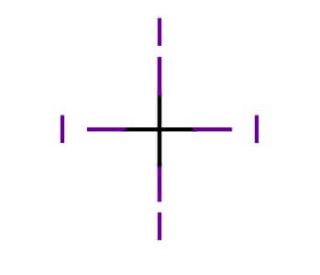

Tetraiodomethane (CAS 507-25-5)
QUICK LINKS
Tetraiodomethane is often utilized in research focused on crystallography and molecular structure analysis due to its heavy atom content, which facilitates X-ray diffraction studies. This compound is particularly useful in determining the structure of organic molecules by providing high electron density, which enhances the diffraction pattern clarity. Research involving Tetraiodomethane includes its application as a contrast agent in imaging techniques, aiding in the visualization of molecular arrangements and interactions. Studies also explore its reactivity and stability under various conditions, which is for its safe handling and effective use in experimental setups. Additionally, Tetraiodomethane′s role in the synthesis of other iodine-containing compounds is investigated, broadening its utility in chemical synthesis and materials science.
Tetraiodomethane (CAS 507-25-5) References
- The First Efficient Iodination of Unactivated Aliphatic Hydrocarbons. | Schreiner, PR., et al. 1999. Angew Chem Int Ed Engl. 38: 2786-2788. PMID: 10508383
- Normal halogen dependence of 13 C NMR chemical shifts of halogenomethanes revisited at the four-component relativistic level. | Samultsev, DO., et al. 2016. Magn Reson Chem. 54: 787-792. PMID: 27168025
- New Promises from an Old Friend: Iodine-Rich Compounds as Prospective Energetic Biocidal Agents. | Chang, J., et al. 2021. Acc Chem Res. 54: 332-343. PMID: 33300791
- Effect of chloral hydrate and related compounds on the metabolism of lactic and pyruvic acid by rumen bacteria. | Quaghebeur, D. and Oyaert, W. 1971. Zentralbl Veterinarmed A. 18: 64-74. PMID: 4993349
- Macroheterocyclic μ-Nitrido- and μ-Carbido Dimeric Iron and Ruthenium Complexes as a Molecular Platform for Modeling Oxidative Enzymes (A Review) | , et al. (2022). Russian Journal of Inorganic Chemistry. volume 67,: pages 276–305.
- A phosphorus nuclear magnetic resonance spectroscopic study of the conversion of hydroxy groups into iodo groups in carbohydrates using the iodine–triphenylphosphine–imidazole reagent | Per J. Garegg, Tor Regberg, Jacek Stawiński and Roger Strömberg. 1987,. J. Chem. Soc., Perkin Trans. 2,: 271-274.
- Synthesis and chemistry of perfluoro-2-iodo-2-methyl-alkanes | A Probst, K Raab, K Ulm, K Von Werner - Journal of fluorine chemistry, 1987 - Elsevier. November 1987,. Journal of Fluorine Chemistry. Volume 37, Issue 2,: Pages 223-245.
- Halogen- und Pseudohalogen-substituierte Penta- und Tetramethylcyclopentadine | and Peter Jutzi, Karl-Heinz Schwartzen, Andreas Mix. April 1990. Chemische Berichte. Volume123, Issue4: Pages 837-840.
- Dimerization of a 3-Substituted Oxindole at C-3 and Its Application to the Synthesis of (.+-.)-Folicanthine | Cheng-Lin Fang, Stephen Horne, Nicholas Taylor, and Russell Rodrigo. 1994,. J. Am. Chem. Soc. 116, 21,: 9480–9486.
- Iodoform, a New Reagent in the Todd-Atherton Reaction | Grażyna Mielniczak and & Dr. Andrzej Bopusiński. 2003 -. Synthetic Communications. Volume 33, Issue 22: Pages 3851-3859.
Ordering Information
| Product Name | Catalog # | UNIT | Price | Qty | FAVORITES | |
Tetraiodomethane, 5 g | sc-229422 | 5 g | $72.00 |