
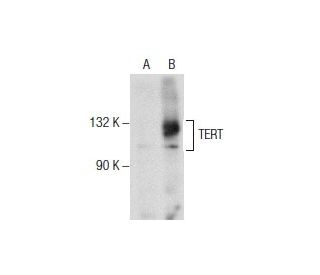


TERT (h): 293T Lysate: sc-371923
- human TERT transfected 293T lysate
- 100 µg protein in 200 µl SDS-PAGE buffer; suitable as Western Blotting control for TERT antibodies
- Suitable control antibody: TERT Antibody (C-12): sc-377511 is recommended as control antibody for monitoring of TERT expression knockdown by Western blotting or immunofluorescence
- should be stored at -20° C and repeated freezing and thawing should be minimized
- sample vial should be boiled once prior to use
- non-transfected control 293T lysate (sc-117752)

QUICK LINKS
TERT (h): 293T Lysate is derived from the human embryonic kidney 293T cell line, which has been genetically modified to express the human telomerase reverse transcriptase (TERT). TERT is a catalytic subunit of the enzyme telomerase, essential for maintaining telomere length and integrity in eukaryotic cells. The 293T cell line is renowned for its high transfection efficiency and robust protein production, making it an ideal system for producing TERT lysates. In research, TERT (h): 293T Lysate is used to study the molecular mechanisms of telomere maintenance and the role of telomerase in cellular aging and genome stability. TERT functions by adding telomeric repeats to the ends of chromosomes, counteracting telomere shortening that occurs during DNA replication. Researchers utilize this lysate in various assays, such as Western blotting, immunoprecipitation, and telomerase activity assays (TRAP assays), to analyze TERT expression, post-translational modifications, and interactions with other telomerase components like the RNA component of telomerase (TERC). Additionally, TERT (h): 293T Lysate is employed in chromatin immunoprecipitation (ChIP) assays to explore the recruitment of TERT to telomeres and its regulatory factors. This lysate is also valuable in studying the effects of TERT on cellular processes such as proliferation, DNA repair, and stress responses. By using TERT (h): 293T Lysate, researchers gain insights into the regulatory networks involving telomerase, enhancing our understanding of telomere biology and its impact on cellular homeostasis and longevity.
Ordering Information
| Product Name | Catalog # | UNIT | Price | Qty | FAVORITES | |
TERT (h): 293T Lysate | sc-371923 | 100 µg/200 µl | $236.00 |