
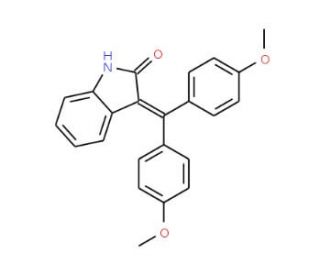

TAS-301 (CAS 193620-69-8)
LINK RAPIDI
TAS-301 è un composto ampiamente esplorato nel campo della ricerca sulla biologia e patologia vascolare grazie al suo impatto sulla migrazione delle cellule muscolari lisce. Questa piccola molecola è particolarmente significativa nelle indagini sul processo di iperplasia intimale. Inibendo la migrazione delle cellule muscolari lisce, TAS-301 è diventato uno strumento utile per studiare i meccanismi cellulari che contribuiscono al restringimento dei vasi sanguigni e i conseguenti effetti sul flusso sanguigno. Inoltre, è coinvolto in ricerche volte a comprendere le cause alla base dell'aterosclerosi e della restenosi, fornendo approfondimenti sulle vie molecolari correlate a queste condizioni. L'azione di TAS-301 nella modulazione dei processi cellulari si estende anche alla ricerca sulla formazione di costrutti tissutali stabili e funzionali.
TAS-301 (CAS 193620-69-8) Referenze
- Effetto inibitorio di TAS-301, un nuovo regolatore del rimodellamento costrittivo sintetizzato, sul restringimento dopo lesione da overstretch con palloncino dell'arteria coronaria suina. | Sasaki, E., et al. 2000. J Pharmacol Exp Ther. 295: 1043-50. PMID: 11082439
- TAS-301 blocca l'afflusso di calcio operato dai recettori e inibisce la proliferazione delle cellule muscolari lisce vascolari di ratto indotta dal fattore di crescita dei fibroblasti di base e dal fattore di crescita derivato dalle piastrine. | Sasaki, E., et al. 2000. Jpn J Pharmacol. 84: 252-8. PMID: 11138725
- Tas-301, un nuovo inibitore sintetico dell'ispessimento neointimale dopo lesione da palloncino, inibisce la trasduzione del segnale calcio-dipendente e la riorganizzazione citoscheletrica. | Sasaki, E., et al. 2001. Pharmacology. 63: 17-27. PMID: 11408828
- Miglioramento della solubilità e della biodisponibilità orale di un farmaco scarsamente idrosolubile, TAS-301, mediante il suo assorbimento per fusione su un silicato di calcio poroso. | Kinoshita, M., et al. 2002. J Pharm Sci. 91: 362-70. PMID: 11835196
- Formazione di farmaci amorfi fisicamente stabili mediante macinazione con Neusilin. | Gupta, MK., et al. 2003. J Pharm Sci. 92: 536-51. PMID: 12587115
- Effetto degli adsorbenti sull'assorbimento del lansoprazolo con tensioattivi. | Ito, Y., et al. 2005. Int J Pharm. 289: 69-77. PMID: 15652200
- Formazione di una fase amorfa fisicamente stabile di ibuprofene mediante macinazione allo stato solido con caolino. | Mallick, S., et al. 2008. Eur J Pharm Biopharm. 68: 346-51. PMID: 17669640
- Confronto tra la capacità di vari silicati farmaceutici di amorfizzare e migliorare la dissoluzione dell'indometacina in seguito a co-macinazione. | Bahl, D., et al. 2008. Pharm Dev Technol. 13: 255-69. PMID: 18484494
- Preparazione e caratterizzazione di miscele co-macinate di aceclofenac e neusilina US2 per migliorare la dissoluzione dell'aceclofenac. | Vadher, AH., et al. 2009. AAPS PharmSciTech. 10: 606-14. PMID: 19444620
- Sviluppo e valutazione di compresse disintegrabili per via orale (ODT) contenenti granuli di Ibuprofene preparati mediante estrusione a caldo. | Gryczke, A., et al. 2011. Colloids Surf B Biointerfaces. 86: 275-84. PMID: 21592751
- Approccio one-pot catalizzato da palladio a 3-(diarilmetilene)ossindoli da triflato di propiolamidoarile. | Lee, D., et al. 2015. Molecules. 20: 14022-32. PMID: 26247925
- Tecniche di miglioramento della biodisponibilità per farmaci e terapie scarsamente solubili in acqua. | Bhalani, DV., et al. 2022. Biomedicines. 10: PMID: 36140156
- TAS-301, un inibitore della migrazione e della proliferazione delle cellule muscolari lisce, inibisce l'ispessimento intimale dopo un trauma da palloncino nelle arterie carotidi di ratto. | Muranaka, Y., et al. 1998. J Pharmacol Exp Ther. 285: 1280-6. PMID: 9618434
Informazioni ordini
| Nome del prodotto | Codice del prodotto | UNITÀ | Prezzo | Quantità | Preferiti | |
TAS-301, 10 mg | sc-215942 | 10 mg | $143.00 |