
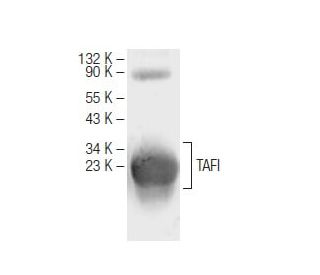

TAFI Antibody (19E2): sc-52241
- TAFI Antibody (19E2) is a mouse monoclonal IgG1 provided at 100 µg/ml
- raised against thrombin activatable fibrinolysis inhibitor of human origin
- recommended for detection of TAFI of human origin by WB and IP
- At present, we have not yet completed the identification of the preferred secondary detection reagent(s) for TAFI Antibody (19E2). This work is in progress.

QUICK LINKS
SEE ALSO...
TAFI Antibody (19E2) is a mouse monoclonal IgG1 antibody that detects Thrombin-activatable fibrinolysis inhibitor (TAFI) in human samples through western blotting (WB) and immunoprecipitation (IP) applications. TAFI is a crucial regulator of fibrinolysis, synthesized in the liver and secreted into the plasma as an inactive zymogen. Upon activation by thrombin, TAFI exerts its function by cleaving C-terminal arginine or lysine residues from various biologically active peptides, including kinins and anaphylatoxins, which plays a significant role in modulating inflammatory responses and coagulation processes. The ability of TAFI to remove lysine residues from fibrin is particularly important, as this action inhibits the conversion of plasminogen to plasmin, thereby slowing down the dissolution of fibrin clots. This regulatory mechanism is vital for maintaining hemostatic balance; however, elevated TAFI levels in the bloodstream are associated with an increased risk of venous thrombosis, while deficiencies can exacerbate bleeding disorders, such as hemophilia A and B. Additionally, decreased TAFI levels are often observed in patients with chronic liver disease, highlighting TAFI′s importance in both coagulation and liver function. Anti-TAFI antibody (19E2) is an essential tool for researchers studying the complex interplay of coagulation and fibrinolysis in various pathological conditions.
Ordering Information
| Product Name | Catalog # | UNIT | Price | Qty | FAVORITES | |
TAFI Antibody (19E2) | sc-52241 | 100 µg/ml | $322.00 |