
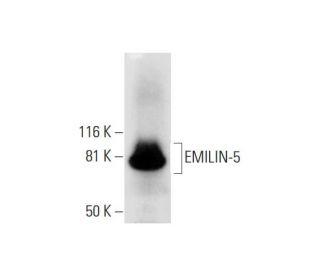


T24 Cell Lysate: sc-2292
- 500 µg protein in 200 µl SDS-PAGE Western blotting buffer
- human whole cell lysate; urinary bladder carcinoma cells
- whole cell lysate provided as Western blotting positive control
- should be stored at -20°C and repeated freezing and thawing should be minimized
- sample vial should be placed at 95° C for up to 5 minutes, once prior to use

QUICK LINKS
SEE ALSO...
T24 Cell Lysate is derived from T24 cells, a human urinary bladder carcinoma cell line established from a transitional cell carcinoma patient. This lysate is extensively used in cancer research to explore the molecular mechanisms underlying bladder cancer progression and metastasis. T24 cells harbor characteristic genetic mutations, including alterations in the HRAS gene, making the lysate valuable for studying oncogenic signaling pathways. Researchers utilize T24 Cell Lysate to analyze the expression, phosphorylation, and interactions of key proteins involved in critical signaling cascades such as the MAPK/ERK, PI3K/AKT, and Wnt/β-catenin pathways using techniques like western blotting, immunoprecipitation, and mass spectrometry. This lysate is particularly useful for investigating the molecular mechanisms of cell proliferation, survival, and epithelial-mesenchymal transition (EMT), which are essential for tumor invasion and metastasis. Additionally, T24 Cell Lysate aids in studying the effects of various chemical compounds on these signaling pathways, providing insights into the cellular processes driving bladder cancer progression. By comparing T24 lysates with those from normal urothelial cells, scientists can identify specific molecular alterations associated with bladder carcinoma, advancing research in cancer biology and facilitating the identification of potential molecular targets for further exploration in the field of oncology.
T24 Cell Lysate References:
- Hyperphosphorylation of pRb: a mechanism for RB tumour suppressor pathway inactivation in bladder cancer. | Chatterjee, SJ., et al. 2004. J Pathol. 203: 762-70. PMID: 15221935
- Overexpression of alpha-defensin is associated with bladder cancer invasiveness. | Holterman, DA., et al. 2006. Urol Oncol. 24: 97-108. PMID: 16520271
- Altered patterns of RB expression define groups of soft tissue sarcoma patients with distinct biological and clinical behavior. | Polsky, D., et al. 2006. Histol Histopathol. 21: 743-52. PMID: 16598673
- Proteomic profiling of mammary carcinomas identifies C7orf24, a gamma-glutamyl cyclotransferase, as a potential cancer biomarker. | Gromov, P., et al. 2010. J Proteome Res. 9: 3941-53. PMID: 20527979
- AKT serine/threonine protein kinase modulates baicalin-triggered autophagy in human bladder cancer T24 cells. | Lin, C., et al. 2013. Int J Oncol. 42: 993-1000. PMID: 23354080
- Lab on a chip for multiplexed immunoassays to detect bladder cancer using multifunctional dielectrophoretic manipulations. | Chuang, CH., et al. 2015. Lab Chip. 15: 3056-64. PMID: 26087450
- Immunosensor for the ultrasensitive and quantitative detection of bladder cancer in point of care testing. | Chuang, CH., et al. 2016. Biosens Bioelectron. 84: 126-32. PMID: 26777732
- An ultrasensitive microchip electrophoresis assay based on separation-assisted double cycling signal amplification strategy for microRNA detection in cell lysate. | Wei, K., et al. 2018. Analyst. 143: 1468-1474. PMID: 29473062
- A novel multiplex signal amplification strategy based on microchip electrophoresis platform for the improved separation and detection of microRNAs. | Wei, K., et al. 2018. Talanta. 189: 437-441. PMID: 30086943
- The Association Between Ascorbate and the Hypoxia-Inducible Factors in Human Renal Cell Carcinoma Requires a Functional Von Hippel-Lindau Protein. | Wohlrab, C., et al. 2018. Front Oncol. 8: 574. PMID: 30555801
- Metabolic profile and structure-activity relationship of resveratrol and its analogs in human bladder cancer cells. | Yang, Y., et al. 2019. Cancer Manag Res. 11: 4631-4642. PMID: 31191024
- Ascorbate modulates the hypoxic pathway by increasing intracellular activity of the HIF hydroxylases in renal cell carcinoma cells. | Wohlrab, C., et al. 2019. Hypoxia (Auckl). 7: 17-31. PMID: 31192266
- Label free Impedimetric Immunosensor for effective bladder Cancer detection in clinical urine samples. | Shaikh, MO., et al. 2020. Biomed Microdevices. 22: 45. PMID: 32607868
- TRIM38 triggers the uniquitination and degradation of glucose transporter type 1 (GLUT1) to restrict tumor progression in bladder cancer. | Wang, X., et al. 2021. J Transl Med. 19: 508. PMID: 34906161
- Comparison of the binding of the human papillomavirus type 16 and cottontail rabbit papillomavirus E7 proteins to the retinoblastoma gene product. | Haskell, KM., et al. 1993. J Gen Virol. 74 (Pt 1): 115-9. PMID: 8380832
Ordering Information
| Product Name | Catalog # | UNIT | Price | Qty | FAVORITES | |
T24 Cell Lysate | sc-2292 | 500 µg/200 µl | $120.00 |