
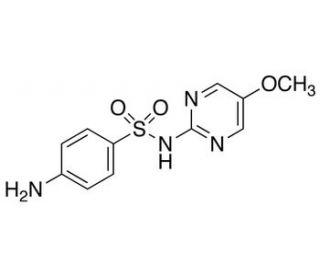

Sulfameter (CAS 651-06-9)
QUICK LINKS
Sulfameter, with the CAS number 651-06-9, is a sulfonamide antibiotic chemically known as Methoxysulfadiazine. It functions by inhibiting the bacterial synthesis of folic acid, a vital component for bacterial growth and replication. Sulfameter achieves this by competitively inhibiting the enzyme dihydropteroate synthase (DHPS), which is crucial in the biosynthetic pathway that produces dihydrofolic acid from para-aminobenzoic acid (PABA). By mimicking PABA, Sulfameter binds to DHPS, preventing the enzyme from catalyzing its normal substrate and thus blocking the production of folic acid. This inhibition disrupts the synthesis of nucleic acids and proteins necessary for bacterial cell growth and division. In research, Sulfameter has been utilized to study its antibacterial mechanism of action extensively, providing insights into the strategies bacteria employ to resist such mechanisms. For instance, studies have focused on the genetic mutations that confer resistance to sulfonamides, including alterations in the DHPS enzyme that reduce the efficacy of the sulfonamide binding. This research is crucial for understanding bacterial resistance pathways and for the development of new methods to counteract these defenses, thereby enhancing the effectiveness of sulfonamide-based compounds in controlling bacterial populations.
Sulfameter (CAS 651-06-9) References
- Desolvation kinetics of sulfameter solvates. | Khawam, A. and Flanagan, DR. 2008. J Pharm Sci. 97: 2160-75. PMID: 17975809
- Investigation of sulfonamide, tetracycline, and quinolone antibiotics in vegetable farmland soil in the Pearl River Delta area, southern China. | Li, YW., et al. 2011. J Agric Food Chem. 59: 7268-76. PMID: 21623636
- Hirshfeld surface analysis of sulfameter (polymorph III), sulfameter dioxane monosolvate and sulfameter tetrahydrofuran monosolvate, all at 296 K. | Tailor, SM. and Patel, UH. 2015. Acta Crystallogr C Struct Chem. 71: 944-53. PMID: 26524165
- Density functional theory study of direct and indirect photodegradation mechanisms of sulfameter. | Shah, S. and Hao, C. 2016. Environ Sci Pollut Res Int. 23: 19921-30. PMID: 27424205
- Occurrence and removal of sulfonamide antibiotics and antibiotic resistance genes in conventional and advanced drinking water treatment processes. | Hu, Y., et al. 2018. J Hazard Mater. 360: 364-372. PMID: 30130695
- Health risks associated with sulfonamide and quinolone residues in cultured Chinese mitten crab (Eriocheir sinensis) in China. | Fang, L., et al. 2021. Mar Pollut Bull. 165: 112184. PMID: 33621905
- Identification and characterization of Fe3O4/peroxodisulfate advanced oxidation products from sulfameter. | Du, J., et al. 2022. J Environ Sci (China). 122: 227-235. PMID: 35717087
- Selected ssDNA aptamers-graphene oxide-based fluorescent biosensor to detect sulfameter in milk. | He, Y., et al. 2023. Luminescence. 38: 518-526. PMID: 36882911
- Antimalarial activity of oxidized starch and cellulose imine derivatives. | Ohara, MT., et al. 1995. Boll Chim Farm. 134: 522-7. PMID: 8527105
Ordering Information
| Product Name | Catalog # | UNIT | Price | Qty | FAVORITES | |
Sulfameter, 100 mg | sc-212975 | 100 mg | $337.00 |