
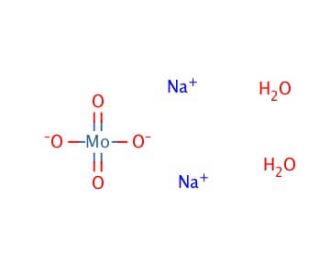

Sodium molybdate dihydrate (CAS 10102-40-6)
QUICK LINKS
Sodium molybdate dihydrate is extensively used in chemical and environmental research due to its role as a source of molybdenum ions. It serves as a critical micronutrient in studies of plant nutrition, where it facilitates the understanding of molybdenum′s role in enzymatic processes such as nitrogen fixation and the reduction of nitrates in plants. In these applications, sodium molybdate dihydrate is added to soil or hydroponic solutions to assess its impact on plant growth and health, particularly in understanding how trace elements influence physiological processes. Beyond its agricultural implications, this chemical is employed in corrosion inhibition studies. It acts as an anodic corrosion inhibitor, particularly in water treatment systems, helping to prevent the corrosion of metals in pipes and boilers. In the field of materials science, researchers use sodium molybdate dihydrate to develop and enhance the properties of alloys and steels. Additionally, its role as a catalyst in the petrochemical industry is examined, particularly in the oxidation of organic compounds. This broad spectrum of applications showcases sodium molybdate dihydrate′s utility in advancing our understanding of both biological and industrial processes, underscoring its versatility and importance in scientific research across various disciplines.
Sodium molybdate dihydrate (CAS 10102-40-6) References
- 90-Day subchronic toxicity study of sodium molybdate dihydrate in rats. | Murray, FJ., et al. 2014. Regul Toxicol Pharmacol. 70: 579-88. PMID: 24041747
- Developmental toxicity study of sodium molybdate dihydrate administered in the diet to Sprague Dawley rats. | Jay Murray, F., et al. 2014. Reprod Toxicol. 49: 202-8. PMID: 25236591
- A two-generation reproductive toxicity study of sodium molybdate dihydrate administered in drinking water or diet to Sprague-Dawley rats. | Murray, FJ., et al. 2019. Reprod Toxicol. 84: 75-92. PMID: 30503857
- Embellishing 2-D MoS2 Nanosheets on Lotus Thread Devices for Enhanced Hydrophobicity and Antimicrobial Activity. | Selvam, GS., et al. 2022. ACS Omega. 7: 24606-24613. PMID: 35874217
- Sodium molybdate dihydrate does not exhibit developmental or reproductive toxicity in Sprague-Dawley rats maintained on a marginal copper diet. | Murray, FJ., et al. 2023. Reprod Toxicol. 120: 108442. PMID: 37473928
- OECD 414 supplementary prenatal developmental toxicity study of sodium molybdate dihydrate in the rat and benchmark dose evaluation. | Aveyard, L., et al. 2023. Reprod Toxicol. 120: 108443. PMID: 37473931
- Effects of sodium molybdate on the androgen receptor from the R3327 prostatic tumor. | Rowley, DR., et al. 1984. Endocrinology. 114: 1776-83. PMID: 6714164
- Action of glycerol and sodium molybdate in stabilization of the progesterone receptor from rat trophoblast. | Ogle, TF. 1983. J Biol Chem. 258: 4982-8. PMID: 6833286
- Reversible inhibition of estrogen receptor activation by molybdate. | Müller, RE., et al. 1982. J Biol Chem. 257: 1295-300. PMID: 7056718
- Molybdate interaction with the estrogen receptor: effects on estradiol binding and receptor activation. | Mauck, LA., et al. 1982. Biochemistry. 21: 1788-93. PMID: 7082647
Ordering Information
| Product Name | Catalog # | UNIT | Price | Qty | FAVORITES | |
Sodium molybdate dihydrate, 5 g | sc-203391 | 5 g | $35.00 | |||
Sodium molybdate dihydrate, 100 g | sc-203391A | 100 g | $65.00 | |||
Sodium molybdate dihydrate, 500 g | sc-203391B | 500 g | $295.00 |