
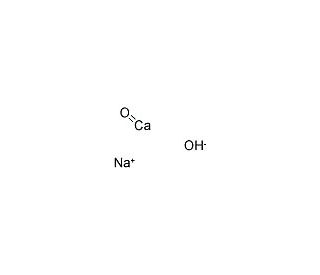

Soda lime (CAS 8006-28-8)
QUICK LINKS
Ammonium hydrogencitrate, with the chemical formula C6H7O7NH4, is an organic ammonium salt derived from citric acid, where one hydrogen atom is replaced by an ammonium ion. This compound is highly valued in analytical and environmental chemistry for its chelating properties, allowing it to form stable complexes with metal ions. This ability makes it crucial in water treatment processes, where it aids in the removal of metallic contaminants by binding to metal ions and preventing their precipitation. In research contexts, ammonium hydrogencitrate is extensively used to study metal ion transport and absorption due to its effective chelation, which offers a controlled environment for examining metal behavior in various systems, including biological ones. Additionally, it finds application in biochemistry as a component of buffer solutions, maintaining pH stability during enzymatic reactions and other sensitive biochemical processes. Its utility is further extended to the field of nanotechnology, where it serves as a stabilizing agent in the synthesis of nanoparticles, helping to prevent aggregation and ensuring the production of uniformly dispersed nanoparticles. This makes ammonium hydrogencitrate a versatile agent in scientific research, contributing significantly to advancements in environmental management, biochemistry, and materials science.
Soda lime (CAS 8006-28-8) References
- Dry soda lime markedly degrades sevoflurane during simulated inhalation induction. | Funk, W., et al. 1999. Br J Anaesth. 82: 193-8. PMID: 10364992
- Soda-lime dust contamination of breathing circuits. | Lauria, JI. 1975. Anesthesiology. 42: 628-9. PMID: 1130729
- Exposure to soda-lime dust in closed and semi-closed diving apparatus. | Neubauer, B., et al. 2000. Aviat Space Environ Med. 71: 1248-51. PMID: 11439725
- Personal CO2 scrubbing device for use in a disabled submarine. | Arieli, R., et al. 2009. Aviat Space Environ Med. 80: 561-4. PMID: 19522368
- Soil respiration in apple orchards, poplar plantations and adjacent grasslands in Artvin, Turkey. | Tufekcioglu, A., et al. 2009. J Environ Biol. 30: 815-20. PMID: 20143711
- Decomposition of volatile anesthetics in soda lime. | Fujii, K. 1997. Drug Metabol Drug Interact. 13: 261-70. PMID: 21568804
- Production of Soda Lime Glass Having Antibacterial Property for Industrial Applications. | Demirel, B. and Erol Taygun, M. 2020. Materials (Basel). 13: PMID: 33126734
- Revealing the surface structural cause of scratch formation on soda-lime-silica glass. | Roy, B., et al. 2022. Sci Rep. 12: 2681. PMID: 35177699
- Properties of Geopolymers Based on Metakaolin and Soda-Lime Waste Glass. | Kotsay, G. and Grabowski, P. 2023. Materials (Basel). 16: PMID: 37570094
- Soda lime adsorption of isoflurane and enflurane. | Grodin, WK., et al. 1985. Anesthesiology. 62: 60-4. PMID: 3966671
Ordering Information
| Product Name | Catalog # | UNIT | Price | Qty | FAVORITES | |
Soda lime, 500 g | sc-203268 | 500 g | $140.00 |