
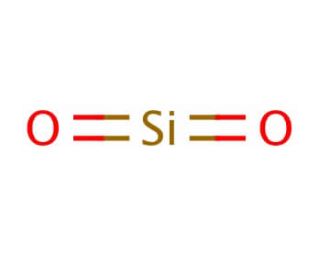

Sand (CAS 14808-60-7)
QUICK LINKS
Sand is a naturally abundant granular material composed primarily of finely divided rock and mineral particles, the most common constituent being quartz. Sand′s chemical and physical properties make it integral to various research fields, particularly in geology and environmental science. In geology, sand is used to study sedimentary processes and earth′s history through the analysis of particle size, composition, and layering, which can reveal past climatic conditions, geological events, and environmental changes. In environmental studies, sand serves as a medium in filtration systems for water purification, where its large surface area and the ability to retain pollutants play a crucial role. The mechanism of action in such applications involves physical trapping of particulate matter and adsorption of contaminants onto the sand particles. Furthermore, sand is employed in the research of hydraulic fracturing, a method used in the extraction of oil and gas, where its physical properties are crucial for propping open fractures in rock to allow hydrocarbons to flow more freely. Additionally, in the field of materials science, sand is fundamental in the creation of glass and concrete, providing insights into the properties required for manufacturing and the implications of different sand types on product quality and environmental sustainability.
Sand (CAS 14808-60-7) References
- Effect of thin silicon dioxide layers on resonant frequency in infrared metamaterials. | Shelton, DJ., et al. 2010. Opt Express. 18: 1085-90. PMID: 20173930
- Raman spectra of high- κ dielectric layers investigated with micro-Raman spectroscopy comparison with silicon dioxide. | Borowicz, P., et al. 2013. ScientificWorldJournal. 2013: 208081. PMID: 24072982
- Growth and etch rate study of low temperature anodic silicon dioxide thin films. | Ashok, A. and Pal, P. 2014. ScientificWorldJournal. 2014: 106029. PMID: 24672287
- [Research progress about the relationship between nanoparticles silicon dioxide and lung cancer]. | Dai, C., et al. 2014. Zhongguo Fei Ai Za Zhi. 17: 760-4. PMID: 25342044
- Toxic Effects of Nanostructured Silicon Dioxide on Multipotent Mesenchymal Stromal Cells. | Lykov, AP., et al. 2017. Bull Exp Biol Med. 163: 159-162. PMID: 28577099
- An Enhanced Soft Vibrotactile Actuator Based on ePVC Gel with Silicon Dioxide Nanoparticles. | Park, WH., et al. 2018. IEEE Trans Haptics. 11: 22-29. PMID: 29611810
- Dry inoculation methods for nonfat milk powder. | Liu, S., et al. 2019. J Dairy Sci. 102: 77-86. PMID: 30447977
- Microorganism adhesion using silicon dioxide: An experimental study. | Lozins, R., et al. 2020. Heliyon. 6: e03678. PMID: 32280796
- Occupational exposure to silicon dioxide and prevalence of chronic respiratory symptoms in the cement manufacturing industries: A review. | Rathebe, PC. 2023. J Public Health Res. 12: 22799036231204316. PMID: 37822998
- Silicon dioxide calculi in humans in the absence of silicate antacid medication. | Alpaugh, HB. and Johnson, FB. 1984. Scan Electron Microsc. 969-72. PMID: 6091262
Ordering Information
| Product Name | Catalog # | UNIT | Price | Qty | FAVORITES | |
Sand, 500 g | sc-212913 | 500 g | $40.00 | |||
Sand, 1 kg | sc-212913A | 1 kg | $50.00 |