
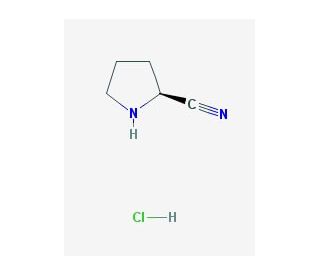

(S)-Pyrrolidine-2-carbonitrile hydrochloride (CAS 65732-69-6)
QUICK LINKS
(S)-Pyrrolidine-2-carbonitrile hydrochloride (PCN-HCl) is a synthesized compound widely employed in scientific research due to its versatility and optical activity. It serves as useful in biochemical, physiological, and laboratory studies. With its chiral catalytic properties and low toxicity, (S)-Pyrrolidine-2-carbonitrile hydrochloridel finds a range of applications. (S)-Pyrrolidine-2-carbonitrile hydrochloride is extensively utilized in scientific research across various fields. In biochemical and physiological studies, it enables investigations into the impact of chiral compounds on biological systems. Additionally, it acts as a chiral catalyst in organic synthesis, facilitating the formation of enantiomerically pure compounds with high selectivity. In laboratory experiments, (S)-Pyrrolidine-2-carbonitrile hydrochloride is employed to examine how optically active compounds influence the structure and function of proteins. Furthermore, it is thought to interact with proteins, leading to alterations in their structure and function. Additionally, (S)-Pyrrolidine-2-carbonitrile hydrochloride is known to exert an influence on the activity of certain hormones, including adrenaline and noradrenaline.
(S)-Pyrrolidine-2-carbonitrile hydrochloride (CAS 65732-69-6) References
- Design, synthesis, biological evaluation, and docking studies of (s)-phenylalanine derivatives with a 2-cyanopyrrolidine moiety as potent dipeptidyl peptidase 4 inhibitors. | Liu, Y., et al. 2013. Chem Biol Drug Des. 82: 140-6. PMID: 23530834
- LC/QTOF/MS/MS characterization, molecular docking and in silico toxicity prediction studies on degradation products of anagliptin. | Baira, SM., et al. 2018. J Pharm Biomed Anal. 159: 92-99. PMID: 29980024
- Integrated Synthetic, Biophysical, and Computational Investigations of Covalent Inhibitors of Prolyl Oligopeptidase and Fibroblast Activation Protein α. | Plescia, J., et al. 2019. J Med Chem. 62: 7874-7884. PMID: 31393718
- From Oxadiazole to Triazole Analogues: Optimization toward a Dual Orexin Receptor Antagonist with Improved in vivo Efficacy in Dogs. | Brotschi, C., et al. 2020. ChemMedChem. 15: 430-448. PMID: 31945272
- Imaging of Fibroblast Activation Protein in Cancer Xenografts Using Novel (4-Quinolinoyl)-glycyl-2-cyanopyrrolidine-Based Small Molecules. | Slania, SL., et al. 2021. J Med Chem. 64: 4059-4070. PMID: 33730493
- Pyrrolidine Derivatives as Anti-diabetic Agents: Current Status and Future Prospects | and Aeyaz Ahmad Bhat, Dr. Nitin Tandon, Dr. Runjhun Tandon. 2022. ChemistrySelect. 7: e202103757.
Ordering Information
| Product Name | Catalog # | UNIT | Price | Qty | FAVORITES | |
(S)-Pyrrolidine-2-carbonitrile hydrochloride, 100 mg | sc-264293 | 100 mg | $160.00 | |||
(S)-Pyrrolidine-2-carbonitrile hydrochloride, 1 g | sc-264293A | 1 g | $393.00 |