
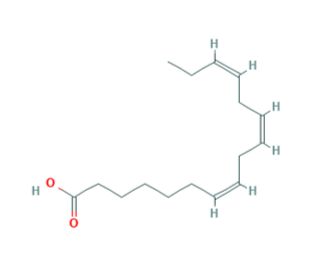

Roughanic acid (CAS 7561-64-0)
QUICK LINKS
Roughanic acid, with the CAS number 7561-64-0, is a naturally occurring triterpenoid compound found in various plant species, particularly those belonging to the Rutaceae family. Structurally, it is known for its complex cyclic molecular architecture, which includes multiple hydroxyl groups that contribute to its chemical reactivity and potential biological interactions. In the realm of research, roughanic acid has been studied primarily for its role in plant physiology and ecology, particularly in how plants produce these compounds as part of their natural defense mechanisms against environmental stresses and herbivorous organisms. The presence of roughanic acid in plant tissues can deter herbivory and infection by pathogens due to its potentially deterrent or toxic properties when ingested by insects or microorganisms. Additionally, in ecological studies, roughanic acid is examined for its role in allelopathy, where it may influence the growth and development of surrounding plant species through chemical interactions in the soil. This compound has also been of interest in understanding the biosynthesis of triterpenoids in plants, contributing to broader studies on plant secondary metabolite pathways, which are crucial for plant adaptation to their environments. Through these studies, roughanic acid aids in elucidating complex ecological relationships and evolutionary strategies in plant defense.
Roughanic acid (CAS 7561-64-0) References
- Identification of an allene oxide synthase (CYP74C) that leads to formation of alpha-ketols from 9-hydroperoxides of linoleic and linolenic acid in below-ground organs of potato. | Stumpe, M., et al. 2006. Plant J. 47: 883-96. PMID: 16899083
- Oxylipins: structurally diverse metabolites from fatty acid oxidation. | Mosblech, A., et al. 2009. Plant Physiol Biochem. 47: 511-7. PMID: 19167233
- Transduction of wound and herbivory signals in plastids. | Bonaventure, G. and Baldwin, IT. 2010. Commun Integr Biol. 3: 313-7. PMID: 20798815
- The Alphabet of Galactolipids in Arabidopsis thaliana. | Ibrahim, A., et al. 2011. Front Plant Sci. 2: 95. PMID: 22639619
- An abscisic acid-independent oxylipin pathway controls stomatal closure and immune defense in Arabidopsis. | Montillet, JL., et al. 2013. PLoS Biol. 11: e1001513. PMID: 23526882
- Oxylipins from the microalgae Chlamydomonas debaryana and Nannochloropsis gaditana and their activity as TNF-α inhibitors. | de Los Reyes, C., et al. 2014. Phytochemistry. 102: 152-61. PMID: 24703579
- Antiamnesic Effect of Broccoli (Brassica oleracea var. italica) Leaves on Amyloid Beta (Aβ)1-42-Induced Learning and Memory Impairment. | Park, SK., et al. 2016. J Agric Food Chem. 64: 3353-61. PMID: 27079470
- Chemical Profiling of Medical Cannabis Extracts. | Lewis, MM., et al. 2017. ACS Omega. 2: 6091-6103. PMID: 30023762
- Evaluation of microalgae polysaccharides as biostimulants of tomato plant defense using metabolomics and biochemical approaches. | Rachidi, F., et al. 2021. Sci Rep. 11: 930. PMID: 33441599
- Release of moth pheromone compounds from Nicotiana benthamiana upon transient expression of heterologous biosynthetic genes. | Xia, YH., et al. 2022. BMC Biol. 20: 80. PMID: 35361182
- Assessing pollen nutrient content: a unifying approach for the study of bee nutritional ecology. | Lau, P., et al. 2022. Philos Trans R Soc Lond B Biol Sci. 377: 20210510. PMID: 35491590
- A non-targeted metabolomics analysis identifies wound-induced oxylipins in Physcomitrium patens. | Resemann, HC., et al. 2022. Front Plant Sci. 13: 1085915. PMID: 36704156
- Phytochemical investigation of the n-hexane-extracted oil from four umbelliferous vegetables using GC/MS analysis in the context of antibacterial activity. | Baky, MH., et al. 2024. Sci Rep. 14: 10592. PMID: 38719900
Ordering Information
| Product Name | Catalog # | UNIT | Price | Qty | FAVORITES | |
Roughanic acid, 5 mg | sc-507111 | 5 mg | $474.00 |