
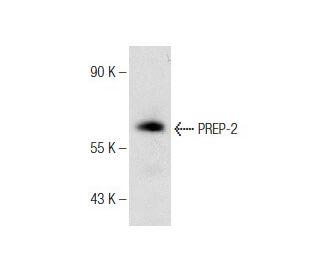


RAW 264.7 nuclear extract: sc-24961
- supplied in four vials, each containing 250 µg nuclear extract in 50 µl buffer
- provided in 20 mM HEPES (pH 7.9), 20% v/v glycerol, 0.1 M KCI, 0.2 mM EDTA, 0.5 mM PMSF and 0.5 mM DTT
- mouse nuclear extract; Abelson transformed macrophage cells
- suitable for use in Gel Shift and Western Blotting assays
- Extracts should be stored at -70°C and repeated freezing and thawing should be avoided.
- prepared by the method of Dignam et al., (1983) Nucleic Acids Res. 11: 1475

QUICK LINKS
SEE ALSO...
RAW 264.7 nuclear extract is derived from the RAW 264.7 cell line, a murine macrophage cell line used predominantly to study immune response mechanisms and macrophage function in a basic research setting. This nuclear extract contains a diverse array of nuclear proteins, including transcription factors and signaling molecules critical for the regulation of genes involved in immune activation, cytokine production, and inflammatory responses. Researchers utilize RAW 264.7 nuclear extract in a variety of assays to explore macrophage behavior under different stimulation conditions, such as pathogen exposure or inflammatory stimuli. Commonly employed techniques include electrophoretic mobility shift assays (EMSA) for investigating DNA-protein interactions, chromatin immunoprecipitation (ChIP) assays to study transcription factor binding and histone modifications at specific gene loci, and co-immunoprecipitation to delineate protein-protein interactions within the nucleus. These studies are instrumental in understanding the transcriptional regulation during macrophage activation and elucidating the cellular signaling pathways that govern macrophage function and behavior. The use of RAW 264.7 nuclear extract, rigorously verified for origin and quality, allows researchers to advance scientific knowledge of immune cell biology.
RAW 264.7 nuclear extract References:
- Identification of a novel AU-rich-element-binding protein which is related to AUF1. | Dean, JL., et al. 2002. Biochem J. 366: 709-19. PMID: 12086581
- A cell-penetrating peptide suppresses inflammation by inhibiting NF-κB signaling. | Wang, YF., et al. 2011. Mol Ther. 19: 1849-57. PMID: 21556052
- Immune modulations and survival strategies of evolved hypervirulent Salmonella Typhimurium strains. | Pradhan, D., et al. 2020. Biochim Biophys Acta Gen Subj. 1864: 129627. PMID: 32360143
- Combinatorial determinants of tissue-specific transcription in B cells and macrophages. | Nikolajczyk, BS., et al. 1997. Mol Cell Biol. 17: 3527-35. PMID: 9199288
- Secretory interleukin-1 receptor antagonist gene expression requires both a PU.1 and a novel composite NF-kappaB/PU.1/ GA-binding protein binding site. | Smith, MF., et al. 1998. J Biol Chem. 273: 24272-9. PMID: 9727052
Ordering Information
| Product Name | Catalog # | UNIT | Price | Qty | FAVORITES | |
RAW 264.7 nuclear extract | sc-24961 | 250 µg/0.05 ml | $163.00 |