
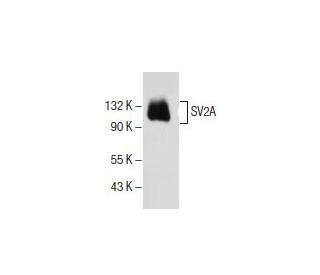


rat cerebellum extract: sc-2398
- 500 µg protein in 200 µl SDS-PAGE Western blotting buffer
- Western blotting positive control
- recommended use is 50 µg (20 µl) per lane
- extracts should be stored at -20°C and repeated freezing and thawing should be minimized
- sample vial should be placed at 95° C for up to 5 minutes, once prior to use

QUICK LINKS
SEE ALSO...
Rat cerebellum extract, derived from the cerebellum tissue of rats, has been extensively utilized in scientific research to explain various biological mechanisms. This extract contains a complex mixture of proteins, lipids, nucleic acids, and other cellular components obtained from the cerebellum, a region of the brain involved in motor control and coordination. The specific mechanisms of action attributed to rat cerebellum extract are multifaceted and diverse. Researchers have utilized this extract to investigate neuronal development, synaptic plasticity, and signal transduction pathways involved in cerebellar function. By exposing neuronal cultures or experimental models to rat cerebellum extract, scientists have been able to study the effects of various components on cellular processes, such as neuronal survival, neurite outgrowth, and synapse formation. Additionally, this extract has been employed to examine the role of specific proteins or molecules present in the cerebellum in various physiological and pathological conditions. The use of rat cerebellum extract in research has provided valuable insights into the complex workings of the cerebellum and its contribution to brain function. It continues to be an invaluable tool for investigating fundamental cellular processes and elucidating the mechanisms underlying cerebellar development and function.
rat cerebellum extract References:
- Production of anti-peptide antibody of rat brain nitric-oxide synthase. | Zhai, R. and Zhu, XZ. 1997. Zhongguo Yao Li Xue Bao. 18: 204-8. PMID: 10072933
- 2-thiouracil is a selective inhibitor of neuronal nitric oxide synthase antagonising tetrahydrobiopterin-dependent enzyme activation and dimerisation. | Palumbo, A., et al. 2000. FEBS Lett. 485: 109-12. PMID: 11094150
- Intracellular cAMP controls a physical association of V-1 with CapZ in cultured mammalian endocrine cells. | Kitazawa, M., et al. 2005. Biochem Biophys Res Commun. 331: 181-6. PMID: 15845376
- Microcirculatory effects of melatonin in rat skeletal muscle after prolonged ischemia. | Wang, WZ., et al. 2005. J Pineal Res. 39: 57-65. PMID: 15978058
- Expression of the onconeural CV2/CRMP5 antigen in thymus and thymoma. | Camdessanchε, JP., et al. 2006. J Neuroimmunol. 174: 168-73. PMID: 16519949
- Site-specific sampling of taurine from rat brain followed by on-line sample pre-concentration, throughout in-capillary derivatization and capillary electrophoresis. | Oguri, S., et al. 2006. J Chromatogr B Analyt Technol Biomed Life Sci. 843: 194-201. PMID: 16854635
- Purkinje cell antibodies in a patient with cerebellar disorder: detection of responsible antigenic proteins. | Unger, JW., et al. 1991. J Neurol. 238: 288-92. PMID: 1824552
- Antibody to CCDC104 is associated with a paraneoplastic antibody to CDR2 (anti-Yo). | Totland, C., et al. 2010. Cancer Immunol Immunother. 59: 231-7. PMID: 19680650
- Paraneoplastic syndrome-associated neuronal antibodies in adult ADHD. | Haukanes, BI., et al. 2015. J Neuroimmunol. 288: 87-91. PMID: 26531699
- Isolation, sequence, and developmental profile of a brain-specific polypeptide, PEP-19. | Ziai, R., et al. 1986. Proc Natl Acad Sci U S A. 83: 8420-3. PMID: 3464961
- Immunocytochemical characterization of glutamate dehydrogenase in the cerebellum of the rat. | Wenthold, RJ., et al. 1987. J Neurochem. 48: 636-43. PMID: 3540215
- Androgen and pituitary control of penile nitric oxide synthase and erectile function in the rat. | Penson, DF., et al. 1996. Biol Reprod. 55: 567-74. PMID: 8862773
- A calcium-dependent nitric oxide synthase and NMDA R1 glutamate receptor in the ink gland of Sepia officinalis: a hint to a regulatory role of nitric oxide in melanogenesis? | Palumbo, A., et al. 1997. Biochem Biophys Res Commun. 235: 429-32. PMID: 9199211
Ordering Information
| Product Name | Catalog # | UNIT | Price | Qty | FAVORITES | |
rat cerebellum extract | sc-2398 | 500 µg/200 µl | $120.00 |