
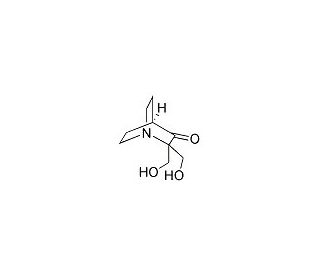

Molecular structure of PRIMA-1, CAS Number: 5608-24-2
PRIMA-1 (CAS 5608-24-2)
See product citations (1)
Alternate Names:
2,2-bis(Hydroxymethyl)-3-quinuclidinone
Application:
PRIMA-1 is a reactivator of p53 and inducer of apoptosis
CAS Number:
5608-24-2
Purity:
≥98%
Molecular Weight:
185.22
Molecular Formula:
C9H15NO3
For Research Use Only. Not Intended for Diagnostic or Therapeutic Use.
* Refer to Certificate of Analysis for lot specific data.
QUICK LINKS
Ordering Information
Product Citations
Description
Technical Information
Safety Information
SDS & Certificate of Analysis
PRIMA-1, an acronym standing for p53 reactivation and induction of massive apoptosis, represents a significant advancement in the study of cellular mechanisms and tumor biology. As a small molecule, PRIMA-1′s primary mechanism revolves around its ability to reactivate the tumor suppressor protein p53 in its mutant forms, thereby reinstating its transcriptional activities and its inherent apoptotic functions. This restoration is pivotal in triggering p53-dependent apoptosis, essentially leading to the targeted elimination of tumor cells by reinstating the cell′s natural mechanism for destroying aberrant cells.
PRIMA-1 (CAS 5608-24-2) References
- Restoration of the tumor suppressor function to mutant p53 by a low-molecular-weight compound. | Bykov, VJ., et al. 2002. Nat Med. 8: 282-8. PMID: 11875500
- Restoration of p53 to limit tumor growth. | Wang, W. and El-Deiry, WS. 2008. Curr Opin Oncol. 20: 90-6. PMID: 18043262
- In vitro and in vivo cytotoxic effects of PRIMA-1 on hepatocellular carcinoma cells expressing mutant p53ser249. | Shi, H., et al. 2008. Carcinogenesis. 29: 1428-34. PMID: 18048389
- PRIMA-1 synergizes with adriamycin to induce cell death in non-small cell lung cancer cells. | Magrini, R., et al. 2008. J Cell Biochem. 104: 2363-73. PMID: 18442053
- PRIMA-1 inhibits growth of breast cancer cells by re-activating mutant p53 protein. | Liang, Y., et al. 2009. Int J Oncol. 35: 1015-23. PMID: 19787255
- PRIMA-1(MET)/APR-246 targets mutant forms of p53 family members p63 and p73. | Rökaeus, N., et al. 2010. Oncogene. 29: 6442-51. PMID: 20818419
- PRIMA-1 induces autophagy in cancer cells carrying mutant or wild type p53. | Russo, D., et al. 2013. Biochim Biophys Acta. 1833: 1904-13. PMID: 23545415
- PRIMA-1 selectively induces global DNA demethylation in p53 mutant-type thyroid cancer cells. | Qiang, W., et al. 2014. J Biomed Nanotechnol. 10: 1249-58. PMID: 24804545
- PRIMA-1, a mutant p53 reactivator, induces apoptosis and enhances chemotherapeutic cytotoxicity in pancreatic cancer cell lines. | Izetti, P., et al. 2014. Invest New Drugs. 32: 783-94. PMID: 24838627
- PRIMA-1 induces caspase-mediated apoptosis in acute promyelocytic leukemia NB4 cells by inhibition of nuclear factor-κB and downregulation of Bcl-2, XIAP, and c-Myc. | Farhadi, E., et al. 2017. Anticancer Drugs. 28: 51-58. PMID: 27548348
- Mutant p53 as a target for cancer treatment. | Duffy, MJ., et al. 2017. Eur J Cancer. 83: 258-265. PMID: 28756138
- PRIMA-1 and PRIMA-1Met (APR-246): From Mutant/Wild Type p53 Reactivation to Unexpected Mechanisms Underlying Their Potent Anti-Tumor Effect in Combinatorial Therapies. | Perdrix, A., et al. 2017. Cancers (Basel). 9: PMID: 29258181
- Mutant p53 in breast cancer: potential as a therapeutic target and biomarker. | Duffy, MJ., et al. 2018. Breast Cancer Res Treat. 170: 213-219. PMID: 29564741
- Antitumor Effects of PRIMA-1 and PRIMA-1Met (APR246) in Hematological Malignancies: Still a Mutant P53-Dependent Affair? | Menichini, P., et al. 2021. Cells. 10: PMID: 33430525
- PRIMA-1 inhibits Y220C p53 amyloid aggregation and synergizes with cisplatin in hepatocellular carcinoma. | Paz, MM., et al. 2023. Front Mol Biosci. 10: 1165132. PMID: 37101558
Inhibitor of:
ΔN p63, CDIP, cep-1, EWS, GTPBP4, karyopherin β2, p19 ARF, p53AIP1, p53CSV, PIG3, Pirh2, RBQ-3, TP53INP2, Trp53i11, TSGA10, and XIAP.Activator of:
BC030500, JMY, MYBBP1A, p53, p53RFP, p73, PIG11, TP53TG3, Transcription Factor, Trp53i13, and Wig-1.Ordering Information
| Product Name | Catalog # | UNIT | Price | Qty | FAVORITES | |
PRIMA-1, 5 mg | sc-200927 | 5 mg | $102.00 | |||
PRIMA-1, 25 mg | sc-200927A | 25 mg | $408.00 |