
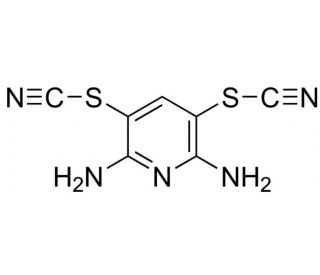

PR 619 (CAS 2645-32-1)
See product citations (1)
QUICK LINKS
PR 619 is used in biochemical research to explore the ubiquitin-proteasome system, which is for protein degradation within cells. This compound acts as a proteasome inhibitor, providing insights into the mechanisms of protein turnover and degradation pathways. Researchers employ PR 619 to study the stabilization of proteins that are typically short-lived, understanding how this influences cellular processes such as cell cycle control and stress response. Additionally, PR 619 is instrumental in investigating diseases associated with proteasome dysregulation, such as neurodegenerative disorders. The use of PR 619 also extends to studies on the modulation of proteasome activity, examining how this impacts cellular homeostasis and the regulation of various metabolic pathways.
PR 619 (CAS 2645-32-1) References
- Activity-based chemical proteomics accelerates inhibitor development for deubiquitylating enzymes. | Altun, M., et al. 2011. Chem Biol. 18: 1401-12. PMID: 22118674
- The small molecule inhibitor PR-619 of deubiquitinating enzymes affects the microtubule network and causes protein aggregate formation in neural cells: implications for neurodegenerative diseases. | Seiberlich, V., et al. 2012. Biochim Biophys Acta. 1823: 2057-68. PMID: 22565157
- Inhibition of protein deubiquitination by PR-619 activates the autophagic pathway in OLN-t40 oligodendroglial cells. | Seiberlich, V., et al. 2013. Cell Biochem Biophys. 67: 149-60. PMID: 23686611
- The Deubiquitinase Inhibitor PR-619 Sensitizes Normal Human Fibroblasts to Tumor Necrosis Factor-related Apoptosis-inducing Ligand (TRAIL)-mediated Cell Death. | Crowder, RN., et al. 2016. J Biol Chem. 291: 5960-5970. PMID: 26757822
- Inhibition of deubiquitinases alters gamete ubiquitination states and sperm-oocyte binding ability in pigs. | Wang, Y., et al. 2017. Anim Reprod Sci. 187: 64-73. PMID: 29029872
- Deubiquitinase inhibitor PR-619 reduces Smad4 expression and suppresses renal fibrosis in mice with unilateral ureteral obstruction. | Soji, K., et al. 2018. PLoS One. 13: e0202409. PMID: 30114247
- The Deubiquitinating Enzyme Inhibitor PR-619 is a Potent DNA Topoisomerase II Poison. | Cowell, IG., et al. 2019. Mol Pharmacol. 96: 562-572. PMID: 31515282
- The Deubiquitinating Enzyme Inhibitor PR-619 Enhances the Cytotoxicity of Cisplatin via the Suppression of Anti-Apoptotic Bcl-2 Protein: In Vitro and In Vivo Study. | Kuo, KL., et al. 2019. Cells. 8: PMID: 31627336
- Effects of selected deubiquitinating enzyme inhibitors on the proliferation and motility of lung cancer and mesothelioma cell lines. | Mirzapoiazova, T., et al. 2020. Int J Oncol. 57: 80-86. PMID: 32236606
- The small molecule inhibitor PR-619 protects retinal ganglion cells against glutamate excitotoxicity. | Hu, X., et al. 2020. Neuroreport. 31: 1134-1141. PMID: 32991521
- Inhibition of deubiquitination by PR-619 induces apoptosis and autophagy via ubi-protein aggregation-activated ER stress in oesophageal squamous cell carcinoma. | Wang, L., et al. 2021. Cell Prolif. 54: e12919. PMID: 33129231
- Deubiquitinating enzymes as possible drug targets for schistosomiasis. | Barban do Patrocínio, A., et al. 2021. Acta Trop. 217: 105856. PMID: 33577811
- PR-619, a General Inhibitor of Deubiquitylating Enzymes, Diminishes Cisplatin Resistance in Urothelial Carcinoma Cells through the Suppression of c-Myc: An In Vitro and In Vivo Study. | Hsu, FS., et al. 2021. Int J Mol Sci. 22: PMID: 34769137
- High Expression of G9a Induces Cisplatin Resistance in Hepatocellular Carcinoma. | Fu, J., et al. 2023. Cell J. 25: 118-125. PMID: 36840458
- Ubiquitin-Specific Proteases as Potential Therapeutic Targets in Bladder Cancer-In Vitro Evaluation of Degrasyn and PR-619 Activity Using Human and Canine Models. | Nowak, Ł., et al. 2023. Biomedicines. 11: PMID: 36979739
Ordering Information
| Product Name | Catalog # | UNIT | Price | Qty | FAVORITES | |
PR 619, 1 mg | sc-476324 | 1 mg | $77.00 | |||
PR 619, 5 mg | sc-476324A | 5 mg | $188.00 | |||
PR 619, 25 mg | sc-476324B | 25 mg | $431.00 |