
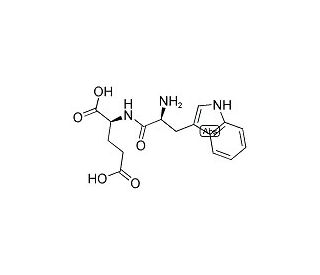

PPARγ Antagonist III, G3335 (CAS 36099-95-3)
See product citations (3)
QUICK LINKS
PPARγ Antagonist III, G3335 is a cell-permeable dipeptide that acts as a selective and reversible PPAR gamma antagonist (KD ~ 8 muM). Shown to inhibit the agonist activity of Rosiglitazone (100 nM) in a dose-dependent manner (IC50 = 31.9 µM) in transfected COS-7 cells. PPARγ Antagonist III, G3335 is a small molecule compound that selectively inhibits the activity of peroxisome proliferator-activated receptor gamma (PPARγ), a nuclear receptor involved in regulating gene expression and various metabolic processes. By antagonizing PPARγ, this compound can modulate PPARγ-mediated transcriptional activity and downstream signaling pathways. It can be used to investigate the impact of inhibiting PPARγ activity on adipogenesis, and lipid metabolism.
PPARγ Antagonist III, G3335 (CAS 36099-95-3) References
- Assessment of synthetic peptides for hepatitis A diagnosis using biosensor technology. | Gómara, MJ., et al. 2000. J Immunol Methods. 246: 13-24. PMID: 11121543
- The dipeptide H-Trp-Glu-OH shows highly antagonistic activity against PPARgamma: bioassay with molecular modeling simulation. | Ye, F., et al. 2006. Chembiochem. 7: 74-82. PMID: 16317783
- Biosensor immunoassay for flumequine in broiler serum and muscle. | Haasnoot, W., et al. 2007. Anal Chim Acta. 586: 312-8. PMID: 17386729
- Structural variations in species B adenovirus fibers impact CD46 association. | Pache, L., et al. 2008. J Virol. 82: 7923-31. PMID: 18524830
- 15-deoxy-Delta(12,14)-prostaglandin J2 induces vascular endothelial cell apoptosis through the sequential activation of MAPKS and p53. | Ho, TC., et al. 2008. J Biol Chem. 283: 30273-88. PMID: 18718914
- New insights into DNA-binding behavior of Wilms tumor protein (WT1)--a dual study. | Nurmemmedov, E., et al. 2009. Biophys Chem. 145: 116-25. PMID: 19853363
- Stimuli-responsive networks grafted onto polypropylene for the sustained delivery of NSAIDs. | Contreras-García, A., et al. 2011. Acta Biomater. 7: 996-1008. PMID: 20933615
- Measuring antibody-antigen binding kinetics using surface plasmon resonance. | Hearty, S., et al. 2012. Methods Mol Biol. 907: 411-42. PMID: 22907366
- Development of an Au/ZnO thin film surface plasmon resonance-based biosensor immunoassay for the detection of carbohydrate antigen 15-3 in human saliva. | Liang, YH., et al. 2012. Clin Biochem. 45: 1689-93. PMID: 22981930
- Generation of human neutrophil gelatinase-associated lipocalin monoclonal antibodies for use in ARCHITECT® assay. | Hawksworth, D., et al. 2012. Hybridoma (Larchmt). 31: 436-42. PMID: 23244323
- Ultrasensitive, label-free detection of cardiac biomarkers with optical SIS sensor. | Diware, MS., et al. 2017. Biosens Bioelectron. 87: 242-248. PMID: 27567249
- Label-free detection of hepatitis B virus using solution immersed silicon sensors. | Diware, MS., et al. 2017. Biointerphases. 12: 01A402. PMID: 28231713
- An Effective SARS-CoV-2 Electrochemical Biosensor with Modifiable Dual Probes Using a Modified Screen-Printed Carbon Electrode. | Pang, SN., et al. 2021. Micromachines (Basel). 12: PMID: 34683225
Ordering Information
| Product Name | Catalog # | UNIT | Price | Qty | FAVORITES | |
PPARγ Antagonist III, G3335, 50 mg | sc-202771 | 50 mg | $102.00 | |||
PPARγ Antagonist III, G3335, 100 mg | sc-202771A | 100 mg | $204.00 |