
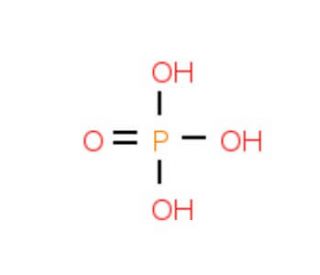

Polyphosphoric acid (CAS 8017-16-1)
QUICK LINKS
Polyphosphoric acid is a highly reactive chemical compound that functions as a powerful dehydrating agent in various chemical reactions. Its mode of action involves the removal of water molecules from organic compounds, leading to the formation of new chemical bonds and the production of desired products. In the experimental applications, it serves as a catalyst in the synthesis of various organic compounds, including pharmaceutical intermediates, polymers, and specialty chemicals. Its ability to facilitate dehydration reactions at high temperatures makes it a useful in the development of novel chemical processes and the production of complex organic molecules. At the molecular level, polyphosphoric acid interacts with functional groups in organic substrates, promoting the rearrangement of chemical bonds and the formation of desired products. Its role in facilitating dehydration reactions and promoting the synthesis of organic compounds may be an asset in the field of chemical research and development.
Polyphosphoric acid (CAS 8017-16-1) References
- Effect of polyphosphoric acid pre-treatment of titanium on attachment, proliferation, and differentiation of osteoblast-like cells (MC3T3-E1). | Maekawa, K., et al. 2008. Clin Oral Implants Res. 19: 320-5. PMID: 18190561
- Polyphosphoric acid promoted synthesis of 10,11-dihydrobenzo[j]fluoranthen-12-one. | Chang, MY., et al. 2012. Org Lett. 14: 2198-201. PMID: 22515182
- Formation of 'fuzzy' phases with high proton conductivities in the composites of polyphosphoric acid and metal oxide nanoparticles. | Miyazaki, K., et al. 2012. Phys Chem Chem Phys. 14: 11135-8. PMID: 22763822
- Silica-supported polyphosphoric acid in the synthesis of 4-substituted tetrahydroisoquinoline derivatives. | Manolov, S., et al. 2013. Molecules. 18: 1869-80. PMID: 23377130
- Influence of Polyphosphoric Acid on the Consistency and Composition of Formulated Bitumen: Standard Characterization and NMR Insights. | Varanda, C., et al. 2016. J Anal Methods Chem. 2016: 2915467. PMID: 27579214
- Stable Chitosan-Based Nanoparticles Using Polyphosphoric Acid or Hexametaphosphate for Tandem Ionotropic/Covalent Crosslinking and Subsequent Investigation as Novel Vehicles for Drug Delivery. | Saeed, RM., et al. 2020. Front Bioeng Biotechnol. 8: 4. PMID: 32039190
- Interaction mechanisms of polyphosphoric acid and nano clay in bituminous composites. | Shariati, S., et al. 2021. J Colloid Interface Sci. 588: 446-455. PMID: 33429341
- Influence of Compound Modification of Oil Sands De-Oiled Asphalt and Polyphosphoric Acid on High- and Low-Temperature Performance of Styrene-Butadiene-Styrene-Modified Asphalt. | Pei, X. and Fan, W. 2021. Materials (Basel). 14: PMID: 33567546
- Effects of Amorphous Poly Alpha Olefin (APAO) and Polyphosphoric Acid (PPA) on the Rheological Properties, Compatibility and Stability of Asphalt Binder. | Pei, X. and Fan, W. 2021. Materials (Basel). 14: PMID: 34068488
- Does electrophilic activation of nitroalkanes in polyphosphoric acid involve formation of nitrile oxides? | Aksenov, AV., et al. 2021. RSC Adv. 11: 35937-35945. PMID: 35492804
- Polyphosphoric acid-promoted one-pot synthesis and neuroprotective effects of flavanones against NMDA-induced injury in PC12 cells. | Wang, E., et al. 2022. RSC Adv. 12: 28098-28103. PMID: 36320275
- Research of Low-Temperature Performance of Polyphosphoric Acid-Modified Asphalt. | Wei, J., et al. 2022. Materials (Basel). 16: PMID: 36614450
- Synthesis of N-[1-(2-Acetyl-4,5-dimethoxyphenyl)propan-2-yl]benzamide and Its Copper(II) Complex. | Marinova, P., et al. 2023. Russ J Gen Chem. 93: 161-165. PMID: 36919098
- Experimental Study on Creep-Recovery Behavior of Polyphosphoric Acid (PPA) Modified Asphalt Binders under Multiple Factors. | Jiang, S., et al. 2023. Materials (Basel). 16: PMID: 37049032
- Evaluating the Effects of Polyphosphoric Acid (PPA) on the Anti-Ultraviolet Aging Properties of SBR-Modified Asphalt. | Xu, Y., et al. 2023. Materials (Basel). 16: PMID: 37049078
Ordering Information
| Product Name | Catalog # | UNIT | Price | Qty | FAVORITES | |
Polyphosphoric acid, 25 g | sc-215732 | 25 g | $52.00 | |||
Polyphosphoric acid, 100 g | sc-215732A | 100 g | $66.00 |