
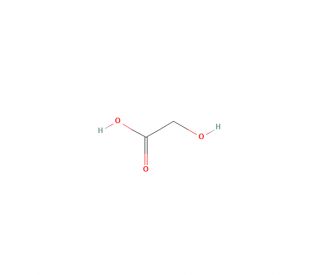

Polyglycolide (CAS 26124-68-5)
ACCÈS RAPIDE AUX LIENS
Le polyglycolide, connu sous le nom de poly(acide glycolique) ou PGA, est un polymère biodégradable très présent dans le domaine de la science des matériaux en raison de son rôle dans la création de dispositifs biorésorbables. Sa grande résistance à la traction et sa capacité à se dégrader par hydrolyse en font un élément central de la recherche sur l'interaction du corps avec les implants biorésorbables et l'absorption en toute sécurité des sous-produits de la dégradation. En outre, la vitesse de dégradation contrôlée du polyglycolide est utilisée dans les systèmes d'administration chimique pour obtenir des délais de libération précis. Au-delà de ces applications, sa contribution potentielle au développement de solutions d'emballage durables le positionne comme une alternative écologique aux plastiques conventionnels, et son utilité est encore élargie par la synthèse de copolymères qui adaptent ses propriétés à une gamme d'utilisations spécifiques.
Polyglycolide (CAS 26124-68-5) Références
- Réponse tissulaire aux broches de polyglycolide et de polylévolactide dans l'os spongieux ostéotomisé. | Nordström, P., et al. 2001. Clin Orthop Relat Res. 247-57. PMID: 11153995
- Vaccins à libération contrôlée - microsphères biodégradables de polylactide/polyglycolide (PL/PG) comme véhicules d'antigènes. | Aguado, MT. and Lambert, PH. 1992. Immunobiology. 184: 113-25. PMID: 1587538
- Implants antibiotiques en polyactide-polyglycolide. | Garvin, K. and Feschuk, C. 2005. Clin Orthop Relat Res. 105-10. PMID: 16056034
- Libération de triclosan par des fils de polyglycolide enduits. | Zurita, R., et al. 2006. Macromol Biosci. 6: 58-69. PMID: 16374771
- Les plaques résorbables en polyactide-polyglycolide stimulent les cellules souches dérivées du tissu adipeux vers la différenciation des ostéoblastes. | Sollazzo, V., et al. 2011. Int J Immunopathol Pharmacol. 24: 59-64. PMID: 21781447
- Biocompatibilité et biorésorption des membranes tissulaires en polylactide et polyglycolide imprimées en 3D. | Kim, EV., et al. 2021. Bull Exp Biol Med. 170: 356-359. PMID: 33452990
- Synthèse, microstructure et propriétés des copolymères de polyglycolide à masse molaire élevée avec des défauts de méthyle isolés. | Altay, E., et al. 2021. Biomacromolecules. 22: 2532-2543. PMID: 33970613
- Évolution structurelle des fibres de polyglycolide et de poly(glycolide-co-lactide) au cours du processus de thermofixation. | Dong, Z., et al. 2021. Biomacromolecules. 22: 3342-3356. PMID: 34212713
- Évolution structurelle des fibres de polyglycolide et de poly(glycolide-co-lactide) au cours de la dégradation in vitro à différentes températures de thermofixation. | Miao, Y., et al. 2021. ACS Omega. 6: 29254-29266. PMID: 34746613
- Estimation de la cristallinité relative des composites biodégradables à base d'acide polylactique et de polymères polyglycolides par des méthodes d'apprentissage automatique. | Wang, J., et al. 2022. Polymers (Basel). 14: PMID: 35160516
- Conception et production de vaccins à immunisation unique à l'aide de systèmes de microsphères de polyglycolide de polylactide. | Cleland, JL. 1995. Pharm Biotechnol. 6: 439-62. PMID: 7551230
- Dispositifs absorbables en polyglycolide en traumatologie et chirurgie osseuse. | Ashammakhi, N. and Rokkanen, P. 1997. Biomaterials. 18: 3-9. PMID: 9003889
- Vis bioabsorbables en polyglycolide dans le traitement des fractures de la cheville. | Hovis, WD. and Bucholz, RW. 1997. Foot Ankle Int. 18: 128-31. PMID: 9116891
Informations pour la commande
| Nom du produit | Ref. Catalogue | COND. | Prix HT | QTÉ | Favoris | |
Polyglycolide, 5 g | sc-506517 | 5 g | $559.00 |