
Date published: 2026-4-5

1-800-457-3801

SCBT Portrait Logo
Seach Input

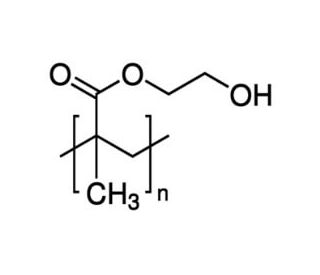
Poly(2-hydroxyethyl methacrylate) (CAS 25249-16-5)

5.0(3)
Write a reviewAsk a question

See product citations (15)

Alternate Names:
Poly(2-hydroxyethyl methacrylate) is also known as pHEMA.
Application:
Poly(2-hydroxyethyl methacrylate) is a polymer that inhibits cell adhesion to growth surfaces in culture vessels.
CAS Number:
25249-16-5
Molecular Weight:
~300,000
Molecular Formula:
(C6H10O3)n
For Research Use Only. Not Intended for Diagnostic or Therapeutic Use.
* Refer to Certificate of Analysis for lot specific data.

QUICK LINKS

Poly(2-hydroxyethyl methacrylate) is a hydrophilic polymer that has been extensively investigated in materials science research. Its main utility lies in the creation of hydrogels, which can absorb significant amounts of water while maintaining structural integrity. Research involving PHEMA often focuses on its biocompatibility and permeability properties, which make it suitable for studies related to biomedical device development. In addition, PHEMA′s capacity for controlled swelling is of interest in the field of controlled release systems, where it is used to study the release kinetics of encapsulated substances. The polymer is also utilized in the examination of surface modification techniques to improve the interface between synthetic materials and biological tissues. Studies on PHEMA contribute to the understanding of polymer networks and their potential applications in creating advanced materials that mimic the properties of natural tissues.


Poly(2-hydroxyethyl methacrylate) (CAS 25249-16-5) References

  1. Evaluation of poly(2-hydroxyethyl methacrylate) gels as drug delivery systems at different pH values.  |  Ferreira, L., et al. 2000. Int J Pharm. 194: 169-80. PMID: 10692641
  2. Calcification of poly(2-hydroxyethyl methacrylate) hydrogel sponges implanted in the rabbit cornea: a 3-month study.  |  Vijayasekaran, S., et al. 2000. J Biomater Sci Polym Ed. 11: 599-615. PMID: 10981676
  3. Poly(2-hydroxyethyl methacrylate) film as a drug delivery system for pilocarpine.  |  Hsiue, GH., et al. 2001. Biomaterials. 22: 1763-9. PMID: 11396879
  4. Evaluation of porous networks of poly(2-hydroxyethyl methacrylate) as interfacial drug delivery devices.  |  Dziubla, TD., et al. 2001. Biomaterials. 22: 2893-9. PMID: 11561895
  5. Effects of negatively charged groups (carboxymethyl) on the calcification of poly(2-hydroxyethyl methacrylate).  |  Filmon, R., et al. 2002. Biomaterials. 23: 3053-9. PMID: 12069348
  6. Fiber templating of poly(2-hydroxyethyl methacrylate) for neural tissue engineering.  |  Flynn, L., et al. 2003. Biomaterials. 24: 4265-72. PMID: 12853258
  7. Poly(2-hydroxyethyl methacrylate) wound dressing containing ciprofloxacin and its drug release studies.  |  Tsou, TL., et al. 2005. J Mater Sci Mater Med. 16: 95-100. PMID: 15744596
  8. Pentablock copolymers of poly(ethylene glycol), poly((2-dimethyl amino)ethyl methacrylate) and poly(2-hydroxyethyl methacrylate) from consecutive atom transfer radical polymerizations for non-viral gene delivery.  |  Xu, FJ., et al. 2008. Biomaterials. 29: 3023-33. PMID: 18423581
  9. Directional migration of vascular smooth muscle cells guided by a molecule weight gradient of poly(2-hydroxyethyl methacrylate) brushes.  |  Ren, T., et al. 2013. Langmuir. 29: 6386-95. PMID: 23634666
  10. Hydrogen-bonds structure in poly(2-hydroxyethyl methacrylate) studied by temperature-dependent infrared spectroscopy.  |  Morita, S. 2014. Front Chem. 2: 10. PMID: 24790979
  11. Non-biofouling property of well-defined concentrated polymer brushes.  |  Yoshikawa, C., et al. 2015. Colloids Surf B Biointerfaces. 127: 213-20. PMID: 25679494
  12. A transparent wound dressing based on bacterial cellulose whisker and poly(2-hydroxyethyl methacrylate).  |  Di, Z., et al. 2017. Int J Biol Macromol. 105: 638-644. PMID: 28716748
  13. Immobilization of glucose oxidase in poly(2-hydroxyethyl methacrylate) membranes.  |  Arica, Y. and Hasirci, VN. 1987. Biomaterials. 8: 489-95. PMID: 3427149

Ordering Information

Product NameCatalog #UNITPriceQtyFAVORITES

Poly(2-hydroxyethyl methacrylate), 10 g

sc-253284
10 g
$179.00

can you tell its solubility solvent please

Asked by: ankit
Thank you for contracting Santa Cruz Biotechnology. Soluble in ethanol (120 mg/mL).
Answered by: BlakeJ
Date published: 2024-09-26

Please confirm when the following item will be shipped if purchased today (16th April). We are a UK based company? https://www.scbt.com/p/poly-2-hydroxyethyl-methacrylate-25249-16-5

Asked by: EPi001
Thank you for your question. Please contact your local distributor or technical service for further assistance.
Answered by: Dallas Tech Service
Date published: 2021-04-20

What are the tensile strength, % elongation and flexural modulus of poly-HEMA?

Asked by: Raihan
Thank you for your question. Unfortunately, we do not have this information.
Answered by: Technical Support
Date published: 2019-09-11

How do we convert it to liquid form?

Asked by: Zavier
Thank you for your question. This biochemical is soluble in ethanol (120 g/mL).
Answered by: Technical Support
Date published: 2019-02-23

Could you please give me more details about the solubility of this product in ethanol and could you elaborate more on the method to dissolve it in ethanol?

Asked by: 13punMA
Thank you for your question. This product, a heavy polymer, is soluble in ethanol to 120 g/mL. To solubilize, please take the desired amount of product and add small aliquots of ethanol until the product is fully dissolved. Stir in between each additional aliquot.
Answered by: Technical Support
Date published: 2019-09-29

Could you tell me the melting point of the Poly-HEMA?

Asked by: 13punMA
Thank you for asking about our product Poly(2-hydroxyethyl methacrylate) (CAS# 25249-16-5). We have a predicted melting point of -12 °C.
Answered by: Chemical Support 8
Date published: 2017-03-01
  • y_2026, m_3, d_26, h_7CST
  • bvseo_bulk, prod_bvqa, vn_bulk_3.0.43
  • cp_1, bvpage1
  • co_hasquestionsanswers, tq_6
  • loc_en_US, sid_253284, prod, sort_[SortEntry(order=LAST_APPROVED_ANSWER_SUBMISSION_TIME, direction=DESCENDING)]
  • clientName_scbt
  • bvseo_sdk, java_sdk, bvseo-4.0.0
  • CLOUD, getContent, 96ms
  • QUESTIONS, PRODUCT
Rated 5 out of 5 by from Works WellWorks well and very consistent. The product was used to study anoikis.
Date published: 2017-11-12
Rated 5 out of 5 by from We order this product consistently and itWe order this product consistently and it works well.
Date published: 2015-09-11
Rated 5 out of 5 by from We use the poly HEMA to coat tissue cultureWe use the poly HEMA to coat tissue culture plates for our EMT cultures. You have the best price available for this product and it does what it is supposed to do.
Date published: 2015-04-09
  • y_2026, m_3, d_26, h_7
  • bvseo_bulk, prod_bvrr, vn_bulk_3.0.43
  • cp_1, bvpage1
  • co_hasreviews, tv_0, tr_3
  • loc_en_US, sid_253284, prod, sort_[SortEntry(order=SUBMISSION_TIME, direction=DESCENDING)]
  • clientName_scbt
  • bvseo_sdk, java_sdk, bvseo-4.0.0
  • CLOUD, getReviews, 8ms
  • REVIEWS, PRODUCT
Poly(2-hydroxyethyl methacrylate) is rated 5.0 out of 5 by 3.
  • y_2026, m_3, d_26, h_7
  • bvseo_bulk, prod_bvrr, vn_bulk_3.0.43
  • cp_1, bvpage1
  • co_hasreviews, tv_0, tr_3
  • loc_en_US, sid_253284, prod, sort_[SortEntry(order=SUBMISSION_TIME, direction=DESCENDING)]
  • clientName_scbt
  • bvseo_sdk, java_sdk, bvseo-4.0.0
  • CLOUD, getAggregateRating, 101ms
  • REVIEWS, PRODUCT