

Pirenzepine Dihydrochloride (CAS 29868-97-1)
See product citations (3)
QUICK LINKS
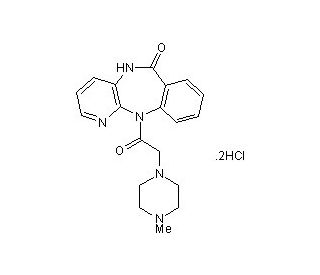
Pirenzepine Dihydrochloride is a chemical that functions as a selective M1 muscarinic receptor antagonist. It acts by inhibiting the binding of acetylcholine to M1 muscarinic receptors, thereby blocking the downstream signaling pathways associated with this receptor subtype. Pirenzepine Dihydrochloride′s mechanism of action involves its interaction with the allosteric site of the M1 muscarinic receptor, leading to a reduction in the receptor′s affinity for acetylcholine. By modulating the activity of M1 muscarinic receptors, Pirenzepine Dihydrochloride may influence various physiological processes and cellular responses that are mediated by these receptors. Its ability to selectively target the M1 muscarinic receptor subtype may be valuable for investigating the specific roles of this receptor in cellular signaling and physiological functions.
Pirenzepine Dihydrochloride (CAS 29868-97-1) References
- Inverse agonist activity of pirenzepine at M2 muscarinic acetylcholine receptors. | Daeffler, L., et al. 1999. Br J Pharmacol. 126: 1246-52. PMID: 10205015
- Influence of muscarinic ligands on the amplitudes of the evoked surface potential's late components in the optic tectum of the urodele Plethodon jordani. | Kahl, H. and Wiggers, W. 2000. Neurosci Lett. 285: 17-20. PMID: 10788697
- HPLC determination of pirenzepine dihydrochloride in rabbit aqueous humor. | Tu, J., et al. 2005. J Chromatogr B Analyt Technol Biomed Life Sci. 822: 300-3. PMID: 16002348
- M₃muscarinic receptors mediate acetylcholine-induced pulmonary vasodilation in pulmonary hypertension. | Orii, R., et al. 2010. Biosci Trends. 4: 260-6. PMID: 21068480
- Presynaptic muscarinic receptor subtypes involved in the enhancement of spontaneous GABAergic postsynaptic currents in hippocampal neurons. | González, JC., et al. 2011. Eur J Neurosci. 33: 69-81. PMID: 21091801
- The interaction between tropomyosin-related kinase B receptors and presynaptic muscarinic receptors modulates transmitter release in adult rodent motor nerve terminals. | Garcia, N., et al. 2010. J Neurosci. 30: 16514-22. PMID: 21147991
- Assessing Educational Needs in Medical Practice: Guidelines for the CME Planning Committee Member. | Jennett, PA. and Laxdal, OE. 1984. Can Fam Physician. 30: 1917-22. PMID: 21279107
- Precise, fast, and flexible determination of protein interactions by affinity capillary electrophoresis: part 1: performance. | Redweik, S., et al. 2012. Electrophoresis. 33: 3316-22. PMID: 22968653
- Postprandial pancreatic exocrine secretion in dogs after oral administration of pirenzepine dihydrochloride. | Madrid, JA., et al. 1985. Arzneimittelforschung. 35: 1560-2. PMID: 2416323
- In vitro release of two anti-muscarinic drugs from soft contact lenses. | Hui, A., et al. 2017. Clin Ophthalmol. 11: 1657-1665. PMID: 29213204
- Treatment of Campylobacter pylori gastritis: a pilot study using pirenzepine dihydrochloride (Gastrozepin) and three formulations of colloidal bismuth subcitrate (De-Nol). | Morris, A., et al. 1988. N Z Med J. 101: 651-4. PMID: 3054641
- Controlled double-blind study of the therapeutic effect of pirenzepine dihydrochloride in duodenal ulcer. Phase III study. | Ishimori, A. and Yamagata, S. 1986. Arzneimittelforschung. 36: 980-3. PMID: 3527182
- Therapeutic effect of pirenzepine dihydrochloride on gastric ulcer evaluated by a double-blind controlled clinical study. Phase III study. | Ishimori, A. and Yamagata, S. 1982. Arzneimittelforschung. 32: 556-65. PMID: 7049190
- Anticholinergic agents prevent guinea-pig airway constriction induced by histamine, bradykinin and leukotriene C4: Relationship to circulating TXA2. | Folco, G., et al. 1982. Eur J Pharmacol. 78: 159-65. PMID: 7075669
Ordering Information
| Product Name | Catalog # | UNIT | Price | Qty | FAVORITES | |
Pirenzepine Dihydrochloride, 100 mg | sc-204197 | 100 mg | $69.00 |