
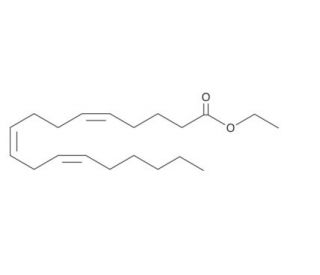

Pinolenic Acid ethyl ester (CAS 493015-74-0)
QUICK LINKS
Pinolenic Acid ethyl ester, identified by the CAS number 493015-74-0, is the ethyl ester derivative of Pinolenic Acid, a polyunsaturated fatty acid extracted primarily from the seeds of pine nuts. This modification, the esterification with ethanol, enhances the chemical′s solubility in organic solvents and alters its physical properties, making it particularly useful in various specialized research and industrial applications. In the context of organic chemistry, Pinolenic Acid ethyl ester is extensively used to examine the effects of esterification on the physical and chemical stability of fatty acids, especially in environments prone to oxidative stress. Its structure, rich in double bonds, allows researchers to explore oxidation processes in more depth, providing insights into the mechanisms that drive lipid peroxidation—a key factor in the aging of organic materials and in the stability of biofuels. Furthermore, its applications extend to the synthesis of biodegradable polymers and eco-friendly lubricants, where its environmental compatibility and potential for efficient degradation play a crucial role. Additionally, the compound′s properties are advantageous in developing novel coatings and adhesives, where enhanced flexibility and durability are desired. Through these diverse applications, Pinolenic Acid ethyl ester contributes significantly to the advancement of sustainable and green chemistry solutions.
Pinolenic Acid ethyl ester (CAS 493015-74-0) References
- Enhanced detection of olefins using ambient ionization mass spectrometry: Ag+ adducts of biologically relevant alkenes. | Jackson, AU., et al. 2011. Anal Bioanal Chem. 399: 367-76. PMID: 21069301
- Facile determination of double bond position in unsaturated fatty acids and esters by low temperature plasma ionization mass spectrometry. | Zhang, JI., et al. 2011. Anal Chem. 83: 4738-44. PMID: 21539336
- Doped Argon Surface Desorption Dielectric-Barrier Discharge Ionization Mass Spectrometry for Fragile Compounds. | Zhang, H., et al. 2018. Anal Chem. 90: 9033-9039. PMID: 29966414
- Endogenous benzoic acid interferes with the signatures of amino acids and thiol compounds through perturbing N-methyltransferase, glutamate-cysteine ligase, and glutathione S-transferase activity in dairy products. | Jia, W., et al. 2022. Food Res Int. 161: 111857. PMID: 36192981
- Analysis of the effect of sterilization and storage on the quality of Pinus yunnanensis pollen based on untargeted metabonomics. | Mei, Suhuan, et al. 2021. Journal of Food Processing and Preservation. 45.12: e16033.
Ordering Information
| Product Name | Catalog # | UNIT | Price | Qty | FAVORITES | |
Pinolenic Acid ethyl ester, 1 mg | sc-205438 | 1 mg | $20.00 | |||
Pinolenic Acid ethyl ester, 5 mg | sc-205438A | 5 mg | $30.00 |