
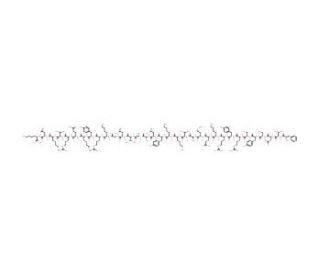

PACAP(6-38) (CAS 137061-48-4)
QUICK LINKS
PACAP(6-38), a synthetic peptide derived from the hypothalamic neuropeptide PACAP, exhibits a unique and intricate mechanism of action primarily through its antagonistic effects on PACAP receptors, which are pivotal in modulating anterior pituitary cell function. This peptide has been instrumental in elucidating the role of PACAP signaling pathways in various physiological processes beyond the pituitary gland. Specifically, it has emerged as a critical tool in neurobiological research, providing insights into the molecular mechanisms underlying brain development, or embryogenesis, and the neuroprotective mechanisms that safeguard brain neurons against ischemic damage. By inhibiting specific PACAP receptors, PACAP(6-38) helps in deciphering the complex interactions involved in neuronal survival, differentiation, and repair processes. Its utility in research extends to studying the intricacies of neuronal injury response and apoptosis, thereby contributing significantly to our understanding of neural resilience and recovery mechanisms in the face of adverse conditions such as ischemia.
PACAP(6-38) (CAS 137061-48-4) References
- Inhibitory effect of PACAP(6-38) on relaxations induced by PACAP, VIP and non-adrenergic, non-cholinergic nerve stimulation in the guinea-pig taenia caeci. | Lénárd, L., et al. 2000. Naunyn Schmiedebergs Arch Pharmacol. 361: 492-7. PMID: 10832602
- PACAP 1-38 as neurotransmitter in the porcine antrum. | Tornøe, K., et al. 2001. Regul Pept. 101: 109-21. PMID: 11495686
- PACAP 38 is involved in the non-adrenergic non-cholinergic inhibitory neurotransmission in the pig urinary bladder neck. | Hernández, M., et al. 2006. Neurourol Urodyn. 25: 490-7. PMID: 16721838
- Intrathecal PACAP-38 causes increases in sympathetic nerve activity and heart rate but not blood pressure in the spontaneously hypertensive rat. | Farnham, MM., et al. 2011. Am J Physiol Heart Circ Physiol. 300: H214-22. PMID: 20952662
- CART peptide stimulation of G protein-mediated signaling in differentiated PC12 cells: identification of PACAP 6-38 as a CART receptor antagonist. | Lin, Y., et al. 2011. Neuropeptides. 45: 351-8. PMID: 21855138
- Pituitary adenylate cyclase-activating polypeptide 6-38 blocks cocaine- and amphetamine-regulated transcript Peptide-induced hypophagia in rats. | Burgos, JR., et al. 2013. PLoS One. 8: e72347. PMID: 23967296
- PACAP-38 infusion causes sustained vasodilation of the middle meningeal artery in the rat: possible involvement of mast cells. | Bhatt, DK., et al. 2014. Cephalalgia. 34: 877-86. PMID: 24563332
- Neurotransmitter-mediated anxiogenic action of PACAP-38 in rats. | Telegdy, G. and Adamik, A. 2015. Behav Brain Res. 281: 333-8. PMID: 25543171
- Intravesical PAC1 Receptor Antagonist, PACAP(6-38), Reduces Urinary Bladder Frequency and Pelvic Sensitivity in NGF-OE Mice. | Girard, BM., et al. 2016. J Mol Neurosci. 59: 290-9. PMID: 27146136
- PACAP-38 and PACAP(6-38) Degranulate Rat Meningeal Mast Cells via the Orphan MrgB3-Receptor. | Pedersen, SH., et al. 2019. Front Cell Neurosci. 13: 114. PMID: 30983973
- Intrabladder PAC1 Receptor Antagonist, PACAP(6-38), Reduces Urinary Bladder Frequency and Pelvic Sensitivity in Mice Exposed to Repeated Variate Stress (RVS). | Girard, BM., et al. 2021. J Mol Neurosci. 71: 1575-1588. PMID: 32613552
- PACAP-(1-38) as neurotransmitter in pig pancreas: receptor activation revealed by the antagonist PACAP-(6-38). | Tornøe, K., et al. 1997. Am J Physiol. 273: G436-46. PMID: 9277423
- PACAP(6-38) inhibits the growth of prostate cancer cells. | Leyton, J., et al. 1998. Cancer Lett. 125: 131-9. PMID: 9566707
Ordering Information
| Product Name | Catalog # | UNIT | Price | Qty | FAVORITES | |
PACAP(6-38), 500 µg | sc-391136 | 500 µg | $540.00 | |||
PACAP(6-38), 1 mg | sc-391136A | 1 mg | $932.00 |