


Orange G (CAS 1936-15-8)
QUICK LINKS
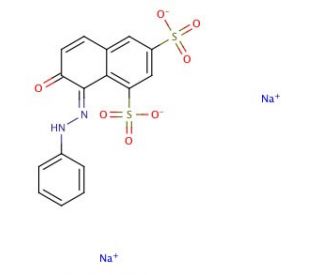
Orange G, with the CAS number 1936-15-8, is a synthetic azo dye, recognized for its vivid orange hue. This dye is primarily utilized in the field of biological staining and laboratory research rather than in textile or food industries. Structurally, Orange G is composed of azo groups that confer its notable coloration properties, which are pivotal in its applications in scientific studies. The mechanism by which Orange G operates in a research setting involves its ability to bind selectively to various biological materials, making it an essential tool for visualizing cellular components under a microscope. Particularly, it is used in gel electrophoresis, where it serves as a tracking dye to monitor the progress of DNA, RNA, or protein separation. This function is facilitated by its negative charge under physiological conditions, allowing it to move towards the anode in an electric field, paralleling the migration of biopolymers like nucleic acids or proteins. Its interaction with biomolecules is primarily hydrophobic and ionic, which makes it suitable for applications that require clear and contrasting staining for better visibility and differentiation of components within complex biological samples. Furthermore, Orange G has been utilized in various research methodologies to develop and optimize staining protocols that improve clarity and precision in the visualization of cellular structures and processes.
Orange G (CAS 1936-15-8) References
- Analysis and testing of biological stains--the Biological Stain Commission Procedures. | Penney, DP., et al. 2002. Biotech Histochem. 77: 237-75. PMID: 12564600
- Three types of chromophil cells of the adenohypophysis; demonstrated by a modification of the periodic acid-Schiff technique. | WILSON, WD. and EZRIN, C. 1954. Am J Pathol. 30: 891-9. PMID: 13197536
- Studies on Mouse Leukemia: VI. The Predominating Cell Type in Line I. | Potter, JS. and Richter, MN. 1932. Proc Natl Acad Sci U S A. 18: 298-303. PMID: 16587682
- Screening methods for thermotolerance in pollen. | Stokes, M. and Geitmann, A. 2024. Ann Bot.. PMID: 38712364
- CXCL10 is a crucial chemoattractant for efficient intranasal delivery of mesenchymal stem cells to the neonatal hypoxic-ischemic brain. | Hermans, EC., et al. 2024. Stem Cell Res Ther. 15: 134. PMID: 38715091
- Simple and scalable preparation of lignin based porous carbon coated nano-clay composites and their efficient removal for the diversified iodine. | Wan, H., et al. 2024. Int J Biol Macromol. 270: 132091. PMID: 38718990
- Methyl green-pyronin with hematoxylin and orange G for the identification of inflammatory cells in tissue sections. | Linder, JE., et al. 1977. Stain Technol. 52: 233-6. PMID: 71770
- Histochemistry in the diagnosis of early prostatic carcinoma. | Taylor, NS. 1979. Hum Pathol. 10: 513-20. PMID: 93567
- Discoloration of textile dyes by spent mushroom substrate of Agaricus bisporus | Brigit van Brenk a, Leodie Kruidhof a, Antoine J.B. Kemperman b, Walter G.J. van der Meer b c, Han A.B. Wösten a. 2024. Bioresource Technology.
- Recent advances in peracetic acid-based advanced oxidation processes for emerging pollutants elimination: A review | Bingzhi Liu a, Baorong Huang a, Xiaochi Ma a, Honghao Huang a, Chong Zou a, Junxia Liu a, Qingzi Luo a, Chuang Wang c, Jialiang Liang b. 2024. Journal of Environmental Chemical Engineering. 12.
Ordering Information
| Product Name | Catalog # | UNIT | Price | Qty | FAVORITES | |
Orange G, 25 g | sc-203750 | 25 g | $68.00 | |||
Orange G, 100 g | sc-203750A | 100 g | $199.00 | |||
Orange G, 250 g | sc-203750B | 250 g | $213.00 | |||
Orange G, 1 kg | sc-203750C | 1 kg | $754.00 |