
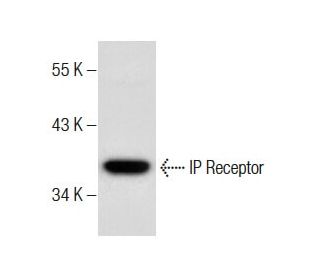


NIH/3T3 Whole Cell Lysate: sc-2210
- 500 µg protein in 200 µl SDS-PAGE Western blotting buffer
- mouse whole cell lysate; normal embryo fibroblast cells
- whole cell lysate provided as Western blotting positive control
- should be stored at -20°C and repeated freezing and thawing should be minimized
- sample vial should be placed at 95° C for up to 5 minutes, once prior to use
QUICK LINKS
SEE ALSO...
NIH/3T3 whole cell lysate is derived from the NIH/3T3 cell line, which was established from mouse embryonic fibroblasts. This lysate is widely used in scientific research to study cellular signaling, growth regulation, and oncogenic transformation. NIH/3T3 cells are known for their robust growth and susceptibility to transformation by oncogenes, making the lysate an essential tool for investigating mechanisms of cell cycle control, proliferation, and differentiation. Researchers utilize NIH/3T3 whole cell lysate to analyze key signaling pathways such as the Ras-MAPK/ERK, PI3K/Akt, and JAK/STAT pathways, which are crucial for regulating cell growth and survival. This lysate facilitates the study of protein expression, post-translational modifications, and the interactions between signaling molecules. It is also employed to investigate the effects of various chemical modulators on these signaling pathways, providing insights into the regulatory mechanisms of cellular behavior and oncogenesis. Recent research has leveraged NIH/3T3 whole cell lysate for proteomic and genomic analyses to identify novel proteins and signaling networks involved in cell growth and transformation. By offering detailed insights into the molecular and cellular mechanisms underlying cell proliferation and oncogenic processes, NIH/3T3 whole cell lysate remains a vital resource for advancing research in cell biology and cancer.
NIH/3T3 Whole Cell Lysate References:
- RanBP3 contains an unusual nuclear localization signal that is imported preferentially by importin-alpha3. | Welch, K., et al. 1999. Mol Cell Biol. 19: 8400-11. PMID: 10567565
- The use of heat-induced hydrolysis in immunohistochemistry on angiotensin II (AT1) receptors enhances the immunoreactivity in paraformaldehyde-fixed brain tissue of normotensive Sprague-Dawley rats. | Thomas, MA. and Lemmer, B. 2006. Brain Res. 1119: 150-64. PMID: 17010318
- Early growth response 1 mediates the systemic and hepatic inflammatory response initiated by hemorrhagic shock. | Prince, JM., et al. 2007. Shock. 27: 157-64. PMID: 17224790
- Glucocorticoid-stimulated preadipocyte differentiation is mediated through acetylation of C/EBPbeta by GCN5. | Wiper-Bergeron, N., et al. 2007. Proc Natl Acad Sci U S A. 104: 2703-8. PMID: 17301242
- Novel effect of estrogen on RANK and c-fms expression in RAW 264.7 cells. | Galal, N., et al. 2007. Int J Mol Med. 20: 97-101. PMID: 17549395
- Cep57, a multidomain protein with unique microtubule and centrosomal localization domains. | Momotani, K., et al. 2008. Biochem J. 412: 265-73. PMID: 18294141
- Effect of estrogen on bone resorption and inflammation in the temporomandibular joint cellular elements. | Galal, N., et al. 2008. Int J Mol Med. 21: 785-90. PMID: 18506373
- Widespread but tissue-specific patterns of interferon-induced transmembrane protein 3 (IFITM3, FRAGILIS, MIL-1) in the mouse gastrula. | Mikedis, MM. and Downs, KM. 2013. Gene Expr Patterns. 13: 225-39. PMID: 23639725
- YWHAE/14-3-3ε: a potential novel genetic risk factor and CSF biomarker for HIV neurocognitive impairment. | Morales, D., et al. 2013. J Neurovirol. 19: 471-8. PMID: 23982958
- Separation of novel phosphoproteins of Porphyromonas gingivalis using phosphate-affinity chromatography. | Izumigawa, M., et al. 2016. Microbiol Immunol. 60: 702-707. PMID: 27663267
- Expression of Angiopoietins and Angiogenic Signaling Pathway Molecules in Chronic Subdural Hematomas. | Isaji, T., et al. 2020. J Neurotrauma. 37: 2493-2498. PMID: 32458767
- RBM14 Modulates Tubulin Acetylation and Regulates Spindle Morphology During Meiotic Maturation in Mouse Oocytes. | Qin, H., et al. 2021. Front Cell Dev Biol. 9: 635728. PMID: 33604343
- A functional LSD1 coregulator screen reveals a novel transcriptional regulatory cascade connecting R-loop homeostasis with epigenetic regulation. | Pinter, S., et al. 2021. Nucleic Acids Res. 49: 4350-4370. PMID: 33823549
Ordering Information
| Product Name | Catalog # | UNIT | Price | Qty | FAVORITES | |
NIH/3T3 Whole Cell Lysate | sc-2210 | 500 µg/200 µl | $118.00 |