
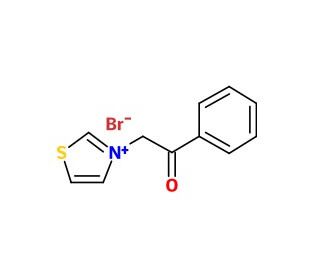

N-Phenacylthiazolium bromide (CAS 5304-34-7)
QUICK LINKS
N-Phenacylthiazolium bromide is utilized in research focused on its ability to break advanced glycation end-products (AGEs), which are implicated in aging and several chronic diseases. This compound is particularly valuable for studies investigating the chemical pathways and biological effects of AGEs in various tissues and organ systems. Research involving N-Phenacylthiazolium bromide often delves into its potential to improve cellular function and structural integrity by cleaving AGEs, thereby mitigating their deleterious effects. Additionally, it is used in studies aimed at understanding the kinetics and mechanisms of AGE breakage, which is for designing interventions that could manage or mitigate AGE-related pathologies.
N-Phenacylthiazolium bromide (CAS 5304-34-7) References
- An overview of carbohydrate-protein interactions with specific reference to myosin and ageing. | Ramamurthy, B., et al. 1999. Acta Physiol Scand. 167: 327-9. PMID: 10632635
- Advanced glycation end products: a Nephrologist's perspective. | Raj, DS., et al. 2000. Am J Kidney Dis. 35: 365-80. PMID: 10692262
- The cross-link breaker, N-phenacylthiazolium bromide prevents vascular advanced glycation end-product accumulation. | Cooper, ME., et al. 2000. Diabetologia. 43: 660-4. PMID: 10855541
- Effects of advanced glycation end-product inhibition and cross-link breakage in diabetic rats. | Oturai, PS., et al. 2000. Metabolism. 49: 996-1000. PMID: 10954016
- Glucose-mediated cross-linking of collagen in rat tendon and skin. | Mentink, CJ., et al. 2002. Clin Chim Acta. 321: 69-76. PMID: 12031595
- The role of AGEs and AGE inhibitors in diabetic cardiovascular disease. | Thomas, MC., et al. 2005. Curr Drug Targets. 6: 453-74. PMID: 16026265
- Wood identification with PCR targeting noncoding chloroplast DNA. | Tang, X., et al. 2011. Plant Mol Biol. 77: 609-17. PMID: 22038094
- Osseous wound repair under inhibition of the axis of advanced glycation end-products and the advanced glycation end-products receptor. | Tsai, SC., et al. 2015. J Formos Med Assoc. 114: 973-80. PMID: 24389269
- Soft-tissue wound healing by anti-advanced glycation end-products agents. | Chang, PC., et al. 2014. J Dent Res. 93: 388-93. PMID: 24554538
- N-Phenacylthiazolium bromide inhibits the advanced glycation end product (AGE)-AGE receptor axis to modulate experimental periodontitis in rats. | Chang, PC., et al. 2014. J Periodontol. 85: e268-76. PMID: 24988129
- N-phenacylthiazolium bromide reduces bone fragility induced by nonenzymatic glycation. | Bradke, BS. and Vashishth, D. 2014. PLoS One. 9: e103199. PMID: 25062024
- Effect of type 2 diabetes-related non-enzymatic glycation on bone biomechanical properties. | Karim, L. and Bouxsein, ML. 2016. Bone. 82: 21-7. PMID: 26211993
- pH-Responsive Hydrogel With an Anti-Glycation Agent for Modulating Experimental Periodontitis. | Yu, MC., et al. 2016. J Periodontol. 87: 742-8. PMID: 26891246
- Ancient DNA extraction methods for herbarium specimens: When is it worth the effort? | Marinček, P., et al. 2022. Appl Plant Sci. 10: e11477. PMID: 35774991
- Molecular coproscopy: dung and diet of the extinct ground sloth Nothrotheriops shastensis. | Poinar, HN., et al. 1998. Science. 281: 402-6. PMID: 9665881
Ordering Information
| Product Name | Catalog # | UNIT | Price | Qty | FAVORITES | |
N-Phenacylthiazolium bromide, 1 g | sc-500909 | 1 g | $275.00 | |||
N-Phenacylthiazolium bromide, 5 g | sc-500909A | 5 g | $709.00 | |||
N-Phenacylthiazolium bromide, 25 g | sc-500909B | 25 g | $2403.00 | |||
N-Phenacylthiazolium bromide, 100 g | sc-500909C | 100 g | $5722.00 |