
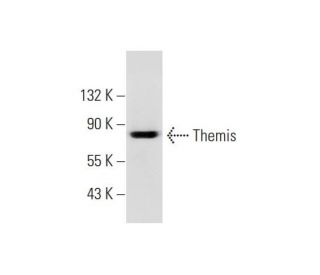


mouse thymus extract: sc-2406
- 500 µg protein in 200 µl SDS-PAGE Western blotting buffer
- Western blotting positive control
- recommended use is 50 µg (20 µl) per lane
- extracts should be stored at -20°C and repeated freezing and thawing should be minimized
- sample vial should be placed at 95° C for up to 5 minutes, once prior to use

QUICK LINKS
SEE ALSO...
Mouse thymus extract, derived from the thymus tissue of mice, has been extensively employed in scientific research to unravel various biological mechanisms. This extract encompasses a diverse array of proteins, peptides, cytokines, and other cellular components obtained from the thymus, a primary lymphoid organ crucial for T-cell development and immune system maturation. The specific mechanisms of action associated with mouse thymus extract are multifaceted and complex. Researchers have utilized this extract to investigate immune cell differentiation, thymocyte maturation, and immunomodulatory pathways. By exposing immune cell cultures or experimental models to mouse thymus extract, scientists have gained valuable insights into the effects of its constituents on cellular processes, such as lymphocyte proliferation, cytokine production, and immune response regulation. Additionally, this extract has been employed to explore the role of specific proteins or molecules present in the thymus in various immunological contexts. The use of mouse thymus extract in research has provided significant contributions to our understanding of immune system development, function, and the underlying regulatory mechanisms. It continues to be a valuable tool for investigating fundamental aspects of immunology and uncovering the complex interplay between immune cells and their microenvironment within the thymus.
mouse thymus extract References:
- Neonatal inoculation with the protein-bound polysaccharide PSK increases resistance of adult animals to challenge with syngeneic tumor cells and reduces azoxymethane-induced precancerous lesions in the colon. | Matsunaga, K., et al. 2000. Cancer Epidemiol Biomarkers Prev. 9: 1313-22. PMID: 11142416
- ENHANCEMENT OF IN VIVO INCORPORATION OF LABELED PRECURSORS INTO DNA AND TOTAL PROTEIN OF MOUSE LYMPH NODES AFTER ADMINISTRATION OF THYMIC EXTRACTS. | KLEIN, JJ., et al. 1965. Proc Natl Acad Sci U S A. 53: 812-7. PMID: 14324539
- A novel antibody microarray format using non-covalent antibody immobilization with chemiluminescent detection. | Usui-Aoki, K., et al. 2007. Mol Biosyst. 3: 36-42. PMID: 17216054
- A rapid fluorescence assay for sphingosine-1-phosphate lyase enzyme activity. | Bandhuvula, P., et al. 2007. J Lipid Res. 48: 2769-78. PMID: 17872591
- Distribution of a negative regulator of haematopoietic stem cell proliferation (AcSDKP) and thymosin beta 4 in mouse tissues. | Pradelles, P., et al. 1991. FEBS Lett. 289: 171-5. PMID: 1915845
- Restoration of the immune response to tobacco mosaic virus with homologous and heterologous thymus extracts in thymocyte-depleted mice. | Ströbel, G. 1974. Eur J Immunol. 4: 621-6. PMID: 4547714
- Thymus-repopulating capacity of cells that can be induced to differentiate to T cells in vitro. | Komure, K., et al. 1975. J Immunol. 115: 195-8. PMID: 50347
- Molecular cloning of a novel actin-binding protein, p57, with a WD repeat and a leucine zipper motif. | Suzuki, K., et al. 1995. FEBS Lett. 364: 283-8. PMID: 7758584
- Nucleolin is a matrix attachment region DNA-binding protein that specifically recognizes a region with high base-unpairing potential. | Dickinson, LA. and Kohwi-Shigematsu, T. 1995. Mol Cell Biol. 15: 456-65. PMID: 7799955
- Antibody-dependent killing of erythrocyte and tumor targets by macrophage-related cell lines: enhancement by PPD and LPS. | Ralph, P. and Nakoinz, I. 1977. J Immunol. 119: 950-54. PMID: 894031
Ordering Information
| Product Name | Catalog # | UNIT | Price | Qty | FAVORITES | |
mouse thymus extract | sc-2406 | 500 µg/200 µl | $120.00 |