
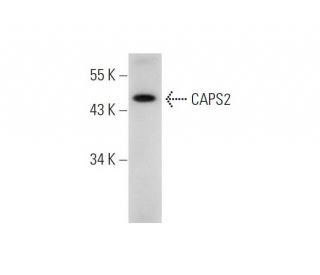


mouse testis extract: sc-2405
- 500 µg protein in 200 µl SDS-PAGE Western blotting buffer
- Western blotting positive control
- recommended use is 50 µg (20 µl) per lane
- extracts should be stored at -20°C and repeated freezing and thawing should be minimized
- sample vial should be placed at 95° C for up to 5 minutes, once prior to use

QUICK LINKS
SEE ALSO...
Mouse testis extract, derived from the testicular tissue of mice, has been extensively utilized in scientific research to explore various biological mechanisms. This extract contains a complex mixture of proteins, enzymes, lipids, and other cellular components obtained from the testes, the male reproductive organs responsible for spermatogenesis and hormone production. The specific mechanisms of action attributed to mouse testis extract are diverse and multifaceted. Researchers have employed this extract to investigate spermatogenesis, germ cell development, and hormonal regulation within the testes. By exposing germ cell cultures or experimental models to mouse testis extract, scientists have gained insights into the effects of its components on cellular processes, such as sperm maturation, meiosis, and gene expression. Furthermore, this extract has been utilized to examine the role of specific proteins or molecules present in the testes in various reproductive contexts. The use of mouse testis extract in research has provided valuable knowledge regarding the complex processes involved in male reproductive physiology and the molecular mechanisms governing testicular function. It continues to be an indispensable tool for studying reproductive biology, advancing our understanding of fertility, and investigating the interplay between cellular components within the testes.
mouse testis extract References:
- Specific expression of heat shock protein HspA2 in human male germ cells. | Son, WY., et al. 1999. Mol Hum Reprod. 5: 1122-6. PMID: 10587366
- Immunohistochemical detection of calmodulin and calmodulin-dependent protein kinase II in the mouse testis. | Moriya, M., et al. 2000. Zygote. 8: 303-14. PMID: 11108552
- Human Pumilio-2 is expressed in embryonic stem cells and germ cells and interacts with DAZ (Deleted in AZoospermia) and DAZ-like proteins. | Moore, FL., et al. 2003. Proc Natl Acad Sci U S A. 100: 538-43. PMID: 12511597
- Dynamic changes in intranuclear and subcellular localizations of mouse Prrp/DAZAP1 during spermatogenesis: the necessity of the C-terminal proline-rich region for nuclear import and localization. | Kurihara, Y., et al. 2004. Arch Histol Cytol. 67: 325-33. PMID: 15700540
- Coxsackievirus and adenovirus receptor (CAR) is expressed in male germ cells and forms a complex with the differentiation factor JAM-C in mouse testis. | Mirza, M., et al. 2006. Exp Cell Res. 312: 817-30. PMID: 16410001
- A heat-shock protein 40, DNAJB13, is an axoneme-associated component in mouse spermatozoa. | Guan, J. and Yuan, L. 2008. Mol Reprod Dev. 75: 1379-86. PMID: 18247331
- HMGB4, a novel member of the HMGB family, is preferentially expressed in the mouse testis and localizes to the basal pole of elongating spermatids. | Catena, R., et al. 2009. Biol Reprod. 80: 358-66. PMID: 18987332
- Combined usage of cascade affinity fractionation and LC-MS/MS for the proteomics of adult mouse testis. | Tan, Q., et al. 2009. J Sep Sci. 32: 3871-9. PMID: 19890842
- Inhibition of testicular and Vipera russelli snake venom hyaluronidase activity by Butea monosperma (Lam) Kuntze stem bark. | Tarannum, S., et al. 2012. Nat Prod Res. 26: 1708-11. PMID: 22007959
- Transcription of the testis-specific mouse protamine 2 gene in a homologous in vitro transcription system. | Bunick, D., et al. 1990. Proc Natl Acad Sci U S A. 87: 891-5. PMID: 2300581
- Mass spectrometric identification of candidate RNA-binding proteins associated with Transition Nuclear Protein mRNA in the mouse testis. | Phillips, BT., et al. 2019. Sci Rep. 9: 13618. PMID: 31541158
- Proteins homologous to the Xenopus germ cell-specific RNA-binding proteins p54/p56 are temporally expressed in mouse male germ cells. | Kwon, YK., et al. 1993. Dev Biol. 158: 99-100. PMID: 8330676
- Binding of a phosphoprotein to the 3′ untranslated region of the mouse protamine 2 mRNA temporally represses its translation. | Kwon, YK. and Hecht, NB. 1993. Mol Cell Biol. 13: 6547-57. PMID: 8413253
Ordering Information
| Product Name | Catalog # | UNIT | Price | Qty | FAVORITES | |
mouse testis extract | sc-2405 | 500 µg/200 µl | $120.00 |